Geopolitical Dynamics of the Israeli-Palestinian Conflict
Origins of the Conflict
Two Emerging Nationalisms
In the late 19th century, the vast Ottoman Empire, which had ruled much of the Middle East for 400 years, was weakening. At the same time, the idea of nationalism—that people with a shared language, culture, and history should have their own nation-state—was sweeping across Europe and beginning to inspire groups within the empire.
Zionism
noun
A nationalist movement that emerged in the late 19th century with the aim of creating and supporting a Jewish national state in Palestine, the ancient homeland of the Jewish people.
For Jewish people, especially in Eastern Europe where they faced intense persecution, this idea took the form of Zionism. Led by figures like Theodor Herzl, the movement sought to establish a Jewish homeland in Palestine, a region of deep historical and religious significance to Judaism. This wasn't just a dream. Starting in the 1880s, waves of Jewish immigrants, known as Aliyahs, began arriving in Palestine. They purchased land and established agricultural communities, laying the groundwork for a future state.
Zionism, originating in 19th-century Europe, is an ethnonationalist movement that sought to establish a homeland for the Jewish people in Palestine.
Simultaneously, the Arab inhabitants of the region were developing their own sense of national identity. As Ottoman control faded, many Arabs envisioned a single, independent Arab state stretching across the Middle East. For them, Palestine was an integral part of this future Arab nation. The influx of Jewish settlers with a competing national vision was viewed with growing alarm.
A Promise and a Mandate
World War I changed everything. The Ottoman Empire sided with Germany and lost. Britain, looking to secure its interests in the Middle East, made several conflicting promises to different groups. The most consequential of these for Palestine was the Balfour Declaration of 1917.
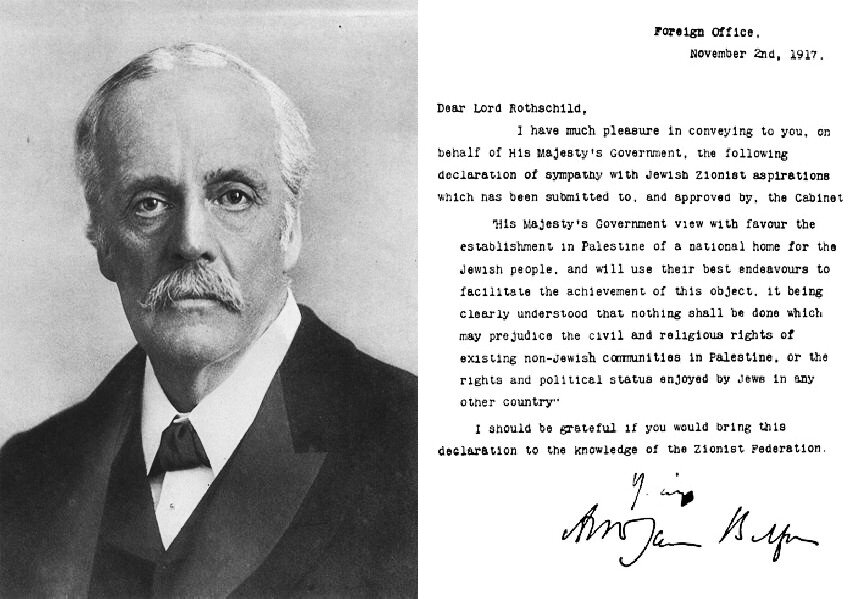
In a short letter, the British government declared its support for "the establishment in Palestine of a national home for the Jewish people." However, it also included a crucial, and ultimately ambiguous, condition: that "nothing shall be done which may prejudice the civil and religious rights of existing non-Jewish communities in Palestine."
This declaration gave a massive boost to the Zionist movement, which now had the backing of a major world power. For Palestinian Arabs, who made up about 90% of the population at the time, it was a betrayal. Their land had been promised to another group without their consent.
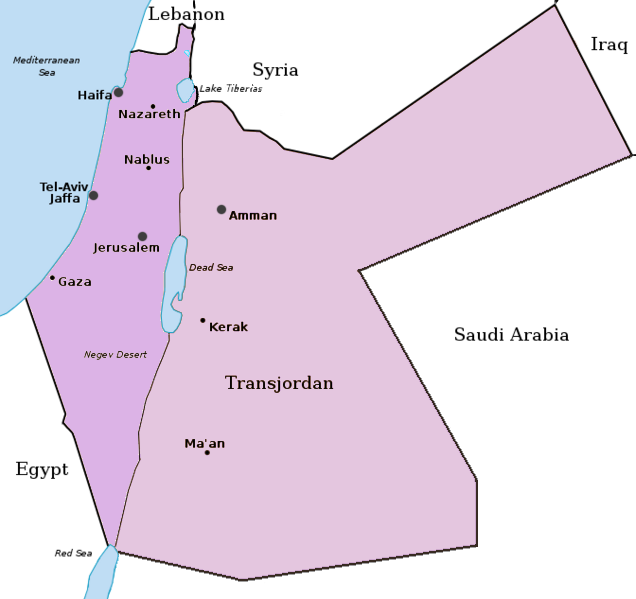
After the war, the League of Nations formalized British control over the region by creating the Mandate for Palestine. Britain's job was to govern the territory and, under the terms of the Balfour Declaration, facilitate the creation of a Jewish national home while protecting the rights of the Arab population. It was a difficult, if not impossible, balancing act.
Rising Tensions
Under British rule, Jewish immigration accelerated. The Jewish population grew from around 60,000 in 1918 to nearly 450,000 by 1939. This rapid demographic shift, combined with continued land purchases, heightened Arab fears of displacement and dispossession.
Both communities began to organize politically and militarily. Clashes, which had been small-scale and local, grew more frequent and violent. Riots erupted in Jerusalem in 1920 and Jaffa in 1921. The 1929 Palestine riots were particularly brutal, with violence spreading across the country and resulting in hundreds of deaths on both sides.
These early conflicts were not just over land; they were a struggle between two competing national movements, each believing they had a legitimate claim to the same territory. The British, caught in the middle, struggled to maintain order. Their policies often seemed to favor one side and then the other, satisfying no one and deepening the mistrust between Jews and Arabs.
By the late 1930s, the situation had escalated into a full-blown Arab revolt against British rule and Jewish immigration. The British response was harsh, crushing the rebellion by 1939. But the underlying conflict remained unresolved. The two communities were on a collision course, with irreconcilable ambitions for the future of Palestine. The stage was set for the larger conflicts that would follow.
What was the primary goal of the Zionist movement that emerged in the late 19th century?
The Balfour Declaration of 1917 was a public statement issued by which government?