Geological Evolution of Australian Goldfields
Yilgarn Craton Tectonics
Yilgarn's Tectonic Shift
The Yilgarn Craton of Western Australia didn't form in a single, simple event. Its architecture, particularly in the gold-rich Eastern Goldfields Superterrane, is the product of a dramatic tectonic transition between 2.71 and 2.65 billion years ago. This period saw a shift from a world dominated by mantle plumes to one governed by processes more akin to modern plate tectonics.
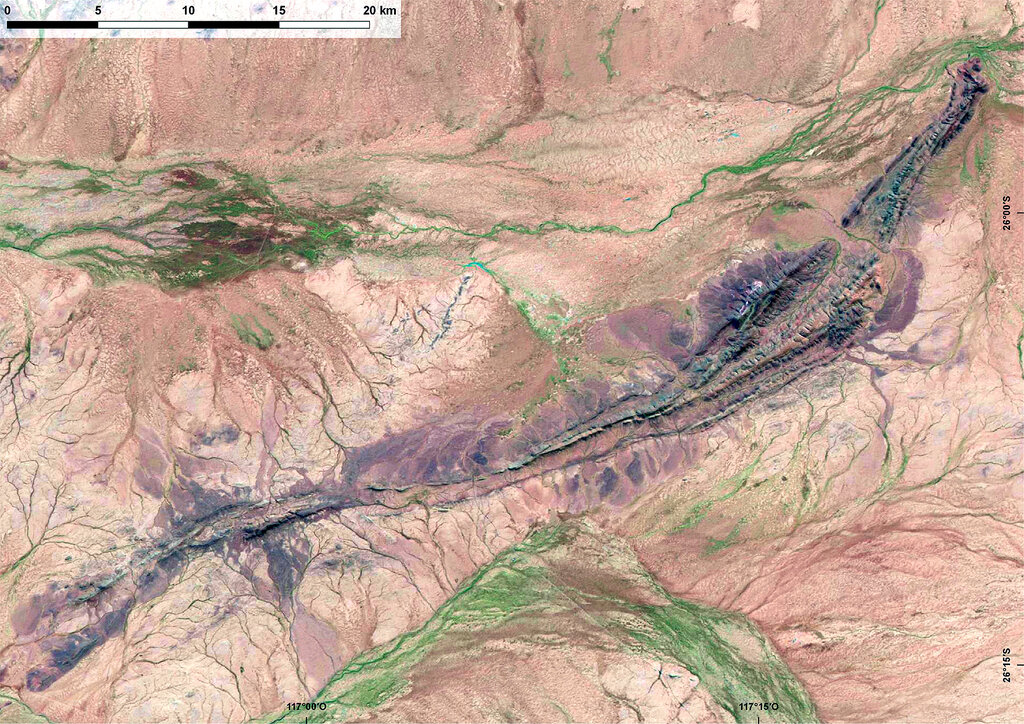
Initially, the craton's development was driven by one or more large mantle plumes. These upwellings of hot rock from deep within the Earth produced widespread basaltic and magmatism between 2.72 and 2.70 Ga. This phase laid down the foundational 'greenstone' sequences—volcanic and sedimentary rocks—that host so much of the region's mineral wealth. These early volcanic provinces formed a relatively thin, hot, and weak lithosphere.
This plume-driven stage created the raw ingredients. The subsequent tectonic shift provided the mechanism to concentrate the gold.
From Plume to Plate
Around 2.70 Ga, the tectonic regime began to change. The plume's influence waned, and subduction-like processes initiated. This led to an accretionary phase, where volcanic arcs and microcontinents collided and sutured together, forming the superterrane we see today. This process is evident in the Kalgoorlie and Kurnalpi Terranes, which were juxtaposed against the older Youanmi Terrane.
This collision event was critical. It caused significant crustal shortening and thickening, deforming the pre-existing greenstone belts. The heat and pressure from this tectonic activity triggered widespread regional metamorphism, reaching amphibolite and locally granulite facies. This process drove fluids rich in gold and other elements out of the metamorphosed rocks and into major crustal shear zones. It was this large-scale plumbing system, created during accretion, that focused mineralising fluids and ultimately formed the world-class gold deposits.
Granites and Gold
The story isn't complete without the relationship. Following the main compressional event, massive volumes of granitoid magmas intruded the thickened crust from about 2.68 to 2.62 Ga. These intrusions added buoyancy and stability to the craton, but also played a crucial role in mineralisation.
These late-stage granites provided an enormous heat source that maintained high geothermal gradients long after the peak of metamorphism. This sustained heat flow continued to drive the circulation of hydrothermal fluids through the crustal faults. The structural architecture established during the accretionary phase acted as the conduit, and the late magmatic heat was the engine. This combination of pre-existing structures and a long-lived thermal anomaly provided the perfect conditions for gold deposition, concentrating it along major structures like the Boulder-Lefroy and Kurnalpi Shear Zones.
Superterrane
noun
A large crustal block composed of several smaller, distinct terranes that have been joined together through tectonic processes like collision and accretion.
Now let's check your understanding of the Yilgarn Craton's formation.
What was the initial tectonic process that dominated the formation of the Yilgarn Craton's foundational 'greenstone' belts between 2.72 and 2.70 billion years ago?
The critical transition in the Yilgarn Craton's formation around 2.70 billion years ago was from mantle plume dominance to what kind of process?
In summary, the Yilgarn Craton's exceptional gold endowment wasn't caused by a single process. It resulted from a critical transition: from plume-related magmatism that created the source rocks, to an accretionary phase that built the structural framework and drove fluids, and finally to late-stage granitic intrusions that provided the lasting heat to power the mineralising system.