Geography and National Borders
Introduction to Geography
The Five Themes of Geography
Geography is more than just memorizing countries on a map. It's the study of Earth's places and the complex relationships between people and their environments. To make sense of this complexity, geographers use five key themes as a kind of framework. Think of them as five different lenses to look at the world, helping us answer the fundamental question: “Why of where?”
Using the themes can help you better organize your learning about geography.
These themes are location, place, human-environment interaction, movement, and region. Each one offers a unique perspective for understanding how our world is organized and how its different parts are connected.
Location and Place
The first theme, Location, answers the question, “Where is it?” It’s the most basic starting point in geography, and it can be described in two ways.
Absolute Location
noun
The exact spot on Earth where something is found, often expressed using a grid system like latitude and longitude coordinates or a street address.
While absolute location is precise, we often use relative location in our daily lives. This describes a spot by its relationship to other places. You might say your favorite coffee shop is “two blocks down from the library” or that Nepal is “north of India.” Relative location provides context and helps us understand how places are connected.
Once we know where a place is, we can ask, “What is it like?” This brings us to the second theme: Place. A place is defined by its unique characteristics, both natural and human-made.
Physical characteristics include landforms, climate, and wildlife. Human characteristics include language, religion, population density, and architecture. These features combine to give a place its own distinct identity.
For example, the Amazon rainforest's “place” is defined by its dense tree canopy, incredible biodiversity, and hot, humid climate. In contrast, Tokyo's “place” is characterized by skyscrapers, a bustling population, and its unique blend of modern technology and ancient traditions. Every location is a unique place with its own story.
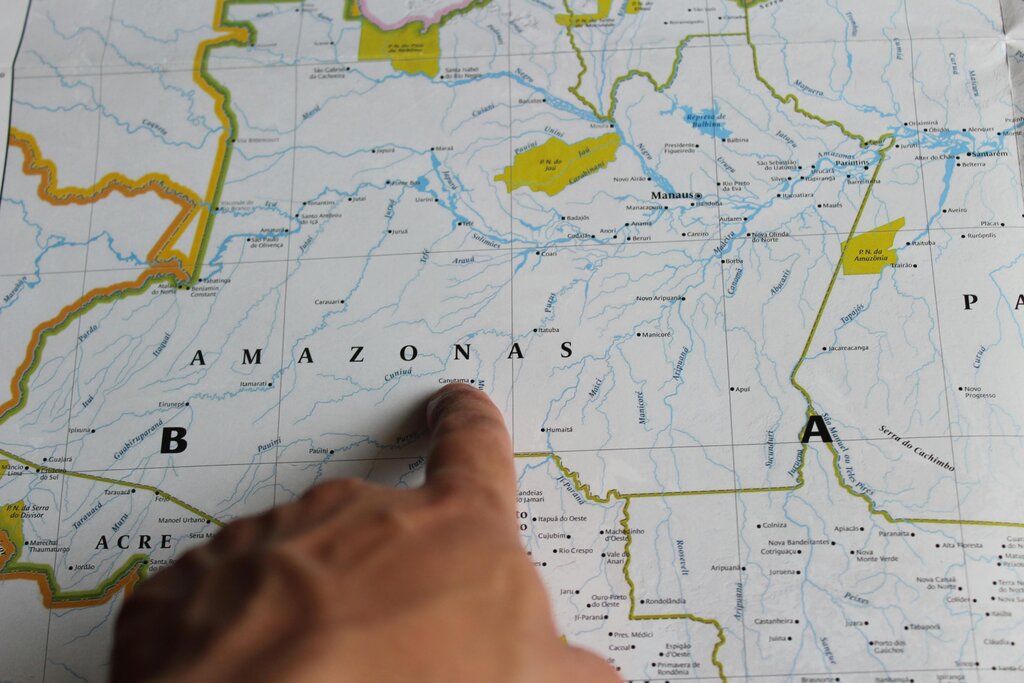
Interaction, Movement, and Regions
People don't just live in places; they interact with them. Human-Environment Interaction explores this two-way relationship. We adapt to, modify, and depend on our surroundings.
Think of a city built in a desert, like Las Vegas. People depend on the nearby Colorado River for water. They modify the environment by building dams to manage that water and create electricity. And they adapt to the extreme heat by installing air conditioning in every building. This constant give-and-take shapes both societies and landscapes.
The world is also in constant motion. The theme of Movement examines how and why people, goods, and ideas travel from one place to another. This includes everything from the migration of people across continents to the shipment of products in global supply chains. It also covers the spread of ideas, fads, and information through the internet. Movement connects our world, driving cultural and economic change.
Finally, to manage the complexity of the world, geographers group places into Regions. A region is an area with one or more shared characteristics that set it apart from other areas. These characteristics can be physical, human, or a combination of both.
A formal region has defined, official boundaries, like a state or country. A functional region is organized around a central point, like the delivery area for a pizza shop. A perceptual (or vernacular) region is defined by people's informal sense of place, like “The Midwest” or “Southern California.”
Regions help us organize information and compare different parts of the world. They are a tool for understanding the patterns we see on Earth's surface. Together, these five themes provide a powerful framework for exploring our planet and our relationship with it.
Now, let's test your understanding of these foundational concepts.
Describing a city as "200 miles south of the capital" is an example of what?
Which of the following best describes the geographic theme of 'Place'?
By using these five themes, you can start to think like a geographer, analyzing the world not as a collection of random facts, but as an interconnected system of places and relationships.