Geochemical Evolution of the Hawaiian Hotspot
Volcanic Lifecycle Stages
A Volcano's Life Story
Hawaiian volcanoes follow a predictable lifecycle, a direct result of their journey across the mantle plume. As the Pacific Plate inches along, each volcano is carried away from the stationary hotspot that fuels it. This movement isn't just a physical journey; it's a chemical one. The composition of the lava erupted at each stage tells us exactly where the volcano is in its life, from its deep-sea birth to its quiet, erosional end.
Hawaiian volcanoes evolve through well-defined stages: preshield, postshield, and posterosional.
We'll explore four key stages: preshield, shield, post-shield, and rejuvenated. The transitions between them are marked by distinct shifts in lava chemistry, offering a window into the deep mantle processes below.
Preshield Beginnings
Every Hawaiian volcano begins its life deep beneath the ocean's surface. This initial phase, the preshield stage, is characterized by relatively small volumes of lava. These early eruptions build the deep foundation of the future island.
The lavas here are alkalic basalts. This chemical signature tells us that the volcano is on the periphery of the mantle plume, not directly over its hottest center. The rock is experiencing a low degree of partial melting, resulting in a magma rich in alkali elements like sodium and potassium.
The active submarine volcano Kamaʻehuakanaloa (formerly Lōʻihi) is a perfect example of a volcano in the preshield stage. Its lavas provide a direct look at the chemical processes that kickstart the island-building process.
The Shield-Building Giant
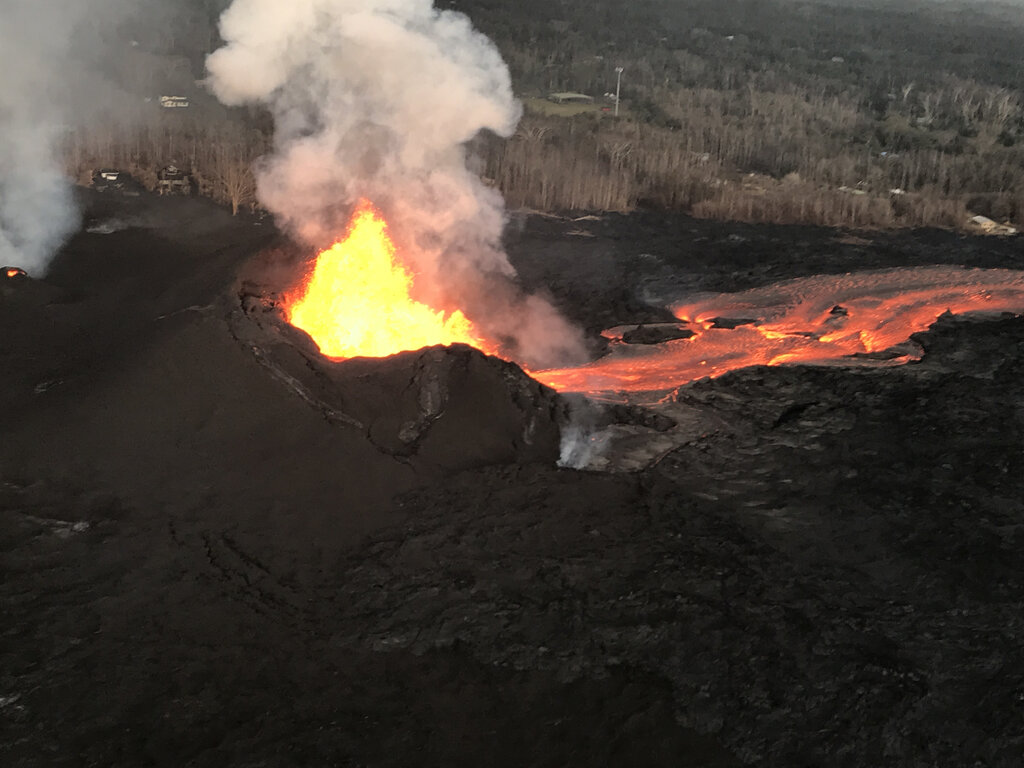
As the volcano moves directly over the center of the hotspot, it enters its most dramatic and productive phase: the shield stage. This is where the volcano truly takes shape, erupting enormous volumes of lava that build its broad, gently sloping profile, resembling a warrior's shield.
During this stage, the lava chemistry switches to tholeiitic basalt. This change signifies a high degree of partial melting in the mantle, driven by the intense heat at the plume's core. These lavas are lower in alkali elements and higher in silica and iron compared to their preshield counterparts. The sheer volume of this tholeiitic lava is staggering, accounting for about 95% of the volcano's total mass. Kīlauea and Mauna Loa, Hawaiʻi's most active volcanoes, are classic examples of shield-stage giants.
Waning Power
Once the Pacific Plate carries the volcano past the hotspot's center, the magma supply begins to dwindle. The volcano enters the post-shield stage. Eruptions become less frequent and more explosive, and the lava chemistry changes once again. The degree of melting decreases, and the composition reverts to alkalic basalts, similar to the preshield stage. These later lavas form a cap on top of the massive tholeiitic shield. Mauna Kea is an excellent example of a volcano in this phase; its summit is dotted with cinder cones from these later, more viscous alkalic eruptions.
The petrogenetic processes forming the postshield lavas at Mauna Kea and other Hawaiian volcanoes reflect movement of the volcano away from the hotspot.
After the post-shield stage, the volcano may enter a long period of dormancy and erosion lasting hundreds of thousands or even millions of years. For some, this is the end. Others, however, experience a final, fleeting burst of activity known as the rejuvenated stage. These late-stage eruptions are sporadic and small in volume, producing highly silica-undersaturated lavas. This suggests they originate from a very different melting process deep within the lithosphere, long after the volcano has left the primary plume behind.
Chemical Fingerprints
The transition between these stages can be tracked by analyzing the major elements in the lava, particularly magnesium oxide () and silica (). Geochemists use these values to understand the volcano's history and its position relative to the plume.
Generally, lavas from the shield stage have lower total alkali content (sodium and potassium) for a given silica content compared to the lavas from the preshield and post-shield stages. This clear chemical divide helps classify the eruptive phase.
The MgO content is a proxy for how 'primitive' a magma is—that is, how little it has changed since leaving the mantle. High MgO indicates a magma that ascended quickly from a hot source. As a volcano moves over the plume's center, MgO levels in its tholeiitic lavas are typically high. As it moves away, melting decreases and magmas stall within the crust, allowing them to cool and evolve, which lowers their MgO content by the time they erupt.
By piecing together these chemical clues, geologists can reconstruct the life history of not just a single volcano, but the entire Hawaiian island chain.
Now, let's test your understanding of the volcanic lifecycle.
Which stage of a Hawaiian volcano's life is characterized by the eruption of enormous volumes of tholeiitic basalt, accounting for about 95% of the volcano's total mass?
A geologist finds that a series of lava flows from a Hawaiian volcano have a high magnesium oxide () content. What does this chemical signature typically indicate about the magma?
This four-stage model provides a powerful framework for understanding how Hawaiian volcanoes are born, grow, and eventually fade away as they are carried by the tectonic plate across the mantle plume.