Generative Engine Optimization (GEO) & Algorithm Design
GEO Core Mechanics
Beyond the Blue Links
For years, the goal of search optimization was simple: get your website to the top of the search engine results page (SERP). This game, known as SEO, was about winning a prime position among the ten blue links. But the landscape is changing. AI-powered search engines don't just point to information; they synthesize it, providing direct answers to user queries.

This new reality calls for a new strategy: Generative Engine Optimization (GEO). The goal of GEO isn't to climb a list of links. It's to achieve a high "Share of Model" (SoM). SoM measures how often an AI model uses your content as a source to construct its generated answers. The prize is no longer just a click. It's becoming a trusted authority cited directly by the AI, influencing the information thousands or millions of users receive.
While SEO targets keyword rankings on a results page, GEO focuses on making content understandable and trustworthy for large language models.
The AI's Information Engine
To win at GEO, you need to understand how these AI engines think. The core mechanism is a process called Retrieval-Augmented Generation (RAG). Instead of just generating an answer from its pre-trained knowledge, which can be outdated or inaccurate, a RAG system first retrieves fresh, relevant information from an external knowledge base, like the internet. This process ensures the answers are timely and grounded in verifiable sources. The RAG pipeline generally follows four key stages.
1. Query Understanding: The model first deconstructs the user's prompt to grasp the underlying intent. It identifies the core entities, concepts, and the specific information being sought.
2. Retrieval: The system then searches its vast knowledge base for documents and data snippets relevant to the query's intent. This is not a simple keyword search; it's a search for meaning.
3. Ranking & Selection: From the dozens or hundreds of retrieved sources, the AI must decide which are the most valuable. It ranks them based on relevance, trustworthiness, and the novelty of the information they provide.
4. Generative Synthesis: Finally, the language model uses the top-ranked sources to compose a coherent, human-readable answer. Crucially, it will often include citations that link back to the original content it used, which is the ultimate goal of GEO.
From Keywords to Concepts
The magic of the retrieval stage lies in its move away from lexical search toward semantic search. Traditional search engines heavily relied on lexical methods like TF-IDF or BM25, which essentially count and weigh keywords. If you used the word "optimization" more often, you were more likely to rank for it. It was a game of word matching.
Modern systems use vector embeddings to understand the meaning behind the words. Every piece of content, from a single sentence to an entire article, is converted into a numerical representation—a vector—that captures its semantic essence. These vectors are then plotted in a high-dimensional space where similar concepts are located close to one another.
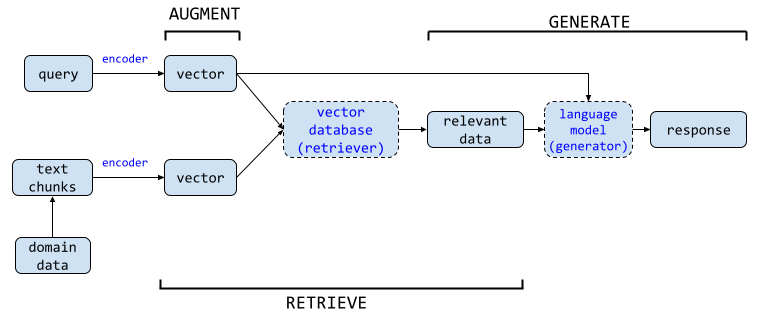
When you ask a question, your query is also converted into a vector. The retrieval system then finds the content vectors that are closest to your query vector in this conceptual space. This is why an article about "improving website performance" can be a top source for a query about "making a site faster," even if it never uses the word "faster." The engine understands the concepts are related. For GEO, this means the richness and clarity of your ideas matter far more than keyword density.
Earning the Citation
Once the AI has retrieved a set of potentially relevant documents, how does it choose which ones to use and cite? Two key factors are Information Gain and Semantic Density.
Information Gain measures how much new, non-redundant information a source provides compared to other retrieved documents. If ten documents say the same thing, but an eleventh provides a unique perspective, a novel data point, or a deeper explanation, it has high Information Gain. The AI prioritizes it because it adds the most value to the final answer.
Semantic Density refers to the richness of concepts within your content. A semantically dense article doesn't just mention a topic; it explores related sub-topics, defines key terms, and connects ideas. It's the difference between an article that says "GEO is important" and one that explains RAG, vector embeddings, and Share of Model. The latter is far more useful to an AI trying to synthesize a comprehensive answer.
Generative Engine Optimization (GEO) is the practice of improving visibility, citation frequency, accuracy, and brand presence inside AI-generated answers.
Ultimately, the AI's citation mechanism is designed to reward the most helpful sources. It attributes information to the content that allowed it to construct the most accurate, thorough, and nuanced response. Your goal in GEO is to be that indispensable source by creating content that is not only semantically relevant but also uniquely informative.
What is the primary goal of Generative Engine Optimization (GEO)?
An AI search system uses a process called Retrieval-Augmented Generation (RAG). What is the main purpose of the "Retrieval" step in this process?