Generative and Agentic AI Explained
Introduction to Generative AI
What Is Generative AI?
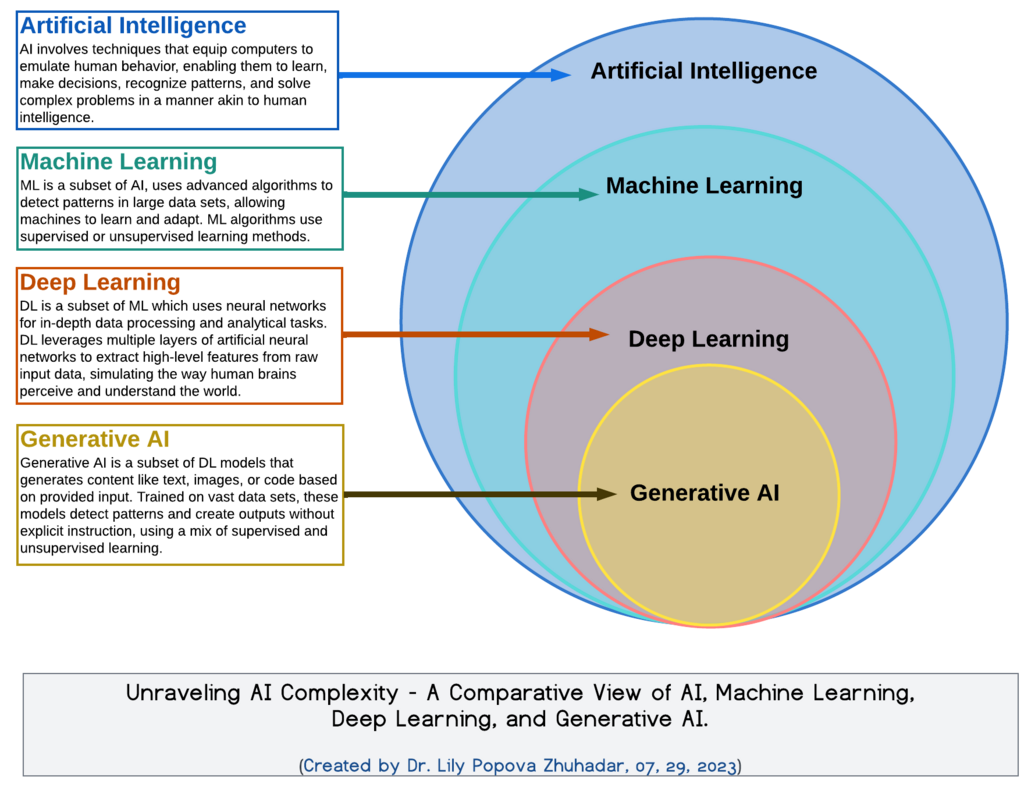
Generative AI is a type of artificial intelligence that can create new, original content. Instead of just analyzing or categorizing information, it generates something entirely new. This could be text, images, music, or even code. It works by learning the patterns and structures from vast amounts of existing data and then using that knowledge to produce novel outputs.
Generative AI refers to a type of artificial intelligence whose core function is to create new content—text, audio, images, video, or data—based on patterns it has learned from existing data.
Think of it this way: a traditional AI model might be trained to look at a picture and identify if it's a cat or a dog. This is a classification task. A generative AI model, on the other hand, could be asked to create a picture of a cat that doesn't exist. It's not just recognizing patterns; it's using them as a foundation for creation.
This ability to generate new content is what sets this technology apart. It's a shift from AI as an analyst to AI as a creator.
How Generative Models Work
Two foundational types of generative models helped pave the way for today's technology: Variational Autoencoders (VAEs) and Generative Adversarial Networks (GANs). Understanding them gives a peek into the mechanics of AI creation.
Variational Autoencoder
noun
A type of generative model that learns to compress data into a simplified representation and then reconstruct it to generate new, similar data.
A VAE works like a skilled artist who learns to sketch the essence of a face rather than every single detail. It has two parts: an encoder and a decoder. The encoder takes an input, like a photo, and compresses it down to its most essential features—a simplified representation. The decoder then takes this compressed representation and tries to recreate the original photo. By learning this process of compression and reconstruction, the VAE can be used to generate new images that share the essential features of the data it was trained on.
Generative Adversarial Network
noun
A model architecture where two neural networks, a generator and a discriminator, compete against each other to produce more realistic outputs.
GANs use a clever competitive dynamic. Imagine a counterfeiter trying to create fake money and a detective trying to spot the fakes. The counterfeiter is the Generator network, creating new data (like images). The detective is the Discriminator network, trying to distinguish between real data and the generator's fakes.
At first, the generator is bad, and the discriminator easily spots the fakes. But the generator learns from its mistakes and gets better. This forces the discriminator to improve as well. This back-and-forth continues until the generator becomes so good that its creations are nearly indistinguishable from the real thing.
Generative AI in the Real World
The applications of generative AI are expanding rapidly across many industries. Its ability to automate creative and complex tasks is opening up new possibilities.
In healthcare, researchers use generative models to accelerate drug discovery. By generating new molecular structures, AI can predict which ones might be effective against diseases, drastically cutting down research and development time. It's also used to create synthetic medical data, which helps train other AI models without compromising patient privacy.
In finance, generative AI automates the creation of financial reports, market summaries, and earnings call transcripts. It can analyze market data to generate insights or simulate market conditions to test trading strategies. This saves analysts time and helps them identify trends more quickly.
Perhaps the most visible impact is in entertainment and content creation. Generative AI tools can write scripts, compose music, create stunning visual effects for movies, and design characters for video games. Artists and designers use these tools as creative partners, speeding up their workflow and exploring ideas that would have been too time-consuming to produce manually.
Generative AI is not just a tool for automation; it's a new medium for creativity and a powerful engine for innovation. As the models become more sophisticated, their impact on how we work, create, and solve problems will only continue to grow.
Ready to check your understanding?
What is the primary characteristic that distinguishes Generative AI from traditional AI models?
In a Generative Adversarial Network (GAN), what is the role of the 'Discriminator'?
From creating art to discovering new medicines, generative AI is a transformative technology that is actively reshaping our world.