Generative AI The Predictive Engine
Introduction to Generative AI
What is Generative AI?
Generative AI creates new, original content. Instead of just analyzing or categorizing information that already exists, it generates something that wasn't there before. This could be an email draft, a digital painting, a piece of music, or a snippet of computer code.
Generative AI is a branch of artificial intelligence that focuses on creating new content such as text, images, code, music and video using models like transformers, GANs and diffusion models.
Think of it like a musician who has spent years listening to jazz. After absorbing thousands of hours of music, they can improvise a new solo. The solo isn't a copy of any specific song they've heard, but it follows the patterns, rules, and style of jazz. Generative AI works in a similar way, learning from vast amounts of data to create new outputs that are consistent with the patterns it has learned.
How AI Learns to Create
The learning process is called training. A generative model is fed enormous amounts of data—for example, all the text on the internet, or millions of images. By processing this data, the model learns the statistical relationships and underlying structures within it. It learns how words typically follow one another in a sentence, or how pixels form the image of a cat.
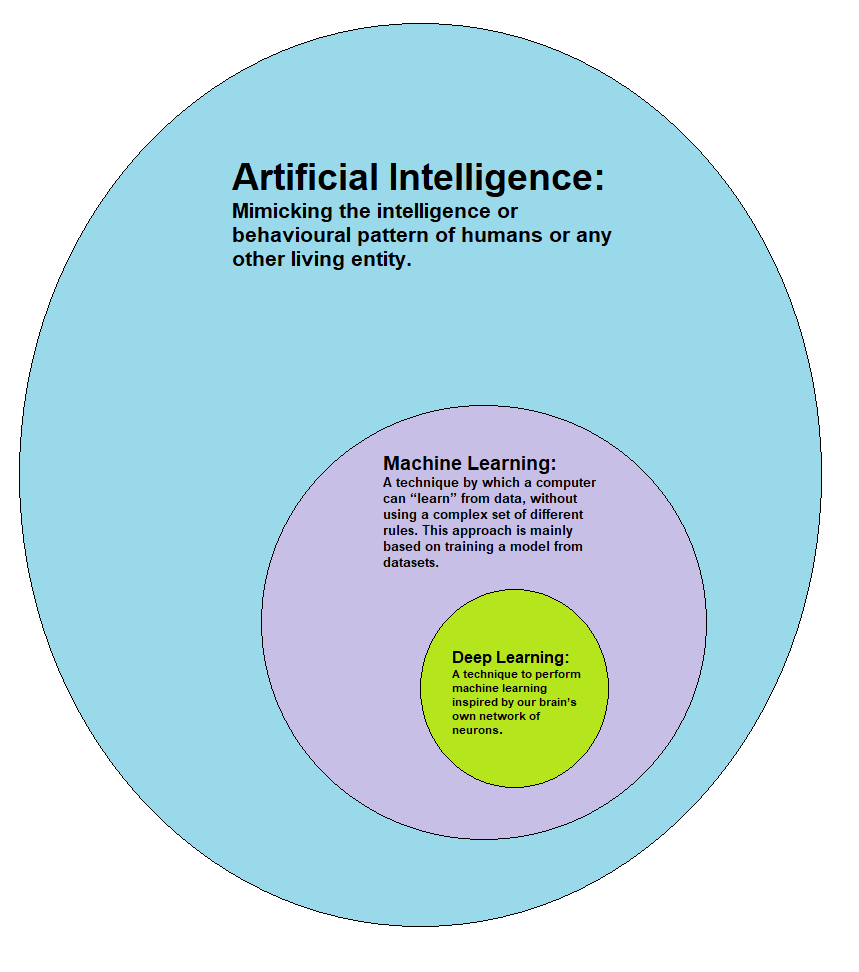
This process doesn't teach the AI to understand concepts in the way humans do. It doesn't know what a cat is, or feel the emotion in a poem. Instead, it becomes incredibly good at recognizing and replicating the patterns it was trained on. The goal isn't comprehension, but pattern-matching on a massive scale.
A Powerful Prediction Engine
At its core, generative AI is a prediction engine. When asked to create something, it makes a series of predictions about what should come next. For a Large Language Model (LLM) writing an email, it predicts the most probable next word based on the words that came before it.
If you give a model the phrase, "The sky is...", it will likely predict "blue." It makes this prediction because, in its training data, the word "blue" followed that phrase more frequently than any other word.
It builds its output one piece at a time, whether it's one word, one pixel, or one note of music. Each new piece is a statistically-informed guess. The result of millions of these tiny predictions is a coherent, and often surprisingly creative, final product. This predictive capability is what allows it to generate human-like text, realistic images, and other complex data.
From Prediction to Application
This fundamental ability to predict and generate has led to a wide range of applications that are becoming more common in our daily lives. Each one is a form of pattern replication and prediction, tailored to a specific task.
| Application | User Input (Prompt) | AI Generated Output |
|---|---|---|
| Writing Assistant | "Draft an email to my team..." | A complete, professionally worded email. |
| Image Generator | "A photo of an astronaut riding a horse on Mars." | A new, photorealistic image matching the description. |
| Code Helper | def calculate_average(numbers): | The rest of the Python function to calculate an average. |
In each case, the AI isn't thinking or reasoning. It's drawing from its vast training data to predict the sequence of text, pixels, or code that best fits the user's request.
Ready to check your understanding?
What is the primary function of Generative AI?
The learning process for a generative model is called 'training'. What happens during training?
Understanding generative AI as a prediction engine is the key to grasping both its incredible capabilities and its inherent limitations.