Generative AI The Prediction Engine
Introduction to Generative AI
What Is Generative AI?
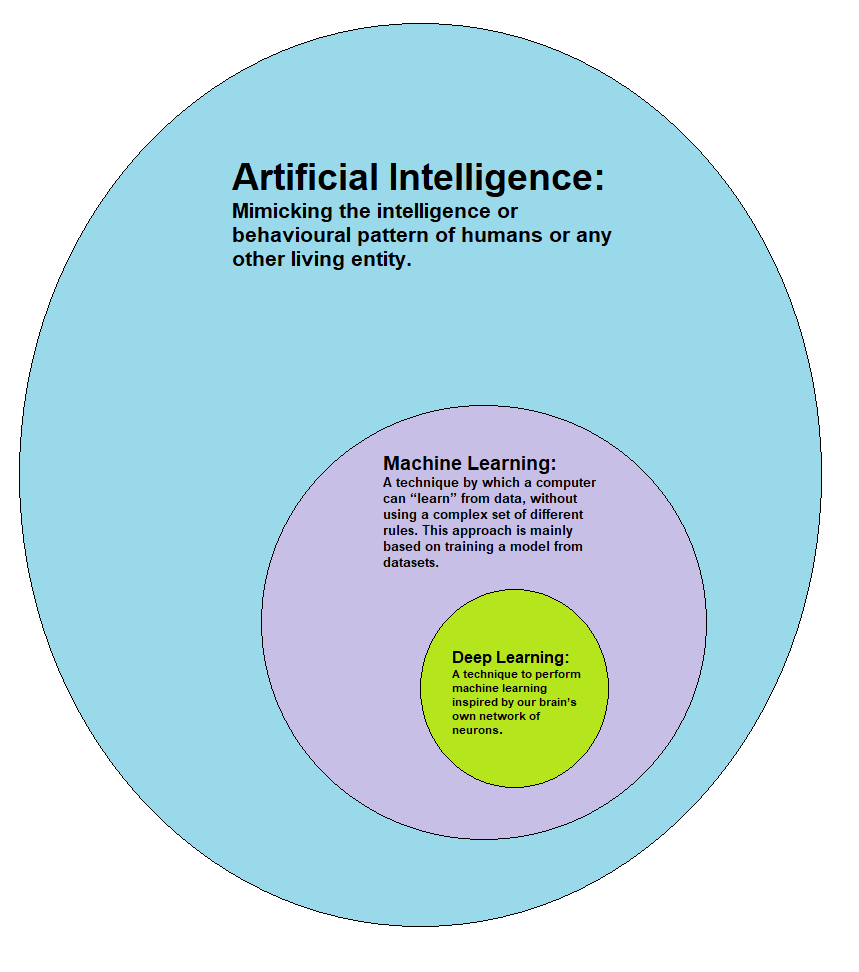
Generative AI is a type of artificial intelligence that can create new and original content. Instead of just analyzing or classifying information, it generates something entirely new. This could be text, images, music, or code that has never existed before.
Think of it like learning to paint. You might study thousands of paintings to understand color, style, and composition. Then, you use that knowledge to create your own unique artwork. Generative AI does something similar, but with data.
Generative AI
noun
A branch of artificial intelligence that uses statistical models to generate new, original content by learning patterns from existing data.
A Prediction Engine
At its core, generative AI is a sophisticated prediction engine. It doesn't understand concepts like a human does. Instead, it works with probabilities. When you ask it to write a sentence, it predicts the most likely next word based on the vast amount of text it was trained on. It repeats this process, word by word, to build a sentence, a paragraph, or even a whole essay.
The same principle applies to images. To generate a picture of a cat, the model predicts the most probable arrangement of pixels that corresponds to the features of a cat it learned from its training data. It's a game of statistics, not sentience.
Generative AI doesn't think, it predicts. Every output is a statistically probable answer based on the patterns in its training data.
Generative vs. Discriminative Models
To better understand what makes generative AI special, it helps to contrast it with another type of AI: discriminative models. The difference is in their goals.
A discriminative model tries to classify or predict a label for a given input. It learns the boundary between different categories. For example, a model that tells you whether an email is spam or not spam is a discriminative model. It's making a decision based on the input.
A generative model, on the other hand, tries to create new data samples that resemble the training data. Instead of just identifying a cat in a photo, it learns what cats look like in general and can generate a brand-new image of a cat.
Two Key Architectures
While there are many types of generative models, two foundational architectures are Generative Adversarial Networks (GANs) and Variational Autoencoders (VAEs).
Generative Adversarial Networks (GANs)
GANs work by pitting two neural networks against each other in a creative competition. The 'Generator' creates new data samples (like fake images), while the 'Discriminator' tries to determine whether the samples are real (from the training data) or fake (created by the generator). Over many cycles, the generator gets better at making convincing fakes, and the discriminator gets better at spotting them. This adversarial process pushes the generator to produce incredibly realistic outputs.
Variational Autoencoders (VAEs)
VAEs take a different approach. They learn to compress data into a simplified representation, called a latent space. Think of this as creating a summary of the key features of the data. The VAE then learns how to reconstruct the original data from this compressed summary. Once trained, it can create new data by generating novel points within this latent space and then decoding them into a full output. It's less about competition and more about learning an efficient representation of the data.
Let's check your understanding of these core concepts.
What is the primary function of generative AI?
A generative AI model that writes an essay doesn't truly understand the topic. Instead, it generates each word by...
Understanding these foundations is the first step to seeing how generative AI is able to create such a wide range of useful and creative content.