Generative AI for Strategic Planning
Introduction to Generative AI
What Is Generative AI?
At its core, artificial intelligence is about creating systems that can perform tasks that normally require human intelligence. A special branch of AI, called machine learning, trains computers to find patterns in data without being explicitly programmed. Dive a bit deeper, and you find deep learning, which uses complex structures called neural networks to handle more abstract patterns, like recognizing a face in a photo.
Within deep learning lies our focus: generative AI. While other types of AI are great at classifying or predicting things—like identifying spam emails—generative AI is all about creating something new. It learns the underlying patterns and structures from a massive dataset of text, images, or sounds, and then uses that knowledge to generate brand-new, original content.
Generative AI
noun
A type of artificial intelligence that can produce various types of content, including text, imagery, audio, and synthetic data.
Think of it like an apprentice musician who listens to thousands of hours of classical music. Eventually, they don't just play back the songs they've heard—they can compose their own original symphony in the same style.
A Brief History
The idea of machines that create isn't new, but the technology has evolved rapidly. Early AI systems in the mid-20th century were based on strict rules. The shift towards machine learning allowed computers to learn from examples instead. The real breakthrough for generative AI came with the development of sophisticated neural networks and massive amounts of data to train them on.
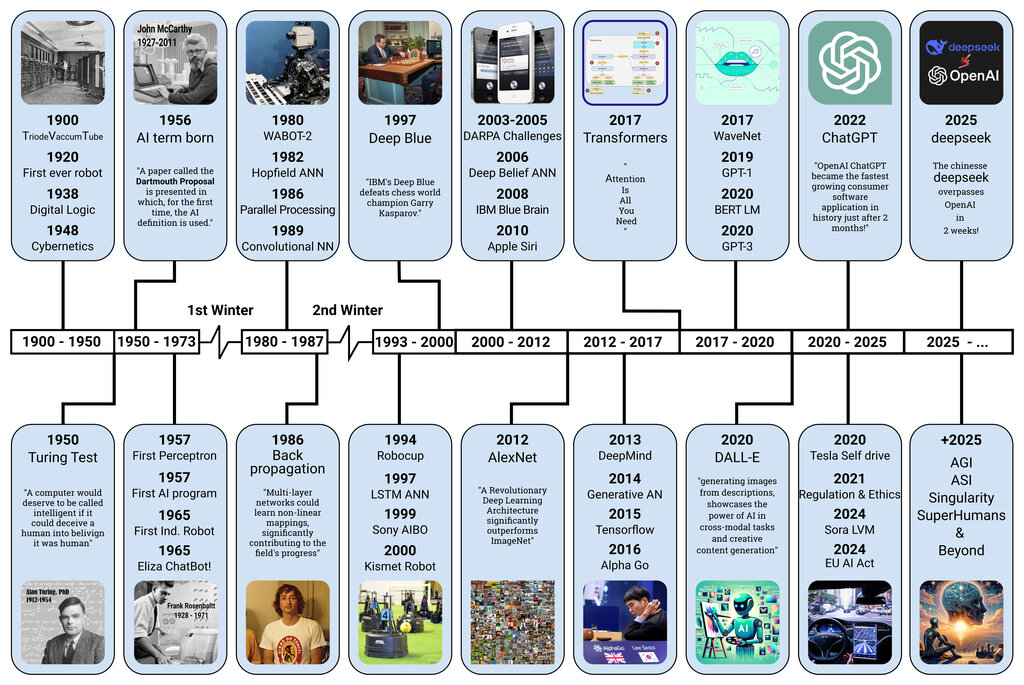
A pivotal moment arrived in 2017 with the invention of the "transformer" architecture, a new type of neural network that was incredibly effective at understanding the context and relationships in sequential data, like sentences. This technology paved the way for models like OpenAI's GPT (Generative Pre-trained Transformer) series.
GPT-2, released in 2019, was a major leap, capable of writing surprisingly coherent paragraphs. A few years later, models like GPT-4 and competitors from other companies became powerful enough to write essays, generate code, and hold complex conversations, bringing generative AI into the mainstream.
How It's Used Today
Generative AI is no longer just a research concept. It's being applied across countless industries to solve problems and create new opportunities.
Generative AI is fundamentally reshaping marketing by revolutionizing content creation, personalization, and design innovation.
In addition to marketing, generative AI is making waves in many other fields. Here's a quick look at some of its applications.
| Industry | Application |
|---|---|
| Software | Generating and debugging code |
| Entertainment | Creating concept art, music, and script ideas |
| Healthcare | Designing new drug molecules |
| Customer Svc | Powering intelligent, human-like chatbots |
| Education | Developing personalized learning materials |
These models are tools that augment human creativity and productivity. They act as powerful assistants, capable of handling first drafts, brainstorming ideas, and processing information at a scale humans cannot. Understanding these fundamental capabilities is the first step toward using them effectively.
Ready to check your understanding? Let's see what you've learned.
Which statement best describes the relationship between Artificial Intelligence (AI), Machine Learning (ML), and Deep Learning (DL)?
What is the primary function that distinguishes generative AI from other types of AI, such as those used for spam filtering?
Now that you have a solid grasp of what generative AI is and where it came from, you're ready to explore how to apply it.