Generative AI for Product Design
Introduction to Generative AI
What is Generative AI?
Generative AI creates new things. Unlike traditional AI that might classify an image as a 'cat' or 'dog', generative AI can create a brand new picture of a cat that has never existed. It learns the underlying patterns and structures from a massive set of examples—like photos, articles, or product designs—and then uses that knowledge to produce original content.
Think of it this way: one type of AI can recognize a song, while generative AI can compose an entirely new piece of music.
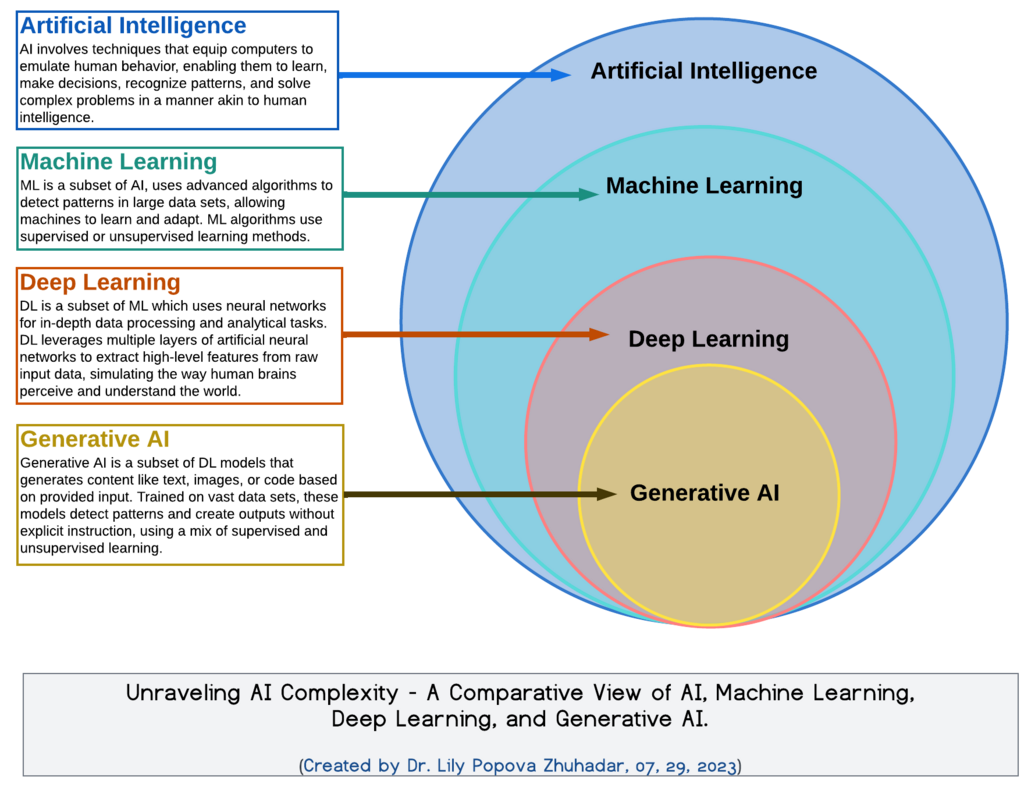
This ability to generate, not just analyze, is what makes it so powerful for creative fields like product design. Instead of starting from a blank slate, a designer can collaborate with an AI to explore countless variations, styles, and forms in a fraction of the time. Let's look at two foundational models that make this possible: GANs and VAEs.
Generative Adversarial Networks (GANs)
Imagine a game between two players: an art forger and an art critic. The forger’s goal is to create a painting so convincing it fools the critic. The critic’s goal is to spot every fake. This is the core idea behind Generative Adversarial Networks, or GANs.
GAN
noun
A type of generative model that uses two competing neural networks, a Generator and a Discriminator, to create new data instances.
A GAN consists of two parts:
- The Generator: This is the forger. It creates new data, like an image of a chair or a design for a shoe.
- The Discriminator: This is the critic. It compares the Generator’s creation to real-world examples and decides if it's authentic or fake.
At first, the Generator's creations are random and messy. The Discriminator easily spots them as fakes. But with each round, the Discriminator provides feedback, and the Generator uses it to improve. Over thousands of rounds, both networks get smarter. The Generator produces incredibly realistic outputs, and the Discriminator becomes an expert at telling real from fake. This adversarial process results in high-quality, novel creations.
Variational Autoencoders (VAEs)
Another powerful generative model is the Variational Autoencoder, or VAE. If a GAN is like a competitive game, a VAE is more like an artist learning to capture the essence of a subject.
A VAE works in two steps:
- The Encoder: This part analyzes an input (like a picture of a car) and compresses it into a simple, abstract representation. This compressed version captures the most important features—like 'has four wheels,' 'is aerodynamic,' 'is a sedan'—in a simplified form called the latent space.
- The Decoder: This part takes a point from that latent space and reconstructs it back into a full, detailed image.
By tweaking the values in the latent space, the decoder can generate new images that are similar to the original but with slight variations. It's like taking the core concept of 'car' and asking the model to create new versions you haven't seen before.
VAEs are excellent for exploring variations on a theme. You could feed it one chair design and have it generate a dozen similar but unique alternatives.
Applications in Product Design
So, how does this help a product designer? Generative AI can act as a tireless brainstorming partner.
A designer could use a GAN to generate entirely new forms for a product, like a bicycle frame or a water bottle, potentially sparking ideas that are completely outside conventional thinking. The results are often surprising and can push creative boundaries.
Meanwhile, a VAE could be used for refinement. A designer could provide a successful product design and use the VAE to generate subtle variations in shape, texture, or proportion. This allows for rapid iteration, helping to perfect a design by exploring a whole family of related options quickly.
By understanding these fundamental models, you can begin to see how generative AI is not here to replace designers, but to augment their creativity, opening up new avenues for exploration and innovation.
Time to check your understanding.
What is the primary function of Generative AI that distinguishes it from traditional AI?
In the analogy of an art forger and a critic used to describe a Generative Adversarial Network (GAN), what role does the 'Generator' play?
These models are the building blocks for many of the advanced generative tools available today. By grasping how they work, you're ready to explore more complex applications in the product design workflow.