Generative AI for Educators
Introduction to Generative AI
What is Generative AI?
Artificial intelligence that analyzes or classifies information has been around for decades. It can spot spam in your email, recognize your face to unlock your phone, or recommend a movie based on your watch history. This type of AI is often called discriminative AI because it discriminates between different types of data.
Generative AI is different. Instead of just analyzing existing data, it creates something entirely new. It generates original content—text, images, sounds, or code—that mimics the patterns and structures it learned from the vast amounts of data it was trained on.
Think of it this way: Discriminative AI is a critic who evaluates art, while generative AI is an artist who creates it.
Generative AI
noun
A type of artificial intelligence that can produce various types of new content, such as text, imagery, audio, and synthetic data.
This ability to create is what makes this technology so powerful. It's not just sorting or identifying; it's producing novel output that can be surprisingly creative and complex.
The Brains Behind the Magic
Generative AI didn't appear out of thin air. It’s built on decades of research in computer science, specifically in the fields of machine learning and deep learning.
Machine Learning (ML) is a broad field of AI where computers learn from data without being explicitly programmed. Instead of a developer writing step-by-step rules, they feed the machine tons of examples. The machine then learns to recognize patterns on its own. For instance, by analyzing thousands of cat photos, a machine learning model can learn to identify a cat in a new photo.
Deep Learning (DL) is a more advanced subset of machine learning. It uses complex structures called artificial neural networks, which are loosely inspired by the connections in the human brain. These networks have many layers, allowing them to learn incredibly subtle and intricate patterns from data. Most modern generative AI models are powered by deep learning.
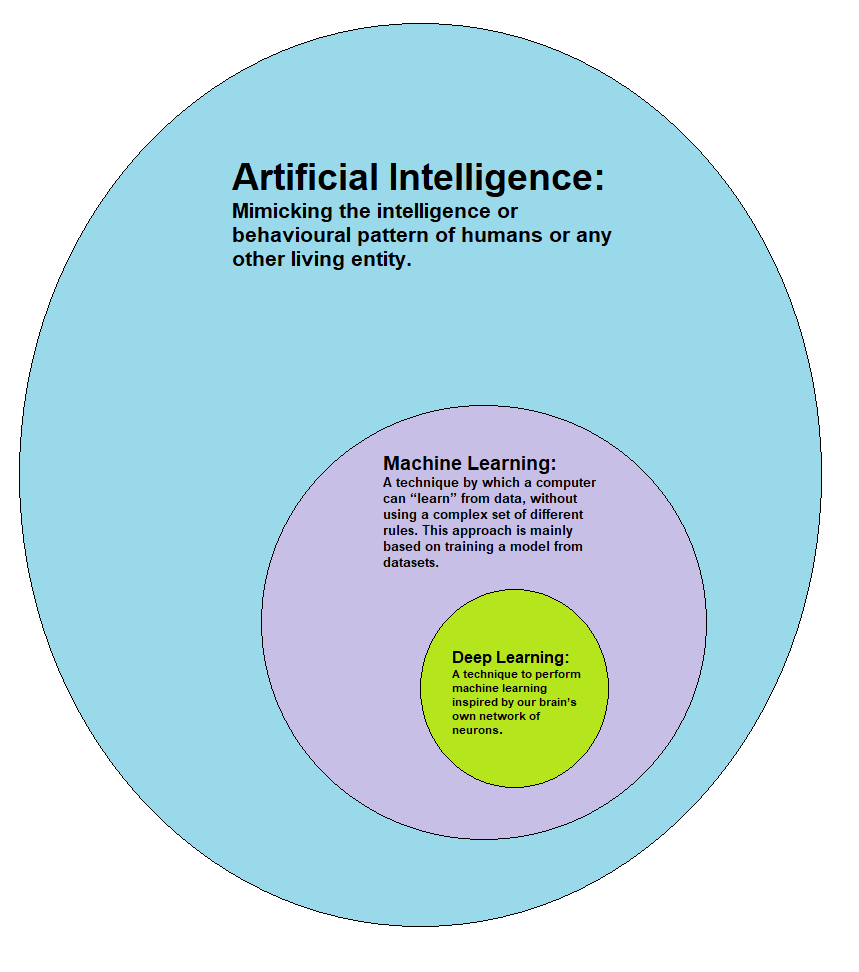
By processing enormous datasets, these deep learning models build a sophisticated understanding of the data's structure, grammar, and style. This understanding is what allows them to generate new content that is coherent and contextually relevant.
A Brief History
The idea of machines that can create isn't new, but the technology has evolved rapidly. Early chatbots in the 1960s, like ELIZA, could simulate conversation but had no real understanding. They simply followed programmed rules and templates.
Through the late 20th century, researchers made steady progress in machine learning. But the real turning point came in the 2010s with two key developments: the availability of massive datasets and significant increases in computing power.
This combination allowed deep learning models to flourish. In 2014, a new technique called a Generative Adversarial Network (GAN) produced grainy, black-and-white images of faces. By 2017, the invention of the “Transformer” architecture revolutionized how AI handles language. This led directly to the powerful text-based models we see today.
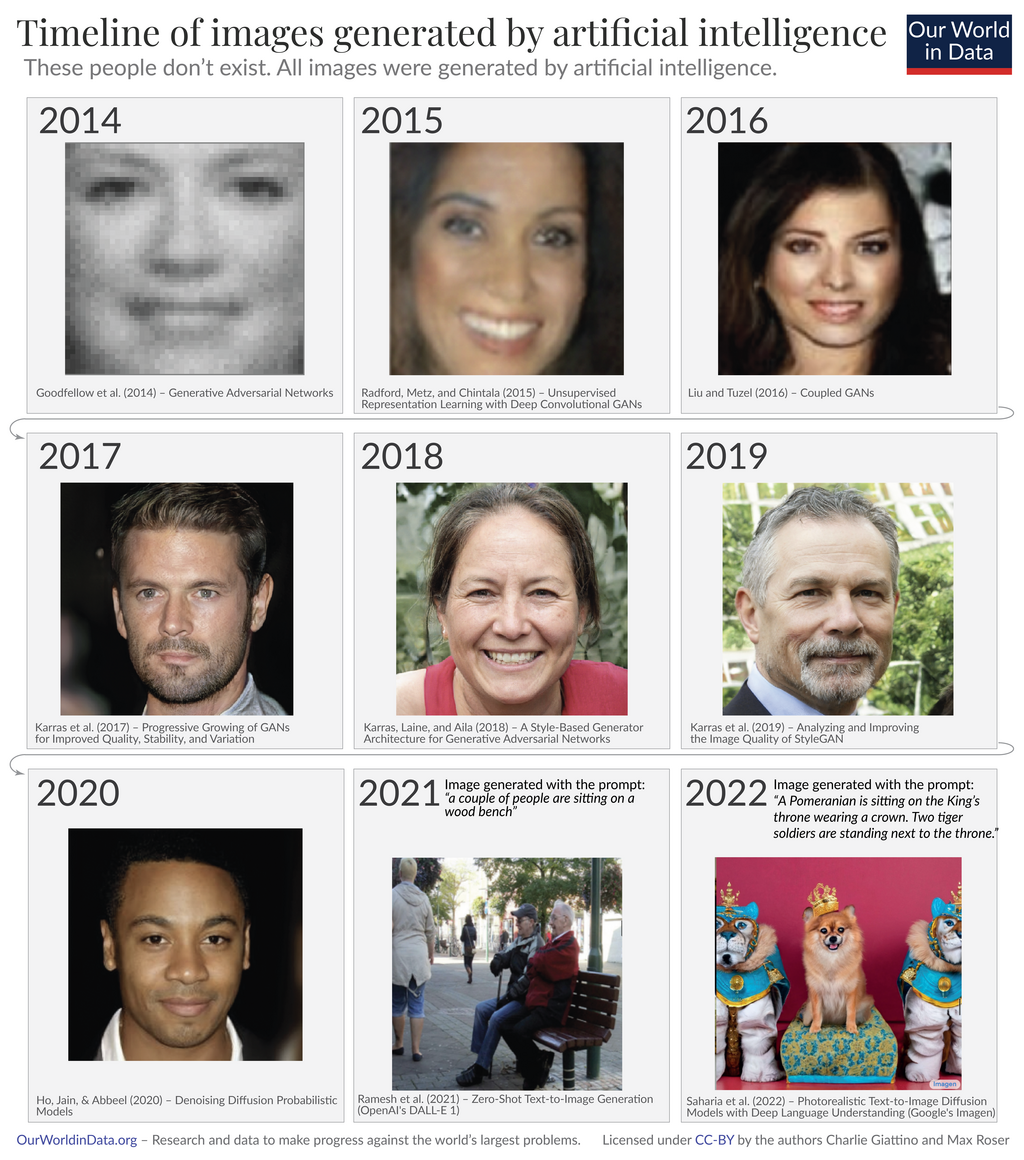
In just a few years, we've gone from blurry faces to photorealistic images and from stilted chatbot conversations to fluid, human-like prose. This rapid acceleration is what brought generative AI into the mainstream.
A Look at the Models
Generative AI isn't a single entity. It's a category of different models, each designed for specific types of creative tasks. You may have heard of some of the most famous ones.
Language Models, like the GPT (Generative Pre-trained Transformer) series, are masters of text. They work by predicting the next word in a sequence based on the words that came before. Trained on a massive portion of the internet and digital books, they can write essays, answer questions, summarize articles, and even write computer code.
Image Generation Models, such as DALL·E and Midjourney, turn text descriptions into visuals. You provide a written prompt, like "a fox in a library wearing glasses," and the model generates a corresponding image. These models learn the relationship between words and visual concepts from a huge dataset of images and their text captions.
Other models can generate music, create realistic voices, or even design 3D models. Each uses similar underlying principles of deep learning but is tailored to the unique patterns of its specific domain, whether it's musical notes, pixel colors, or programming syntax. Understanding these basic building blocks is the first step to seeing their potential in any field.