Generative AI for Data Science
Modern Neural Architectures
Beyond Sequential Models
Recurrent Neural Networks (RNNs) process information one step at a time, making them inherently sequential. This structure struggles with long-range dependencies and can suffer from the vanishing gradient problem, where the signal for learning fades over long sequences. The Transformer architecture, introduced in 2017, sidestepped these issues by abandoning recurrence entirely. Instead, it processes all elements of a sequence simultaneously.
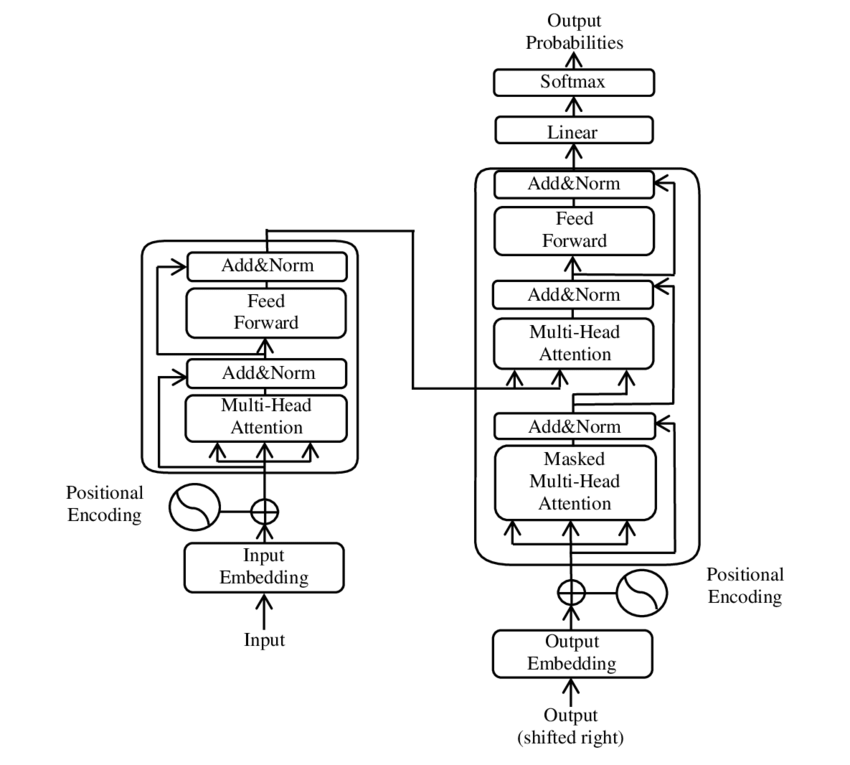
At the heart of the Transformer is the self-attention mechanism. It allows the model to weigh the importance of every other element in the input sequence when encoding a specific element. For instance, in the sentence “The cat sat on the mat, and it was happy,” self-attention helps the model understand that “it” refers to the “cat,” not the “mat,” by creating direct connections between them, regardless of their distance.
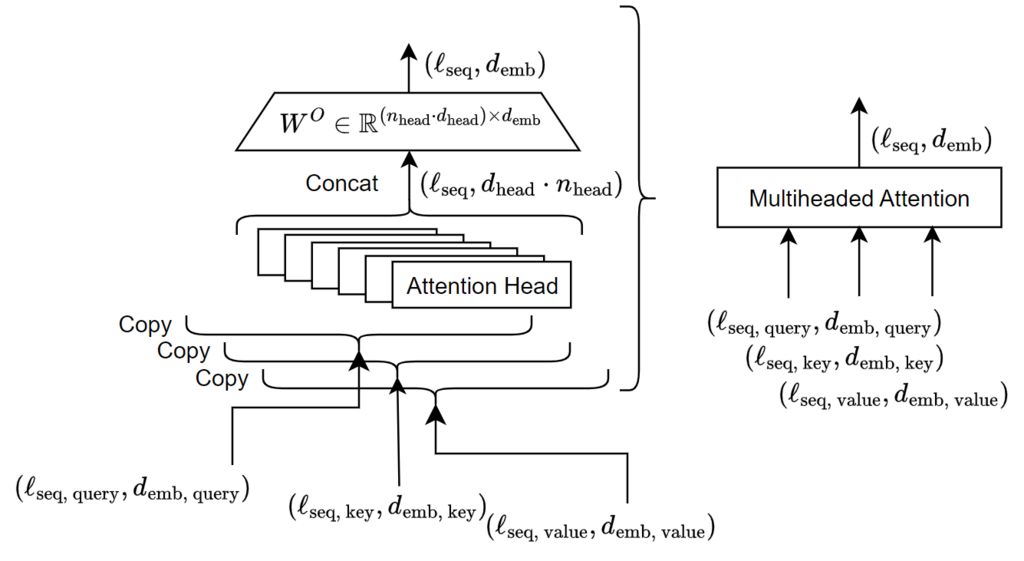
To make this even more powerful, Transformers use multi-head attention which runs the self-attention mechanism multiple times in parallel. Each “head” learns a different aspect of the relationships between words. One head might focus on grammatical structure, while another tracks semantic relationships. The outputs from all heads are then combined, giving the model a much richer understanding of the context.
Transformer models generally come in two flavors. Encoder-decoder architectures, like the original Transformer, are excellent for sequence-to-sequence tasks like machine translation. The encoder processes the source text, and the decoder generates the target text. In contrast, decoder-only models, like the popular GPT family, are autoregressive and excel at text generation. They predict the next word in a sequence based on the words that came before it.
The Creative Adversaries
While Transformers excel at understanding and generating sequences, Generative Adversarial Networks (GANs) tackle a different problem: creating novel, realistic data from scratch. GANs were designed to move beyond simply classifying data, like a traditional Convolutional Neural Network (CNN) does, and into the realm of generation. They work through a competitive process between two distinct neural networks.
The two components of a GAN are:
- The Generator: This network takes a random vector of numbers (latent noise) as input and attempts to transform it into a plausible output, like an image of a human face or a clip of audio.
- The Discriminator: This network acts as a critic. It is trained on a dataset of real examples and is tasked with determining whether the data it receives (either a real example or one from the generator) is authentic or fake.
The training process is an adversarial game. The generator's goal is to create data so convincing that it fools the discriminator. The discriminator's goal is to get better at telling the difference between real and generated data. They learn together in a feedback loop. The discriminator's feedback helps the generator refine its output, while the generator's increasingly sophisticated fakes force the discriminator to improve its detection skills.
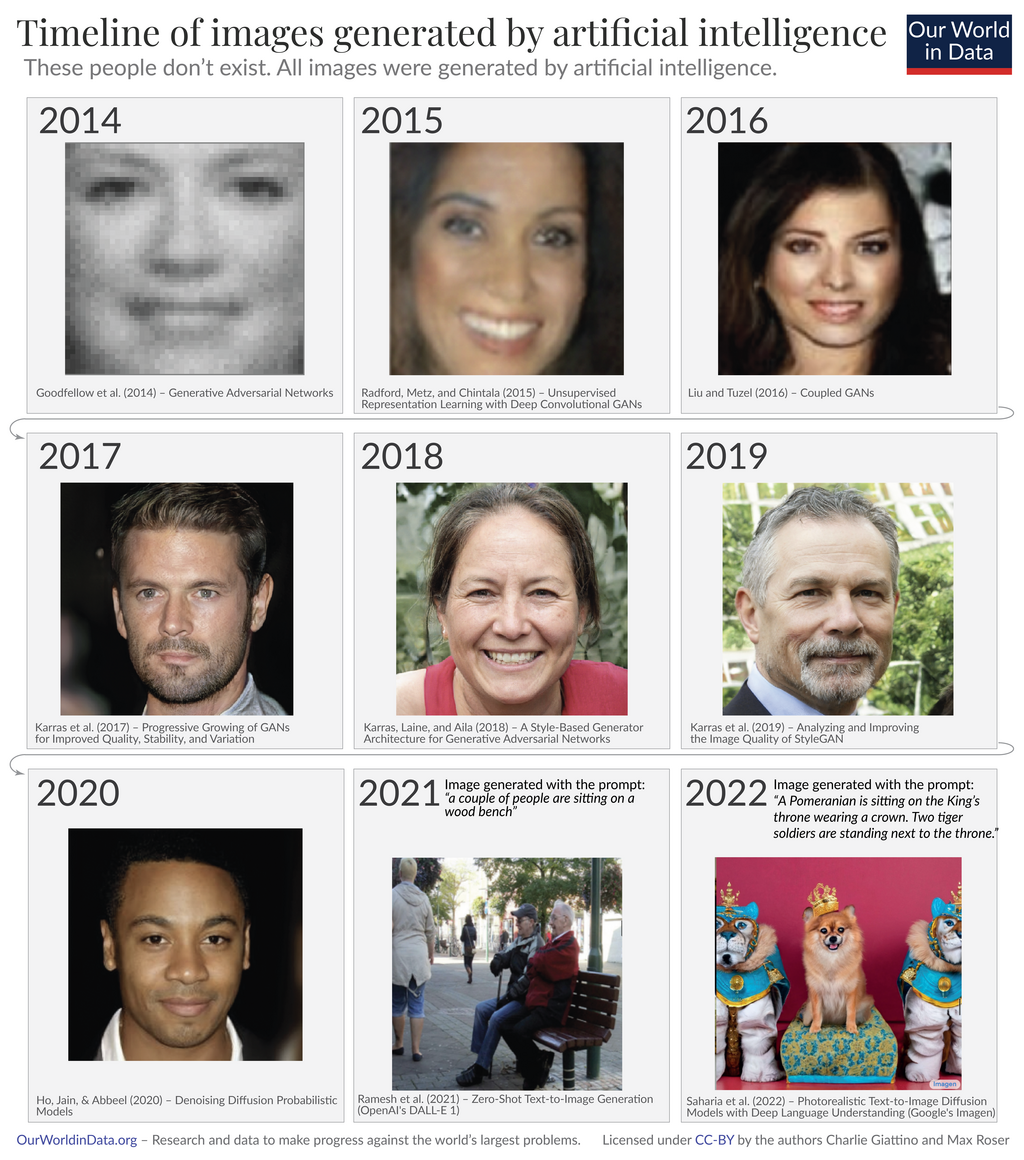
This adversarial loop continues until the generator's outputs are virtually indistinguishable from real data, a state known as convergence. This dynamic makes exceptionally good at tasks like synthesizing photorealistic images, creating deepfakes, and generating artistic styles.
The adversarial training of GANs pushes the boundaries of content generation, while the parallel processing of Transformers redefines how we analyze sequential information.
What is the primary problem in Recurrent Neural Networks (RNNs) that the Transformer architecture addresses by processing all sequence elements simultaneously?
In a Generative Adversarial Network (GAN), what is the main goal of the Generator?