Generative AI Explained
Introduction to Generative AI
What Is Generative AI?
Artificial intelligence is a broad field, but one area has recently captured everyone's attention: generative AI. Unlike other types of AI that analyze or categorize existing information, generative AI is all about creating something entirely new.
Think of it as the difference between a music critic and a composer. A critic analyzes and judges a piece of music, while a composer creates a new one from scratch. Traditional AI is the critic; generative AI is the composer.
It learns patterns, styles, and structures from vast amounts of data—text, images, code, or music—and then uses that knowledge to generate new, original content that resembles the data it was trained on. This ability to create has unlocked new possibilities in everything from art and design to software development and scientific research.
Generative AI
noun
A type of artificial intelligence that can produce various types of content, including text, imagery, audio, and synthetic data.
A Brief History
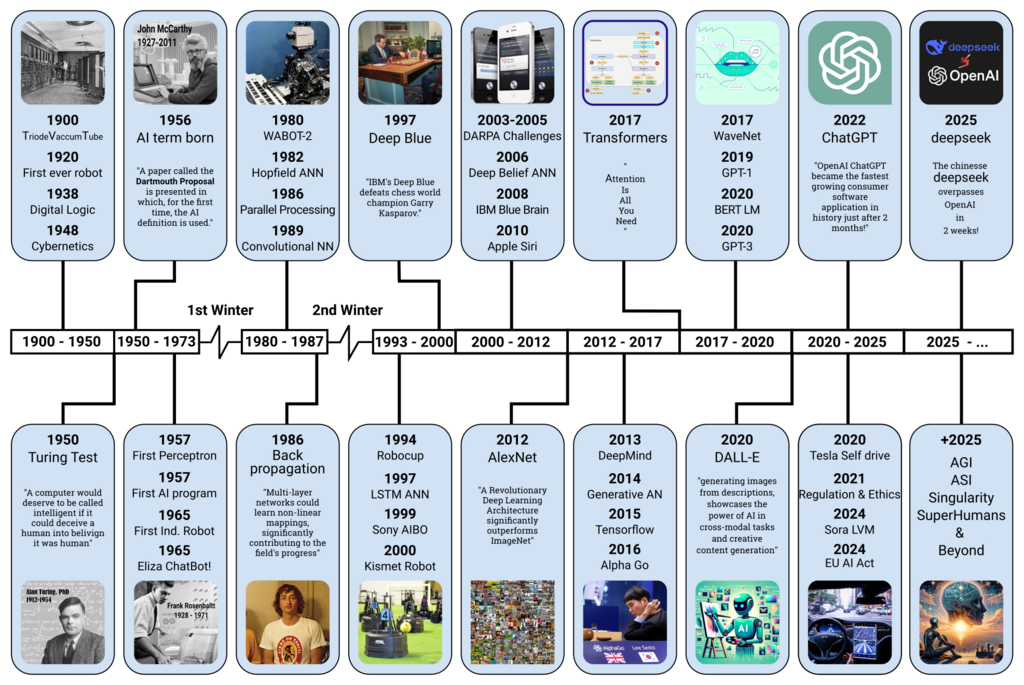
The idea of machines that can create isn't new, but for decades, it was mostly science fiction. Early AI systems were rule-based and lacked the flexibility to generate novel content. The seeds of modern generative AI were planted with the development of neural networks, which mimic the structure of the human brain.
Key breakthroughs in the 2010s, fueled by massive datasets and more powerful computers, allowed these networks to grow incredibly complex. This led to the development of the core models we use today, turning a theoretical concept into a practical and powerful technology.
Creating vs. Classifying
Most AI applications you might have used in the past fall under the umbrella of discriminative AI. These models are trained to make decisions or predictions by finding boundaries in data. They answer questions by sorting information into predefined categories.
Is this email spam or not spam? Does this picture contain a cat or a dog? A discriminative model learns the difference between classes and makes a judgment. Generative AI works differently. Instead of learning the boundary between cats and dogs, it learns what a cat is and what a dog is, so it can create a brand-new image of either.
| AI Paradigm | Primary Goal | Example Question |
|---|---|---|
| Discriminative AI | Classify or predict from input data. | Is this a picture of a cat? |
| Generative AI | Create new data similar to input data. | Can you create a picture of a cat? |
This fundamental difference in approach is what makes generative AI so versatile. It's not just a sorter; it's a source of new material.
The Creator's Toolkit
Generative AI isn't a single technology but a family of different models, each with its own strengths. Here are three of the most influential types you'll encounter.
Generative Adversarial Networks (GANs): Imagine an artist trying to forge a classic painting, and an art critic trying to spot the fake. The artist (the generator) creates images, while the critic (the discriminator) judges them against real ones. They compete, with the artist getting better at creating realistic forgeries and the critic getting better at spotting them. Over time, the artist becomes so skilled that its creations are indistinguishable from the real thing. GANs are excellent for creating realistic images.
Variational Autoencoders (VAEs): Think of a VAE as a skilled artist who first learns to sketch the essence of a subject before drawing the final portrait. It takes complex data (like a detailed photo), compresses it into a simple, abstract representation (the sketch), and then reconstructs the original from that representation. By learning to capture the essential features this way, it can then generate new, varied outputs by starting from slightly different sketches.
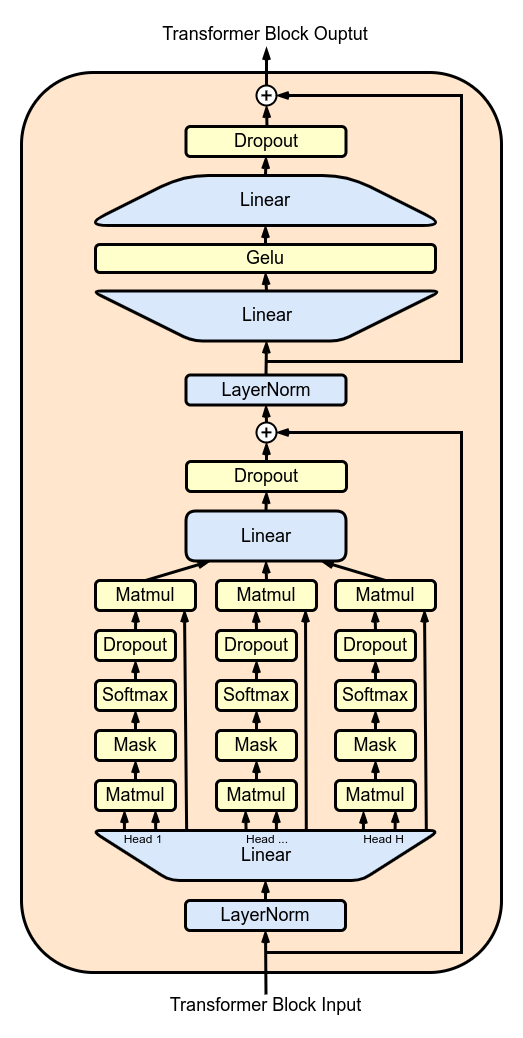
Transformer-based Models: These are the engines behind modern language models like ChatGPT. Transformers are exceptionally good at understanding context and sequences. They process entire sequences of data (like a sentence) at once, paying special attention to how different parts relate to each other. This allows them to grasp grammar, style, and facts, making them perfect for generating coherent and contextually relevant text, code, and more.
How a Model Is Built
Creating a generative AI model follows a general workflow, whether it's for generating text or images.
First is data collection. A model is only as good as the data it's trained on. This stage involves gathering a massive, high-quality dataset. For a language model, this could be billions of words from books and websites. For an image model, it could be millions of pictures with descriptions.
Next comes model training. This is where the magic happens. The model processes the data over and over, adjusting its internal parameters to better understand the patterns and relationships within the data. This process is computationally intensive and can take days or even weeks on powerful hardware.
Finally, there's evaluation and refinement. Once trained, the model is tested to see how well it generates new content. Engineers evaluate its coherence, accuracy, and creativity. Based on the results, they might fine-tune the model or even go back and adjust the training data to improve performance.
Now that you have a foundational understanding of what generative AI is and how it works, you're ready to explore its specific applications.
What is the primary function of a generative AI model?
Which of the following tasks is best suited for a discriminative AI model, rather than a generative one?