Generative AI Explained
Introduction to Generative AI
What is Generative AI?
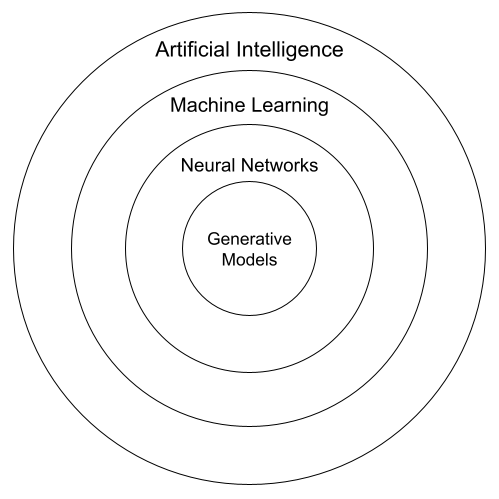
Artificial intelligence comes in many forms. Some AI is designed to analyze data and make predictions, like identifying spam in your email. This type is often called discriminative AI. It learns to distinguish between different categories of things.
Generative AI is different. Instead of just classifying information, it creates something entirely new. It learns patterns from a vast amount of data—text, images, sounds, or code—and then uses those patterns to generate original content. Think of it like a musician who listens to thousands of hours of jazz. Eventually, they don't just recognize jazz; they can improvise a new solo that sounds completely authentic.
Unlike traditional “discriminative” AI models, which can only answer questions or classify inputs (e.g., “Is this spam?”), generative models can produce new, coherent, and contextually relevant outputs, often indistinguishable from human-created content.
This ability to create is what makes generative AI so powerful. It's not just recognizing what already exists; it's adding to it. This opens up possibilities for everything from writing assistance and art creation to scientific discovery.
How Does It Work?
The core principle behind generative AI is learning a probability distribution from a dataset. That sounds complex, but the idea is simple. The model analyzes its training data to understand how likely it is that certain elements appear together. For text, it learns which words typically follow other words. For images, it learns the common arrangements of pixels that form objects like faces or landscapes.
Once it understands these underlying patterns, it can generate new samples. It essentially makes a series of predictions, starting with a seed of an idea (often called a prompt). For example, to generate an image of a cat, it doesn't pull a picture of a cat from its memory. Instead, it builds a new image, pixel by pixel, based on its learned understanding of what constitutes a 'cat'.
This process relies on complex mathematical models, but the fundamental idea is consistent: learn the structure of existing data so well that you can create new data that fits the same structure.
A Quick Look Back
The idea of machines creating content isn't new. Early chatbots in the 1960s, like ELIZA, could mimic human conversation using simple pattern matching. However, their abilities were very limited. For decades, generative models were mostly theoretical or could only produce simple, often blurry or nonsensical results.
The game changed in the 2010s with two key developments: the availability of massive datasets and significant advancements in computing power. This allowed for the development of deep learning models with billions of parameters. A major breakthrough was the invention of the transformer architecture in 2017, which proved exceptionally good at understanding the context and relationships in sequential data like text. This innovation paved the way for the powerful large language models (LLMs) and image generators we see today.
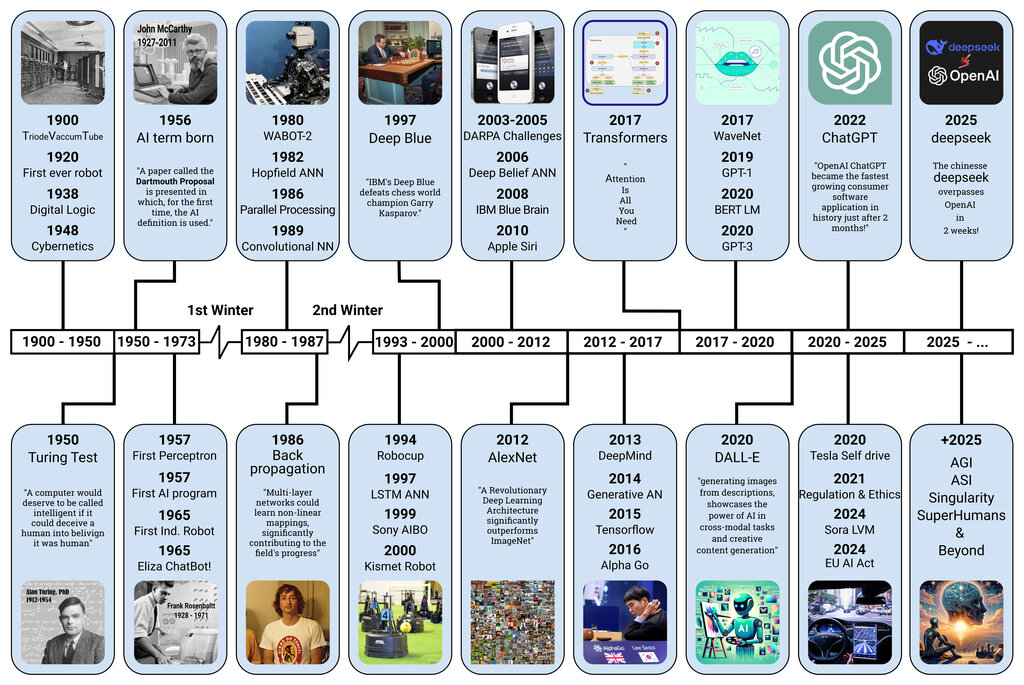
With these advancements, generative AI has moved from a niche area of research to a mainstream technology with broad significance. It's a field that is still evolving rapidly, building on decades of work in computer science, linguistics, and statistics.
What is the primary function of discriminative AI?
An AI system that composes a new piece of jazz music after analyzing thousands of songs is an example of generative AI.
This introduction covers the basic identity and principles of generative AI. It's a tool for creation, built on the idea of learning patterns from data to produce something new.