Generative AI Engineering with Existing Models and APIs
Introduction to Generative AI
What is Generative AI?
Most artificial intelligence you might have encountered before is good at analyzing existing information. It can recognize a cat in a photo, translate French to English, or predict if a stock price will go up. This type of AI is called discriminative AI—it discriminates between different kinds of data.
Generative AI is different. Instead of just analyzing data, it creates something entirely new. It learns patterns, styles, and structures from the data it's trained on, and then uses that knowledge to generate original content. Think of it like a musician who listens to thousands of jazz songs. They don't just learn to identify a jazz song; they learn the rules, rhythms, and soul of jazz so they can improvise a brand new solo.
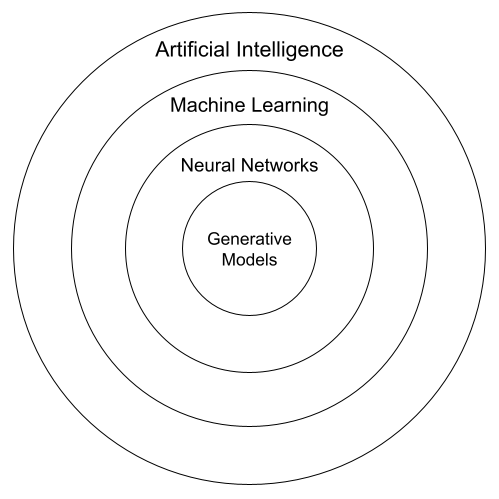
This ability to create makes Generative AI incredibly powerful. It's not just a tool for analysis, but a partner in creation. It can write emails, design images, compose music, and even produce code. This has massive implications for almost every industry, changing how we work, solve problems, and express ourselves.
The Creative Engines
Generative AI isn't a single technology; it's a category of different models, each with its own approach to creation. Think of them as different types of artists. A painter, a sculptor, and a musician all create art, but their methods and tools are completely different. Let's look at a few of the most important types.
Generative Adversarial Networks (GANs): The Artist and the Critic
One of the most clever ideas in AI is the Generative Adversarial Network, or GAN. A GAN works by pitting two neural networks against each other in a constant competition.
- The Generator: This network is the artist. Its job is to create fake data, like a realistic-looking image of a person who doesn't exist.
- The Discriminator: This network is the art critic. Its job is to look at an image and determine if it's a real one from the training data or a fake one made by the Generator.
At first, the Generator is terrible, and the Discriminator easily spots the fakes. But every time the Discriminator wins, the Generator learns from its mistakes and gets better. And as the Generator improves, the Discriminator must get smarter to keep up. This back-and-forth continues until the Generator becomes so skilled that its creations are nearly indistinguishable from reality.

Variational Autoencoders (VAEs): The Essence Distiller
A Variational Autoencoder, or VAE, takes a different approach. Instead of a competition, it's more like a student learning to summarize a complex book. A VAE has two main parts:
- The Encoder: This part takes a piece of data, like an image, and compresses it down into its most essential features. It's not just making the file smaller; it's learning the fundamental concepts that make up the image (e.g., "round eyes," "furry texture," "pointed ears"). This compressed summary is called the latent space.
- The Decoder: This part then takes the compressed summary from the latent space and tries to reconstruct the original image from only that essential information.
By learning to compress and then decompress data, a VAE gets very good at understanding the core properties of that data. Once trained, you can give the decoder a new combination of features from the latent space, and it can generate a completely new image that still follows the rules it learned.
Transformers: The Context Masters
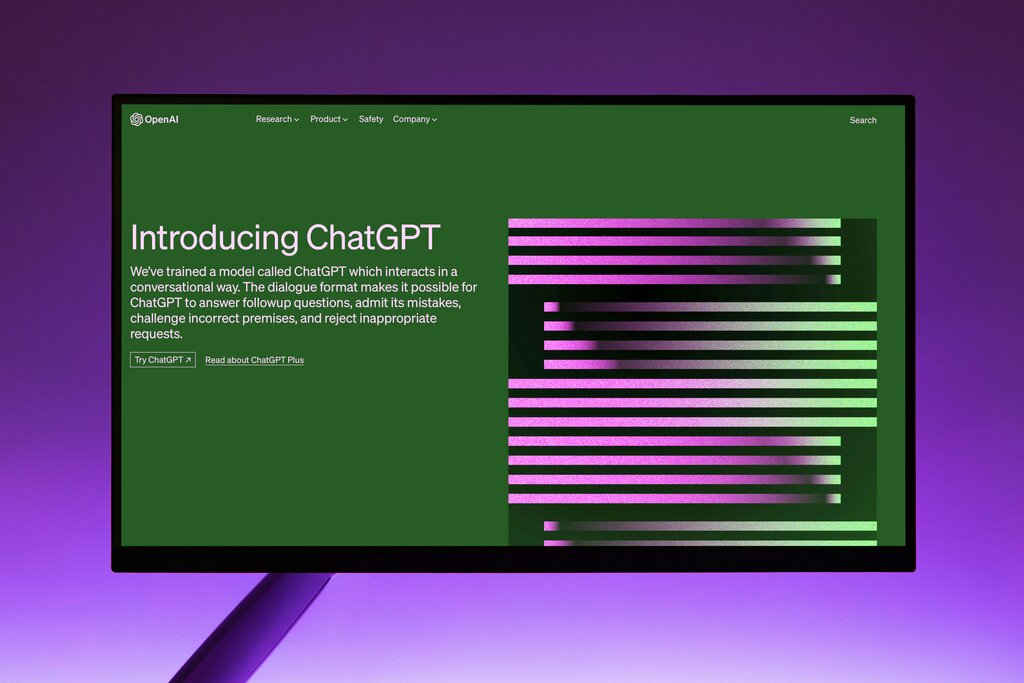
Transformers are the architecture behind large language models (LLMs) like ChatGPT. Their superpower is understanding context. When we read a sentence, the meaning of a word often depends on the words around it. For example, the word "bank" means something different in "river bank" versus "money bank."
Before transformers, AI models struggled with these long-range dependencies. A transformer, however, uses a mechanism called "attention" to weigh the importance of all other words in the input when processing any single word. This allows it to keep track of context over long paragraphs or even entire documents.
This deep understanding of context is what allows transformer models to generate coherent, relevant, and human-sounding text, translate languages accurately, and answer complex questions.
Real-World Applications
The theoretical models are interesting, but the real magic of generative AI is what it can do. It's already being used in countless ways:
- Content Creation: Writing marketing copy, generating blog posts, creating scripts for videos, and even composing music.
- Art and Design: Producing stunning digital art, logos, and product designs from simple text descriptions.
- Software Development: Writing code snippets, debugging existing code, and explaining complex algorithms.
- Science and Medicine: Designing new molecules for drugs, simulating complex physical systems, and generating synthetic medical data for research without compromising patient privacy.
- Personalized Education: Creating customized learning materials, practice problems, and explanations tailored to a student's individual learning style.
This is just the beginning. As these models become more powerful and accessible, they are set to become a fundamental part of our technological landscape.
What is the primary function that distinguishes generative AI from discriminative AI?
In a Generative Adversarial Network (GAN), what are the respective roles of the Generator and the Discriminator?