Generative AI and Prompt Engineering Essentials
Introduction to Large Language Models
What Are Large Language Models?
Large Language Models, or LLMs, are a type of artificial intelligence designed to understand and generate human-like text. They learn by analyzing enormous amounts of text data from books, websites, and articles. By processing this information, they learn the patterns, grammar, context, and nuances of language.
At its core, an LLM works by predicting the next word in a sequence. Given the text "The cat sat on the...", the model calculates the most probable word to come next, which is likely "mat".
This simple predictive ability, when performed on a massive scale with a complex model, allows LLMs to do much more than just complete sentences. They can write essays, answer questions, summarize long documents, translate languages, and even write computer code. They build a sophisticated internal representation of language that enables these complex tasks.
The Transformer Breakthrough
For years, language models struggled with understanding long-term context. Early models could only look at a few preceding words, and later models called Recurrent Neural Networks (RNNs) could remember more but still had trouble connecting ideas across long paragraphs.
A breakthrough came in 2017 with a new architecture called the Transformer. Instead of processing words one by one in sequence, the Transformer can look at every word in a sentence at the same time. It uses a mechanism called attention to weigh the importance of different words when interpreting any single word.
Think about the sentence: "The robot picked up the heavy metal ball because it was strong." What does "it" refer to? The robot. The attention mechanism helps the model make this connection by linking "it" back to "robot," giving it a higher importance or "attention score."
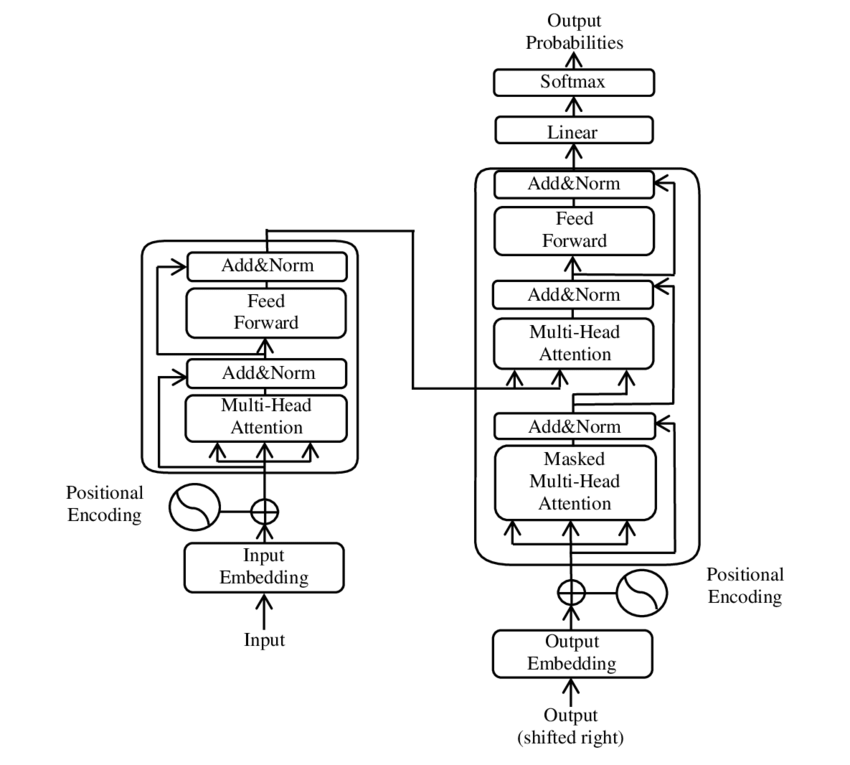
This ability to handle long-range dependencies and process text in parallel made it possible to train much larger and more powerful models than ever before, paving the way for today's LLMs.
How LLMs Are Trained
Training an LLM is a massive undertaking that involves two main stages: pre-training and fine-tuning.
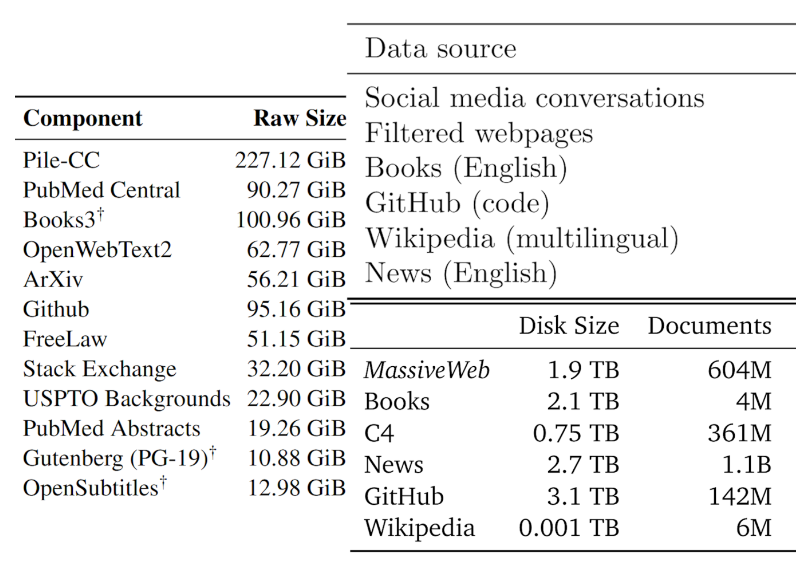
Pre-training: This is where the model learns general language patterns. It's fed a vast dataset of text from the internet and digital books, often trillions of words. During this phase, the model is given a self-supervised task. A common one is to predict a missing word in a sentence, also known as masked language modeling. For example, it might see "The quick brown ___ jumps over the lazy dog" and has to predict "fox".
By doing this billions of times, the model develops a deep understanding of grammar, facts about the world, and even reasoning abilities. This process is computationally expensive, requiring thousands of specialized processors running for weeks or months.
Fine-tuning: After pre-training, the general model can be adapted for specific tasks, like customer service chatbots or medical question-answering. This involves training it further on a smaller, high-quality dataset tailored to that task. For conversational models, this often includes a technique called Reinforcement Learning from Human Feedback (RLHF), where human reviewers rate the model's responses to help it learn what makes a good and helpful answer.
Real-World Applications
LLMs are no longer just a research concept; they are integrated into tools we use every day and are transforming industries.
| Industry | Application | Example |
|---|---|---|
| Technology | Code generation and assistance | A developer asks an LLM to write a Python function to sort a list. |
| Healthcare | Summarizing patient records and medical literature | A doctor uses an LLM to get a quick summary of a new research paper. |
| Education | Personalized tutoring and content creation | An LLM creates practice questions for a student studying history. |
| Media | Content generation and summarization | A journalist uses an LLM to draft an article based on bullet points. |
| Customer Service | Automated chatbots and support agents | A customer interacts with an LLM-powered bot to track a package. |
From powering search engines to enabling more natural human-computer interaction, the applications of LLMs continue to expand, making them one of the most significant technological advancements in recent years.
What is the primary function of a Large Language Model (LLM)?
What key architectural innovation, introduced in 2017, was a major breakthrough for language models by allowing them to weigh the importance of different words in a sentence simultaneously?
These models represent a major step forward in our ability to interact with information and technology in a more natural, human way.