Generative AI Agents Explained
Introduction to Generative AI
What is Generative AI?
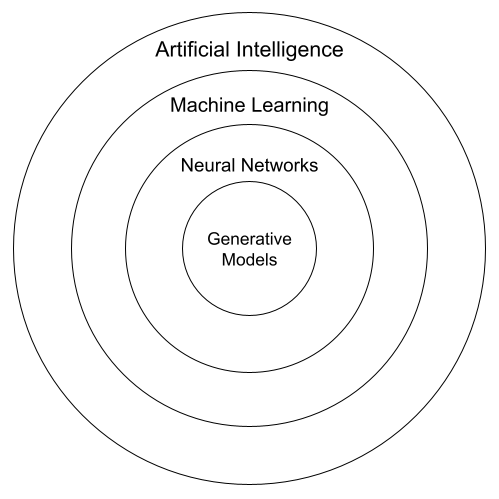
Artificial intelligence is a broad field, but most AI you encounter is designed to recognize, classify, or predict things based on existing data. For example, an AI might look at a photo and identify a cat, or analyze sales data to forecast next quarter's revenue. This is often called discriminative AI because its job is to discriminate between different types of input.
Generative AI is different. Instead of just analyzing data, it creates something entirely new. It learns the underlying patterns and structures from a vast amount of content—like text, images, or music—and then uses that knowledge to generate fresh, original outputs that are similar to what it was trained on.
Think of it as the difference between an art critic and an artist. One judges existing work, while the other creates new work.
Two Key Approaches
While there are many types of generative models, two foundational concepts paved the way for many of the tools we see today: Generative Adversarial Networks (GANs) and Variational Autoencoders (VAEs). You don't need to be an expert in how they work, but understanding the core ideas is helpful.
GAN
noun
A type of generative model that uses two competing neural networks—a generator and a discriminator—to create new data.
A GAN works like a contest between an art forger and a detective. The forger (the generator) tries to create a fake painting, while the detective (the discriminator) tries to tell if it's fake or real. At first, the forger is terrible and the detective easily spots the fakes. But with each round of feedback, the forger gets better, forcing the detective to improve as well. This adversarial process continues until the generator becomes so good at creating fakes that the discriminator can no longer tell the difference. The result is a highly realistic, newly generated piece of content.
VAE
noun
A generative model that learns to encode data into a compressed, simplified representation and then decode it back to its original form.
Variational Autoencoders take a different approach. A VAE learns to take a piece of data, like an image of a face, and compress it into a much smaller set of core characteristics—a simplified representation. It then learns to reconstruct the original face from this compressed data. Once it's trained, you can tweak the values in that compressed representation to generate a brand new face that has similar characteristics but is completely unique.
| Feature | Generative Adversarial Network (GAN) | Variational Autoencoder (VAE) |
|---|---|---|
| Core Idea | Two networks (generator, discriminator) compete and improve each other. | A single network learns to compress and decompress data. |
| Output Quality | Often produces sharper, more realistic images. | Can sometimes produce blurrier or smoother results. |
| Analogy | An art forger vs. a detective. | A sketch artist who can create variations of a face. |
Where is Generative AI Used?
Generative AI is not just a research concept; it's already powering applications across many industries. Its ability to create content opens up new possibilities for creativity, efficiency, and problem-solving.
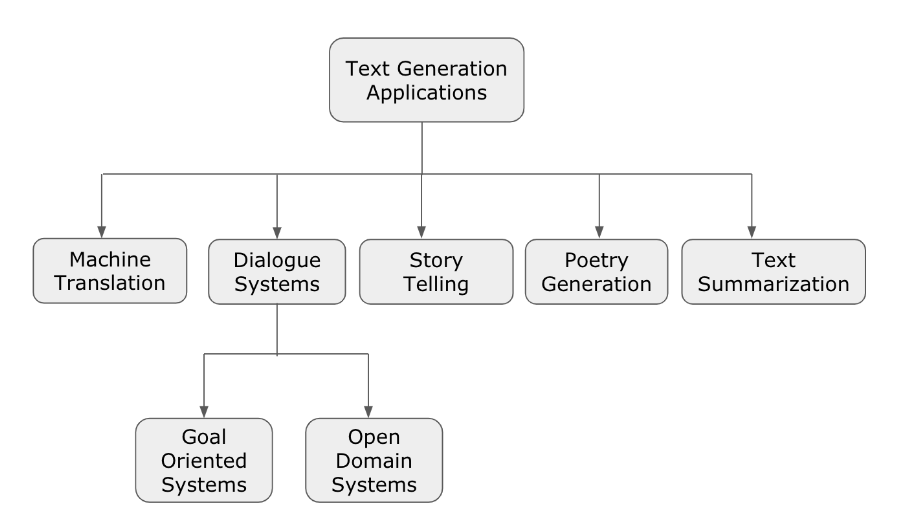
Some common applications include:
- Content Creation: Writing emails, articles, and marketing copy, or generating scripts and stories.
- Art and Design: Creating unique images, illustrations, and logos from text descriptions.
- Software Development: Assisting programmers by writing code snippets, suggesting bug fixes, and even creating entire functions.
- Entertainment: Generating realistic characters and environments for video games and movies, or composing original music.
- Science and Medicine: Designing new drug molecules, creating synthetic medical data to train other AIs without compromising patient privacy, and enhancing medical scans.
These models are powerful tools for extending human creativity and automating complex creative tasks. By learning the essence of what makes something—a picture, a song, a sentence—what it is, they give us a new way to build and explore.
What is the primary function of discriminative AI?
The two competing components of a Generative Adversarial Network (GAN) are known as the generator and the ___.