Generating Quizzes
Understanding Quiz Fundamentals
What's a Quiz, Really?
At its heart, a quiz is a simple tool for checking knowledge. It's a set of questions designed to measure what someone knows about a specific topic. But quizzes are more than just tests. They're a powerful way to make learning stick, find out what you know well, and pinpoint what you still need to work on.
Quiz
noun
A form of game or mind sport in which participants attempt to answer questions correctly on one or several specific topics.
Think of a quiz as a conversation. It asks, "Do you understand this?" and gives you a chance to reply. This back-and-forth helps solidify information in your memory. Whether you're in a classroom or a company training session, quizzes provide quick feedback, showing both the learner and the instructor where the gaps are. They turn passive learning into an active challenge.
The main goal isn't just to get a grade, but to reinforce knowledge and boost long-term retention.
Common Quiz Flavors
Quiz questions come in several common formats, each with its own strengths. The type of question you use depends on what you want to measure.
The most common types are multiple-choice, true/false, and short answer. Each serves a different purpose, from testing recognition to encouraging recall.
| Question Type | Description | Best For |
|---|---|---|
| Multiple-Choice | Presents a question (stem) with several possible answers (options). | Checking understanding of facts and concepts. |
| True/False | A statement that the learner must identify as either correct or incorrect. | Quick knowledge checks on straightforward facts. |
| Short Answer | Requires the learner to type a brief response to an open-ended question. | Testing recall of specific information, like names or dates. |
The Building Blocks of a Quiz
Every quiz, no matter how simple or complex, is built from the same fundamental parts: questions, answers, and a scoring system. Getting these three components right is the key to creating an effective quiz.
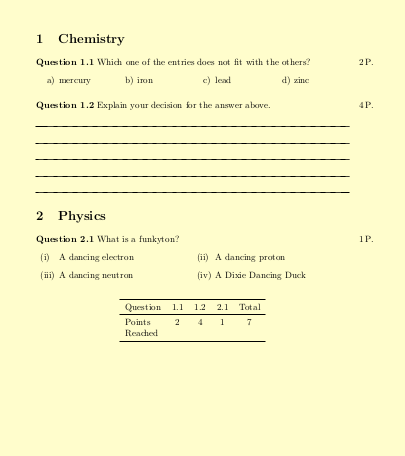
Questions are the core. A good question is clear, unambiguous, and directly related to a learning goal. It should test what a person is supposed to have learned.
Answers provide the correct information. For multiple-choice questions, the incorrect options are called "distractors." Good distractors are plausible but wrong, forcing the learner to think critically instead of just guessing.
Scoring is the method used to measure performance. This could be a simple count of correct answers, a percentage, or a pass/fail designation. The scoring system provides immediate feedback on how well the material has been mastered.
Quizzes are a great way to test the learner’s existing knowledge, and then use it to construct a more personalized microlearning module that fills the gaps in their knowledge and skills.
Beyond the classroom, quizzes are used in professional settings for everything from employee onboarding to compliance training. They help ensure everyone is on the same page and can quickly identify areas where a team might need more support or instruction. This makes them a versatile and valuable tool for any learning environment.
Ready to check your understanding? Let's see what you've learned about the basics of quizzes.
What is the primary purpose of a quiz in a learning environment?
Which of the following are the three fundamental components of any quiz?
Now you know the fundamental purpose, types, and components of a quiz. It's a flexible tool for checking understanding and reinforcing what you've learned.