General Class Ham Radio License
Regulations and Band Privileges
The Rules of the Airwaves
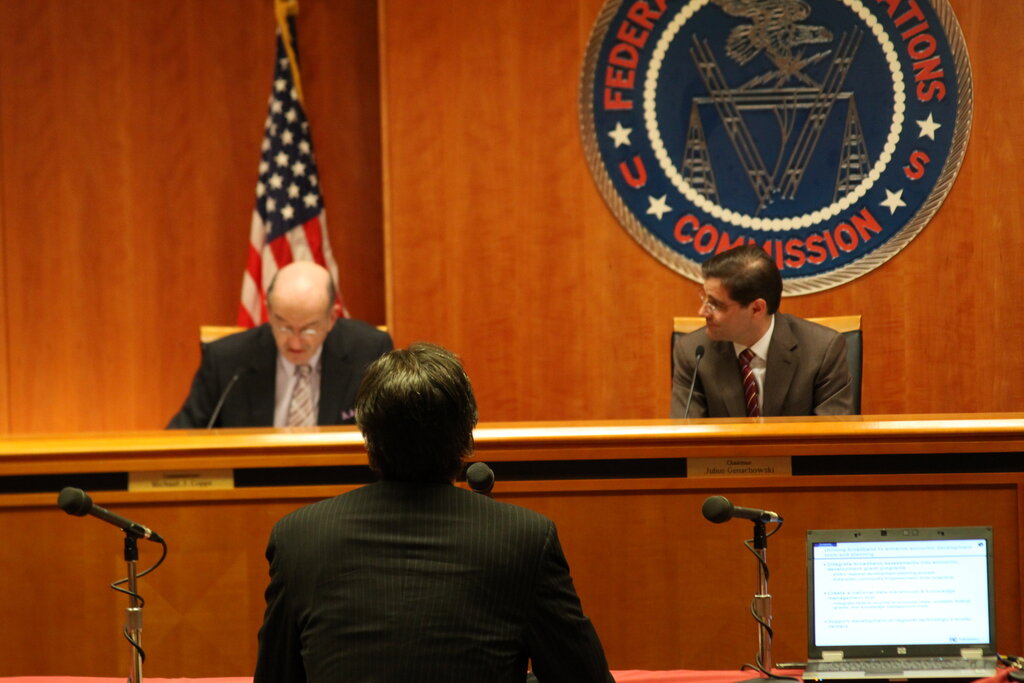
Passing your exam and getting a license means you've agreed to follow the rules. In the United States, amateur radio is governed by the Federal Communications Commission (FCC). The specific regulations for ham radio operators are laid out in a document called Part 97 of the FCC's rules. Think of it as the official handbook for every operator.
Upgrading to a General license--which conveys extensive HF privileges—only requires passing a written examination.
You don't need to memorize every single word of Part 97, but you are responsible for knowing and following the key rules. As the control operator of your station, the legal responsibility for every transmission falls on you. This includes what you say, who you talk to, and how your station is operating.
Key Responsibilities
Two of the most important rules involve identifying your station and knowing what you can (and can't) talk about.
Station Identification: You must identify your station with your FCC-assigned call sign at the end of each communication and at least every 10 minutes during a conversation. This lets everyone listening know who is transmitting. You can use voice, Morse code (CW), or other authorized modes to do this.
Permissible Communications: Amateur radio is for personal, non-commercial communication. You're not allowed to conduct business, broadcast music, or transmit secret codes intended to obscure the meaning of a message. The spirit of the rules is to encourage technical experimentation and international goodwill. You can talk about your gear, the weather, your hobbies, or just about anything else, as long as it's not for business or financial gain.
Remember: The control operator is always responsible for the station's transmissions.
Your New Bands
The biggest reward for upgrading to a General Class license is a huge expansion of your operating privileges, especially on the High Frequency (HF) bands. These are the frequencies that allow for reliable, long-distance communication across the country and around the world. As a General, you gain access to portions of the 160, 80, 60, 40, 30, 20, 17, 15, 12, and 10-meter bands.
This table breaks down your new frequency privileges. Within these ranges, you can operate using various modes, including voice (like Single Sideband or SSB), data (like FT8), and Morse code (CW).
| Band (meters) | Frequency Range (MHz) | Allowed Modes |
|---|---|---|
| 160m | 1.800 - 2.000 | CW, RTTY, data, phone |
| 80m | 3.525 - 3.600 & 3.800 - 4.000 | CW, RTTY, data, phone |
| 60m | 5 specific channels | CW, phone, data (check band plan) |
| 40m | 7.025 - 7.125 & 7.175 - 7.300 | CW, RTTY, data, phone |
| 30m | 10.100 - 10.150 | CW, RTTY, data |
| 20m | 14.025 - 14.150 & 14.225 - 14.350 | CW, RTTY, data, phone |
| 17m | 18.068 - 18.168 | CW, RTTY, data, phone |
| 15m | 21.025 - 21.200 & 21.275 - 21.450 | CW, RTTY, data, phone |
| 12m | 24.890 - 24.990 | CW, RTTY, data, phone |
| 10m | 28.000 - 28.300 & 28.300 - 29.700 | CW, RTTY, data, phone |
These new privileges open up a world of possibilities. You can participate in international contests, chat with operators on other continents, and experiment with communication techniques that simply aren't possible on the VHF and UHF bands you had as a Technician.
Ready to check your knowledge on the rules of the road?
What is the official name for the set of FCC regulations that govern the amateur radio service in the United States?
According to FCC rules for station identification, you must transmit your call sign at the end of each communication and at what other interval?
Understanding these rules and privileges is the foundation of being a good operator. It ensures the airwaves remain a valuable and enjoyable resource for everyone.