General Chemistry Fundamentals
Atomic Structure
The Building Blocks of Everything
At the heart of all matter, from the air you breathe to the screen you're reading this on, are atoms. For a long time, people thought atoms were the smallest possible things, indivisible little spheres. The word atom even comes from the Greek atomos, which means "uncuttable." But we now know they're made of even smaller, or subatomic, particles.
Packed into the center of every atom is a dense core called the nucleus. This is where you'll find two types of particles clinging together.
Proton
noun
A subatomic particle with a positive (+) electrical charge.
Neutron
noun
A subatomic particle with no electrical charge (it's neutral).
Whizzing around the nucleus at incredible speeds are the third type of particle.
Electron
noun
A subatomic particle with a negative (-) electrical charge.
The number of protons defines an element. An atom with one proton is always hydrogen. An atom with six protons is always carbon. The positive charge of the protons holds the negatively charged electrons in place, creating a stable, neutral atom.
Where Electrons Live
Early models of the atom, like the Bohr model, pictured electrons orbiting the nucleus like planets around the sun. This was a helpful starting point. It imagined electrons in fixed paths, or shells, at different energy levels. Electrons in shells farther from the nucleus have more energy than those closer in.
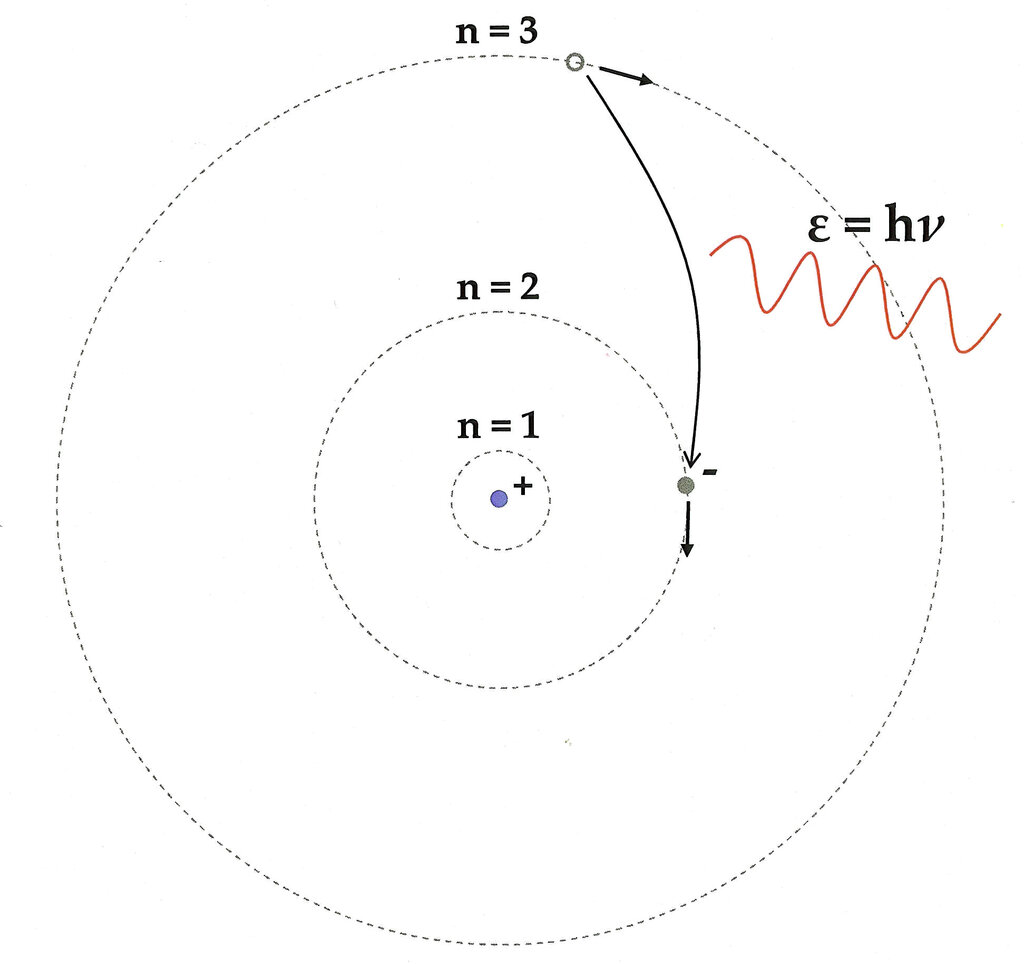
But the reality is much stranger. Thanks to quantum mechanics, we now know that electrons don't follow neat, predictable paths. Instead, they exist in fuzzy regions of probability called orbitals.
Think of a fast-spinning fan blade. You can't see the exact position of any single blade at any moment, but you see a blur where the blades are likely to be. An orbital is like that blur: a three-dimensional map of where an electron is most likely to be found.
An orbital doesn't show the path of an electron. It shows the space where the electron will be about 90% of the time.
These orbitals come in different shapes and sizes, depending on their energy level. The simplest is the s orbital, which is a sphere. Then there are p orbitals, which look like dumbbells, and even more complex shapes for d and f orbitals.
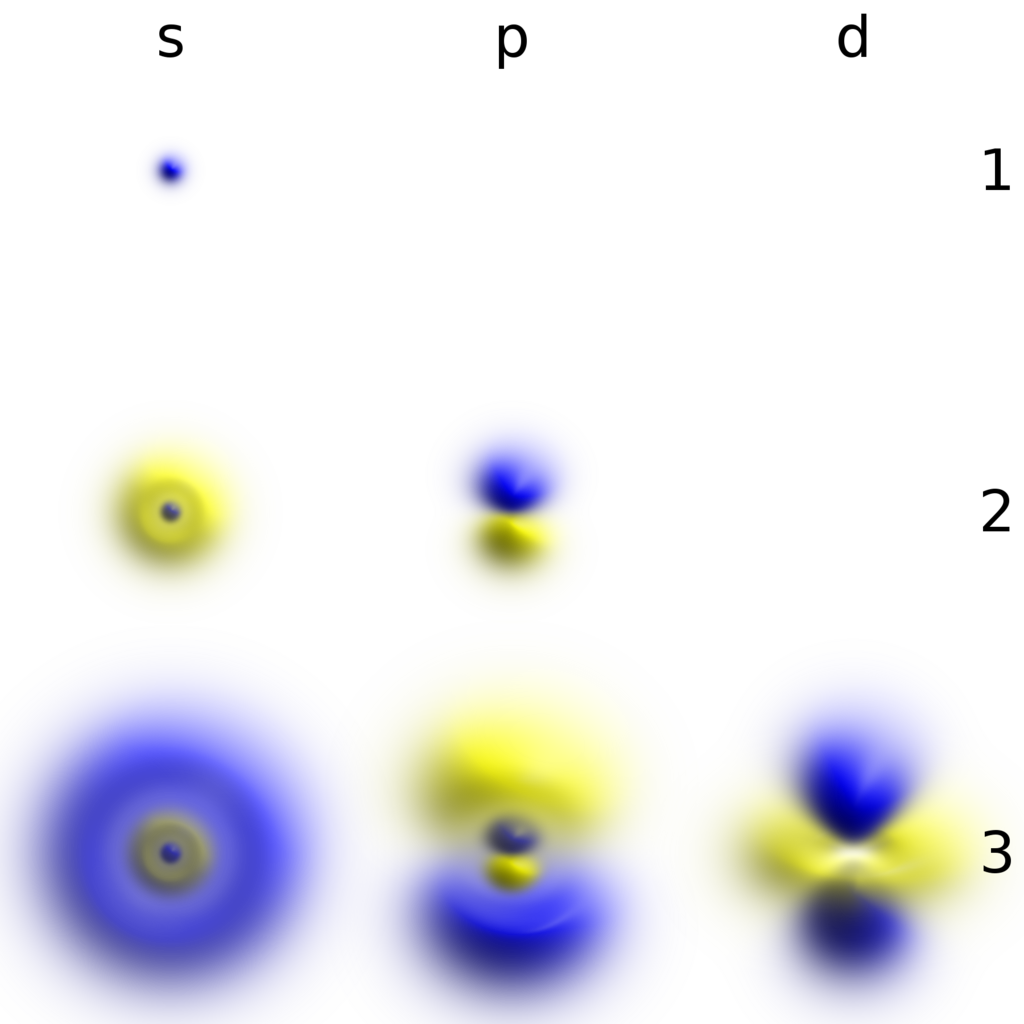
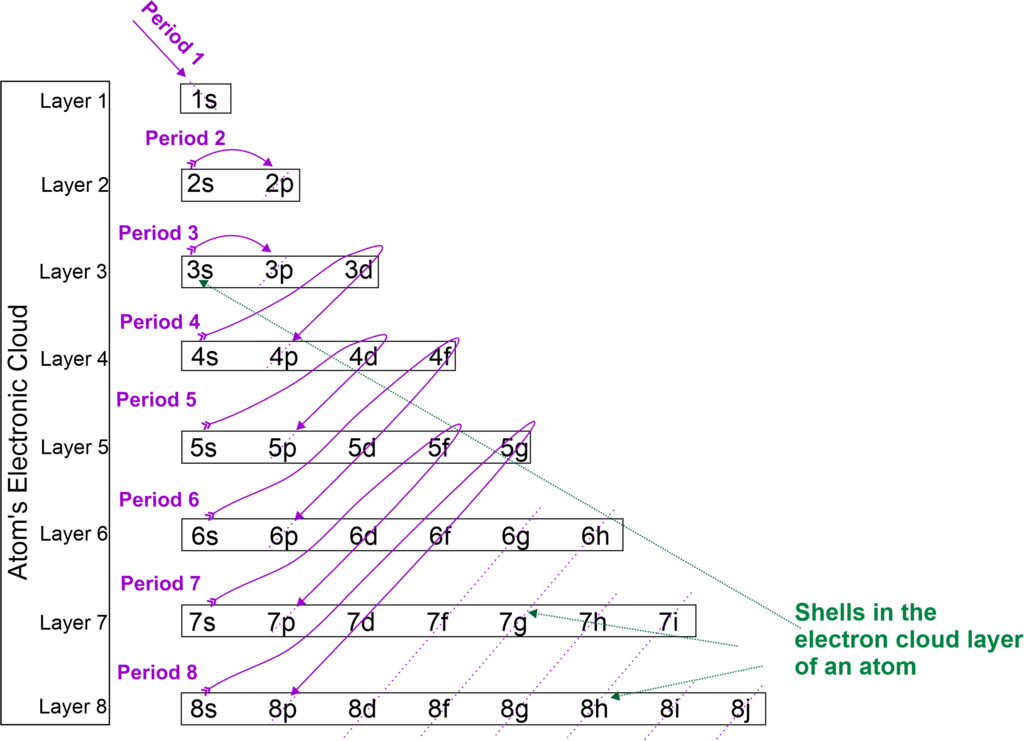
Each orbital can hold a maximum of two electrons. The way these orbitals are filled follows a specific set of rules, creating a unique electron configuration for every element. This configuration is like an address, telling us exactly how an atom's electrons are arranged by energy level and orbital type.
Organizing the Elements
This brings us to one of the most powerful tools in science: the periodic table. It's not just a random chart of elements; it's a map of their atomic structure. Elements are arranged in order of their atomic number (the number of protons).
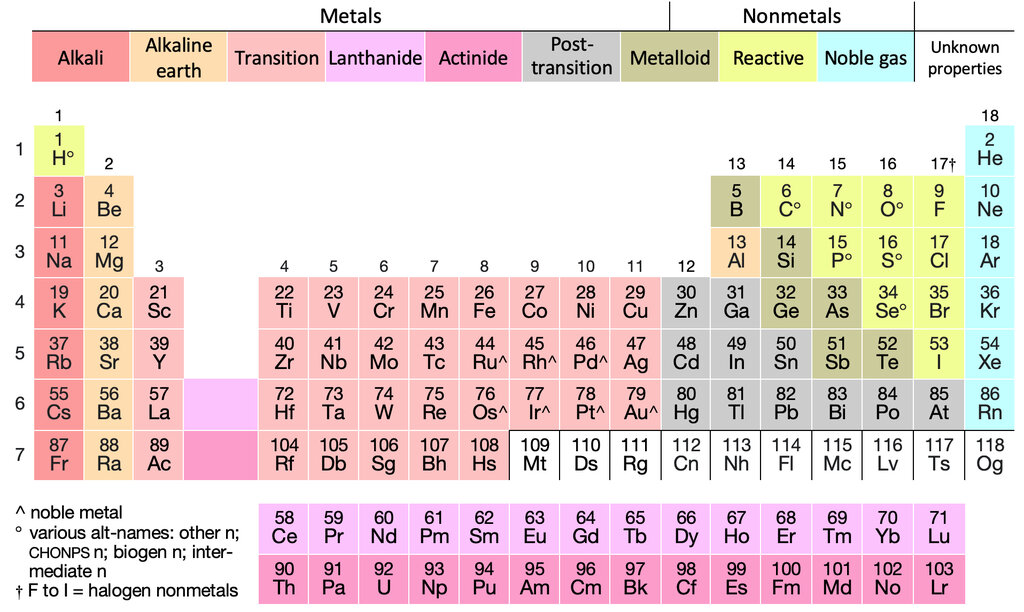
The table's structure reflects how electrons fill their orbitals. As you move from left to right across a row (or period), you're adding one proton and one electron at a time, filling up orbitals in a predictable pattern.
Here’s how the electron configuration notation works. For oxygen, which has 8 electrons, the configuration is:
This means:
- In the first energy level (), the s orbital has 2 electrons.
- In the second energy level (), the s orbital has 2 electrons.
- In the second energy level (), the p orbitals have a total of 4 electrons.
This pattern of filling orbitals is what gives the periodic table its shape and power.
The columns of the table are called groups. Elements in the same group have similar chemical properties. Why? Because they have the same number of electrons in their outermost shell, known as valence electrons. These are the electrons involved in chemical reactions.
For example, lithium (Li), sodium (Na), and potassium (K) are all in Group 1. They each have just one valence electron. This makes them highly reactive in very similar ways. This recurring pattern of properties is called periodicity.
What subatomic particle defines an element?
In the modern quantum mechanical model of the atom, an electron's location is best described as a fuzzy, three-dimensional region of probability called an orbital.
Understanding the atom's structure, from its basic particles to the complex arrangement of its electrons, is the first step toward understanding chemistry and the world around us.