Gemstone Classification and Identification
Gemstone Classification
Species and Varieties
Gemstones, like living things, are organized into a classification system. This helps us make sense of the vast and dazzling array of gems found in nature. The two most important categories are species and variety.
Species
noun
A group of gemstones that share the same chemical composition and crystal structure.
Think of a species as the fundamental identity of a gemstone. All members of a species are made of the same essential chemical ingredients and have their atoms arranged in the same internal pattern. This underlying structure is what makes them, chemically and physically, the same type of mineral.
The mineral corundum is a perfect example. Every type of corundum is aluminum oxide () and has a trigonal crystal structure. Whether it's a fiery red ruby or a deep blue sapphire, its core identity is corundum.
So, if rubies and sapphires are both corundum, what makes them different? That's where varieties come in.
Variety
noun
A sub-category of a gemstone species, distinguished by its color, transparency, or other optical phenomena.
Varieties are created by tiny amounts of other elements, called trace elements, that get mixed into the crystal as it forms. Pure corundum is actually colorless. It’s these trace element impurities that give gemstones their beautiful colors.
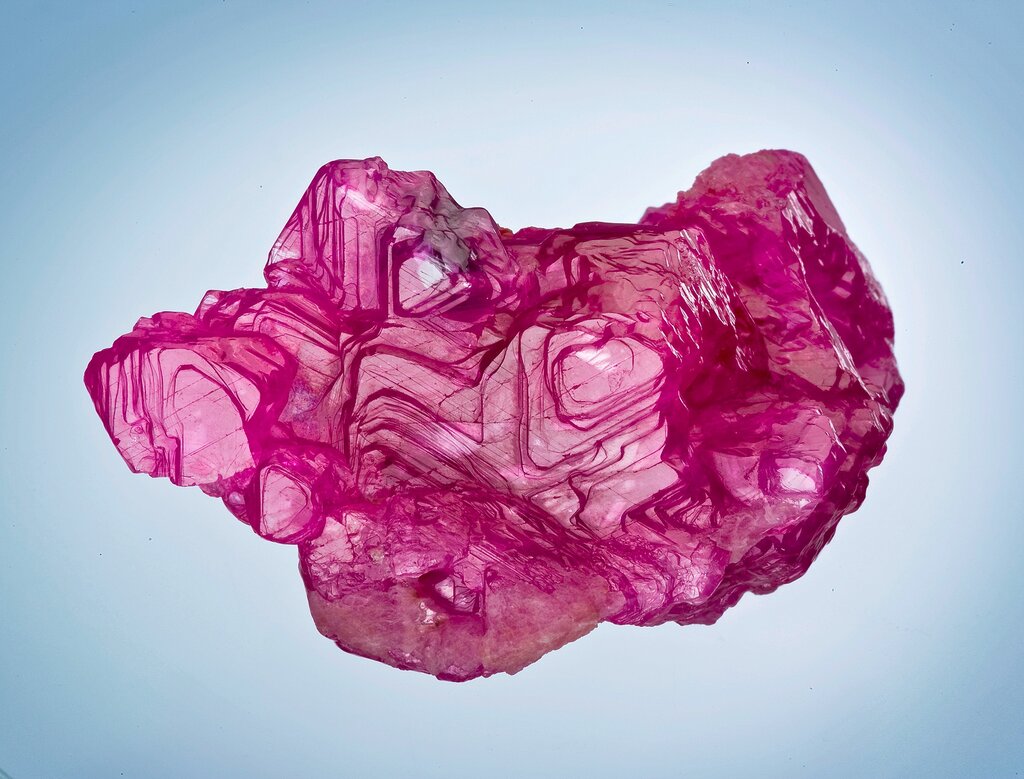
For corundum, the specific trace element determines the color, and therefore the variety name.
| Species | Variety | Color | Trace Element |
|---|---|---|---|
| Corundum | Ruby | Red | Chromium () |
| Corundum | Sapphire | Blue | Iron () & Titanium () |
| Corundum | Padparadscha | Pinkish-Orange | Chromium () & Iron () |
The Beryl Family
Another major gemstone species is beryl. Its chemical formula is beryllium aluminum silicate (), and it forms in a hexagonal crystal system. Like corundum, pure beryl is colorless (the variety is called goshenite). But when trace elements are introduced, beryl produces a whole family of famous gemstones.
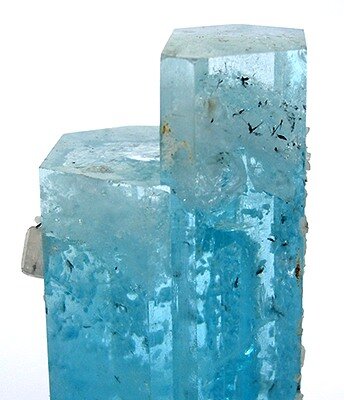
Each variety of beryl has its own unique color and name, all thanks to different trace elements.
| Species | Variety | Color | Trace Element |
|---|---|---|---|
| Beryl | Emerald | Green | Chromium () or Vanadium () |
| Beryl | Aquamarine | Blue to Greenish-Blue | Iron () |
| Beryl | Morganite | Pink to Orange-Pink | Manganese () |
| Beryl | Heliodor | Yellow to Greenish-Yellow | Iron () |
Why Classification Matters
Understanding species and varieties is essential for gemology. It allows us to group gems based on their fundamental properties, not just their appearance. Two gems might look similar, but if they belong to different species, they will have different hardness, density, and optical properties.
This scientific classification is the foundation for accurate identification. It helps distinguish a natural ruby from a red spinel or a green emerald from a green tourmaline. It's the language that gemologists use to precisely describe and value the treasures of the earth.
What is the fundamental identity of a gemstone, defined by its essential chemical ingredients and internal atomic pattern?
Ruby and sapphire are both varieties of which gemstone species?
This framework of species and varieties brings order to the colorful and complex world of gemstones.