Gemini vs OpenAI Generative AI
Introduction to Generative AI
What Is Generative AI?
At its heart, generative AI is a type of artificial intelligence that creates new things. Instead of just analyzing or categorizing information that already exists, it generates original content. Think of it as the difference between a music critic and a composer. A critic analyzes a song, but a composer writes a new one.
Generative AI learns patterns from massive amounts of data—like text, images, or code—and then uses that knowledge to produce something entirely new, but in the same style. This could be a poem, a piece of art, a melody, or even a functioning computer program. It's a powerful shift from AI that simply understands the world to AI that can add to it.
The core function of generative AI is to create new content based on patterns learned from existing data.
This ability has unlocked countless applications. For example, models like Google's Gemini and OpenAI's GPT series can write emails, summarize long documents, and answer complex questions in a conversational way. Others can create photorealistic images from a simple text description.
The Building Blocks
Generative AI didn't appear out of thin air. It’s built on decades of research in computer science, most notably in machine learning and neural networks.
Machine learning is the practice of teaching computers to learn from data without being explicitly programmed for every task. Instead of writing step-by-step instructions, developers feed an algorithm vast amounts of examples. The algorithm then learns to recognize patterns and make predictions on its own.
A specific, powerful type of machine learning is the neural network. Inspired by the structure of the human brain, a neural network is made of interconnected nodes, or "neurons," organized in layers. Each layer processes information and passes it to the next, allowing the network to identify increasingly complex patterns. A simple network might learn to recognize edges in a photo, while a deeper one could learn to identify a specific person's face.
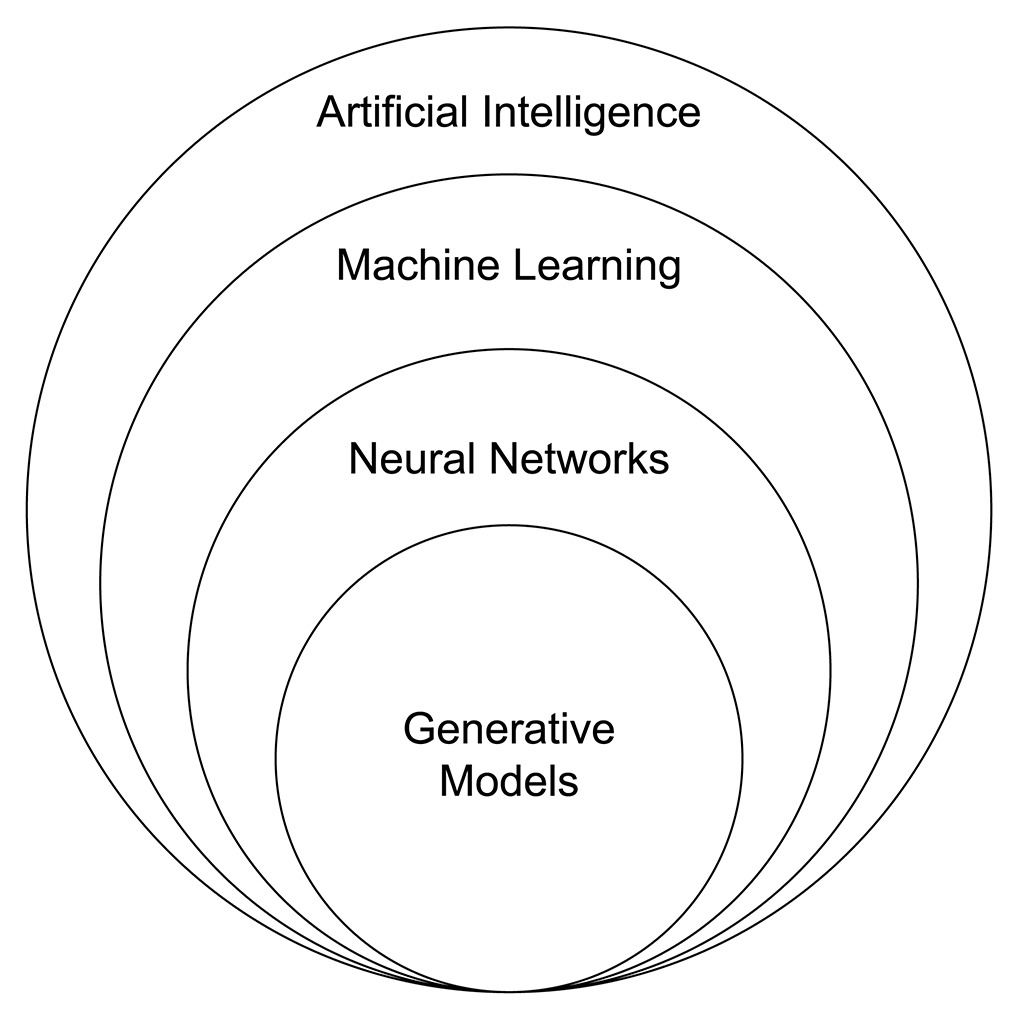
By stacking many of these layers, we get what’s called "deep learning." This depth is what allows generative models to grasp the subtle nuances of human language, art, and logic.
The Road to Creation
The journey to today's powerful generative models was gradual. Early models were impressive but limited. For instance, some could predict the next word in a sentence with reasonable accuracy, but they couldn't write a coherent paragraph. They understood sequence, but not context or meaning.
The major breakthrough came with the development of new architectures, like the transformer, which allowed models to handle long-range dependencies in data. This meant an AI could remember the beginning of a document when writing the end, leading to more consistent and logical outputs.
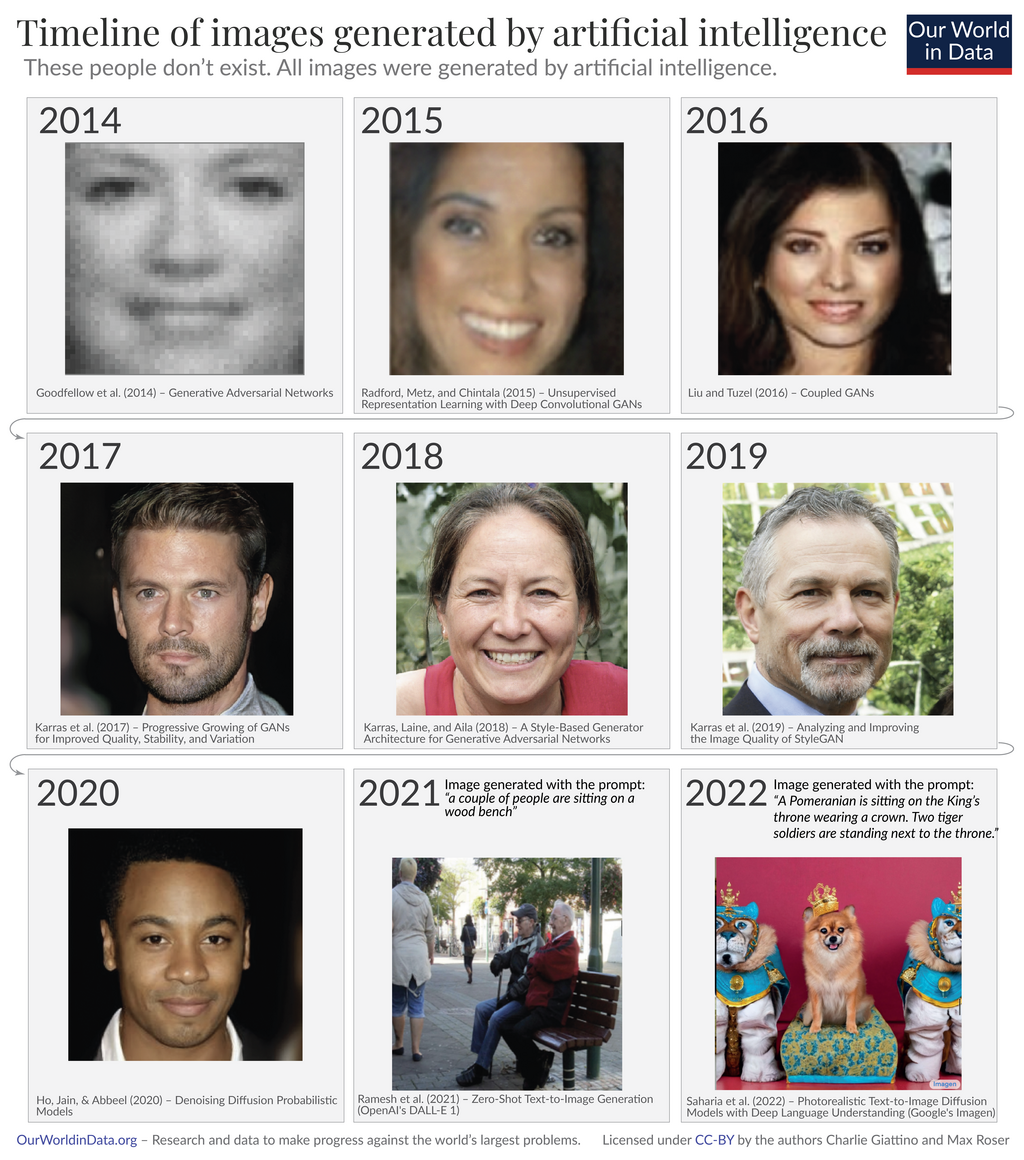
This evolution is easiest to see in image generation. Early models produced blurry, abstract images. But as the techniques improved, so did the results. Models like Gemini and the GPT series represent the current peak of this evolution, capable of generating content that is often indistinguishable from that created by humans.
Now that you have a handle on the basics, let's test your knowledge.
What is the primary function of generative AI?
The provided text compares traditional AI to a music critic. What is generative AI compared to?
Understanding these core concepts is the first step. From here, we can explore what makes models like Gemini and GPT tick, and how they are changing the way we work and create.