Gemini for Research Teams
Introduction to Google Gemini
What Is Google Gemini?
Google Gemini is a powerful family of AI models developed by Google. Think of it as the engine behind many of Google's latest AI tools. Unlike some earlier models that only worked with text, Gemini was designed from the ground up to be multimodal. This means it can natively understand, operate across, and combine different types of information.
Multimodal
adjective
The ability to process and understand information from multiple sources or formats—such as text, images, audio, and code—simultaneously.
This is a big leap forward. You could, for instance, show Gemini a picture of the ingredients in your fridge and a text prompt asking for a vegetarian recipe. It can understand the image, read your text, and generate a step-by-step recipe that uses what you have. It processes these different inputs together, allowing for more nuanced and helpful responses.
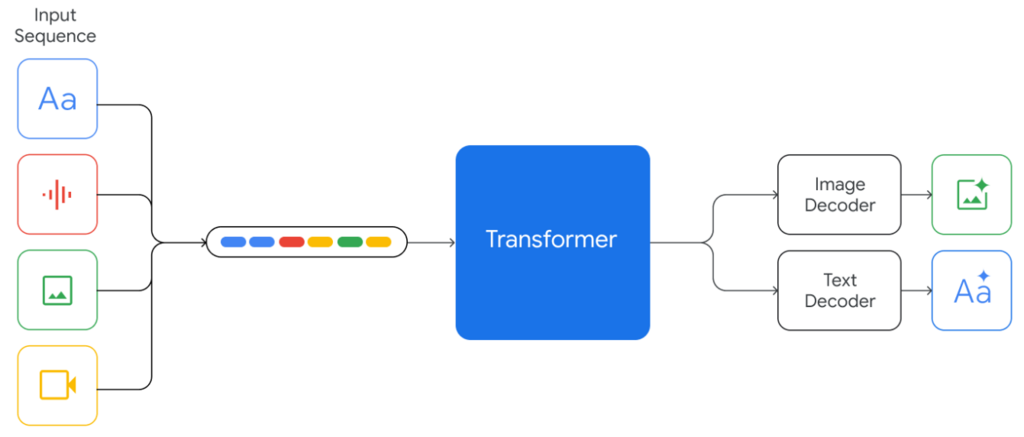
Gemini for Research
For researchers, this multimodal capability unlocks new ways to work. Gemini can act as a sophisticated research assistant. It can sift through dense academic papers, extract key findings, and summarize complex topics. You can give it a chart from a scientific paper and ask it to explain the trend shown in the data.
Gemini can analyze raw data, identify patterns, and even write the code needed to visualize it, streamlining the path from data to discovery.
It also excels at brainstorming. A researcher could describe a problem and ask Gemini to propose novel hypotheses or experimental designs. This ability to generate creative, relevant ideas can help break through mental blocks and accelerate the early stages of a project.
Beyond being a standalone tool, Gemini is integrated into various platforms and can be accessed through APIs. This allows developers to build its power into specialized research software, from analyzing lab results to managing large datasets. This integration means you might use Gemini without even realizing it, as its capabilities get woven into the tools you already use.

It's important to approach any AI tool with a critical eye. While powerful, these models can sometimes produce incorrect or nonsensical information, an issue often called "hallucination." Always verify the information Gemini provides, especially when using it for academic or scientific purposes.
Keep in mind that all generative AI, including Google Gemini, may generate “hallucinations” [12].
Let's review the key term we've learned.
Now, check your understanding of these core concepts.
What is the defining characteristic of Google Gemini that sets it apart from many earlier AI models?
A researcher uploads a graph showing a chemical reaction's rate over time and asks the AI, 'Explain what this chart shows and propose a hypothesis for the trend.' Which core capability of Gemini is being utilized?
With a grasp of what Gemini is and its core features, you can begin to see how it can be applied to specific research challenges.