GCSE Design Technology Core Principles
Introduction to Design Technology
Design Is Everywhere
Look around you. Nearly every object you see was designed by someone. The chair you’re sitting on, the phone in your hand, the layout of the room you're in—they are all solutions to problems. Design is the process of creating things that solve problems, meet needs, or make our lives better, easier, or more enjoyable.
Good design often goes unnoticed. When a product works perfectly, we don't think about the countless decisions that went into its creation. We only tend to notice design when it fails—a door that’s hard to open, a website that’s confusing to navigate, or a tool that’s uncomfortable to hold. Design technology is the study of how to create those successful solutions, blending creativity with practical skills.
The Design Process
Creating a successful product isn't about a single flash of genius. It follows a structured path called the design process. This process is a roadmap that guides a designer from a simple idea to a finished product. While there are many models, they all share core stages that help organize the work and ensure nothing is overlooked.
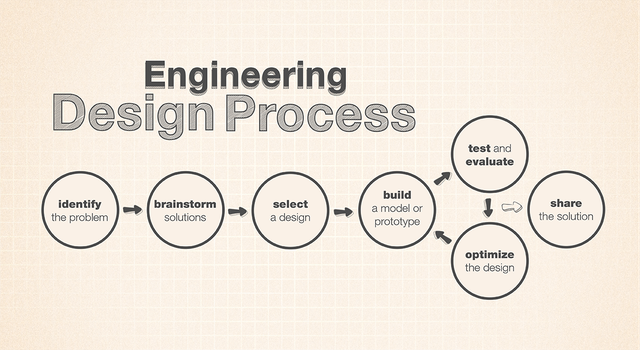
Let's break down these stages:
-
Identify Requirements: This is the starting point. What problem are you trying to solve? Who is it for? You need to define the goals and constraints of the project. This is often called writing a 'design brief'.
-
Research: Here, you gather information. You might look at existing products, analyze what works and what doesn't, and research the needs and wants of your target users. This stage is all about understanding the landscape before you start creating.
-
Develop Ideas: This is the brainstorming phase. You generate a wide range of possible solutions. The goal is quantity over quality at first—sketching, making lists, and thinking creatively without judgment.
-
Prototype: Once you've selected your best ideas, you create models, or prototypes. These can be simple sketches, cardboard mock-ups, or digital renders. Prototypes allow you to test how an idea looks, feels, and functions in the real world.
-
Test and Evaluate: Now you test your prototype. Does it solve the problem you identified in step one? You might ask users for feedback or conduct tests to measure its performance. This stage reveals the strengths and weaknesses of your design.
The design process is not a straight line. It's a cycle. Evaluation often sends you back to an earlier stage to refine your ideas. This is called an iterative process.
Iteration is key to good design. Based on feedback, you'll go back and improve your ideas, build a new prototype, and test it again. Each loop through this cycle gets you closer to a final, successful solution. This process of refining and improving is what turns a decent idea into a great product.
Why Materials Matter
A brilliant design idea is only as good as the materials used to make it. Choosing the right material is a critical decision that impacts a product's function, durability, cost, and appearance. Imagine building a bridge out of paper or a raincoat out of wool. The ideas are useless because the material properties don't match the design's needs.
When selecting materials, designers consider their properties. Is it strong enough? Is it too heavy? Can it bend without breaking? Is it resistant to water? How much does it cost? Understanding these properties is fundamental to making smart design choices.
| Property | Why It's Important for a Reusable Water Bottle |
|---|---|
| Durability | Must withstand being dropped and daily use without breaking. |
| Weight | Should be lightweight enough to carry around easily. |
| Cost | The material must be affordable to keep the final product price reasonable. |
| Food Safety | Cannot leach harmful chemicals into the water. |
| Rigidity | Needs to hold its shape and not collapse when held. |
Each material—whether it's a type of wood, metal, plastic, or textile—has a unique profile of properties. A designer's job is to match these properties to the demands of the product they are creating.
Now that you understand the core concepts of design, it's time to check your knowledge.
What is the primary purpose of design, as described in the text?
The process of repeatedly refining and improving a design based on feedback is known as...
These principles—understanding user needs, following a structured process, and making informed material choices—are the foundation of all work in Design Technology. They provide the framework for creating effective, innovative, and useful products.