GCP Data Engineering Fundamentals
Introduction to GCP Data Services
Your Data's Home in the Cloud
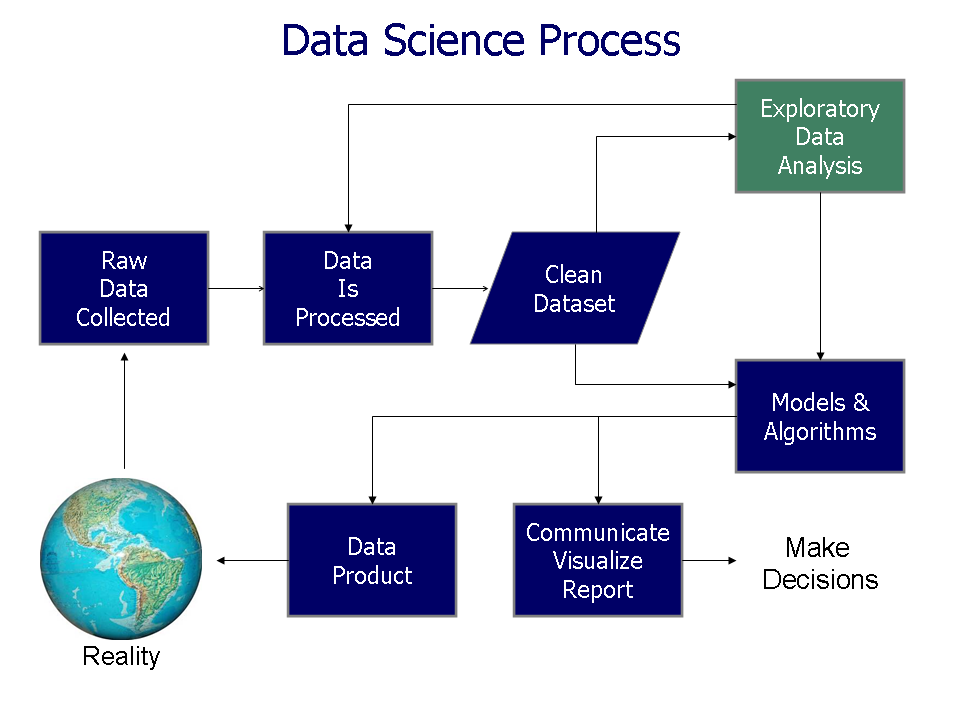
Handling data is a lot like cooking. You start with raw ingredients, prepare them, cook them, and finally, serve a finished meal. In the world of data, this process is often called a pipeline. You gather raw data, store it, clean and transform it, and then analyze it to find useful insights.
Google Cloud Platform (GCP) offers a suite of powerful tools designed for each step of this data journey. Think of it as a professional kitchen with specialized equipment for every task. Let's look at the core services you'll use to build these data pipelines.
Cloud Storage for Everything
Every data pipeline needs a starting point, a place to put your raw ingredients. In Google Cloud, that place is Cloud Storage. It's a service for storing objects, which is a flexible way of saying it can hold just about any kind of file you can think of: text files, images, videos, backups, and massive datasets.
Imagine a set of digital buckets. You can create as many buckets as you need and put whatever you want inside them. It's highly durable and accessible from anywhere. Cloud Storage is often the first stop for data entering the Google Cloud ecosystem, making it a foundational service for any data-related task.
BigQuery the Super-Powered Database
Once your data is stored, you need a way to analyze it. This is where BigQuery shines. BigQuery is a serverless data warehouse, designed to handle enormous amounts of data with incredible speed.
"Serverless" means you don't have to worry about managing the underlying infrastructure. You just load your data and start asking questions. You interact with it using standard SQL, the common language for databases. The magic of BigQuery is its ability to scan terabytes of data in seconds, allowing you to get answers to complex questions almost instantly.
BigQuery is built for speed at scale. You can run a complex query over a dataset the size of a movie library and get a result in the time it takes to pour a cup of coffee.
Pub/Sub for Real-Time Messages
Not all data arrives in neat batches. Sometimes, you need to handle a continuous stream of events, like clicks on a website, sensor readings from a factory, or transactions from a point-of-sale system. For this, Google Cloud provides Pub/Sub.
Pub/Sub is a real-time messaging service. It works on a publish-subscribe model. One service can "publish" messages to a central topic without knowing who will receive them. Other services can then "subscribe" to that topic to get the messages as they arrive. This decouples your systems, making them more flexible and scalable. It’s like a postal service for your application's data, ensuring messages get where they need to go reliably.
Dataflow for Transforming Data
Raw data is rarely ready for analysis. It often needs to be cleaned, filtered, enriched, or reshaped. Cloud Dataflow is the service for this transformation step. It's a fully managed service for executing data processing pipelines.
Dataflow can handle both batch data (large, finite datasets from Cloud Storage) and streaming data (real-time events from Pub/Sub) with the same code. You define the steps of your pipeline, and Dataflow takes care of spinning up the necessary resources, processing the data in parallel, and shutting everything down when it's done. This lets you focus on the logic of your transformation, not the logistics of running it.
| Service | Primary Role | Data Type |
|---|---|---|
| Cloud Storage | Store any type of file | Batch |
| BigQuery | Analyze large datasets | Batch |
| Pub/Sub | Ingest real-time events | Streaming |
| Dataflow | Transform and process data | Batch & Streaming |
Together, these services form the backbone of data engineering on Google Cloud. Data lands in Cloud Storage, gets streamed via Pub/Sub, is transformed by Dataflow, and is finally analyzed in BigQuery, turning raw information into valuable knowledge.