Gastrointestinal System Essentials
Gastrointestinal System Overview
The Body's Fuel Processor
Your gastrointestinal (GI) system is essentially a long, winding tube that runs from your mouth to your anus. Its main job is to take the food you eat, break it down into useful components, and get rid of what's left over. This entire process can be broken down into four key functions.
This journey from meal to waste product is a team effort involving several specialized organs working in a coordinated sequence.
The Main Pathway
The primary path food travels is called the gastrointestinal tract. It begins in the mouth, where chewing and saliva start breaking things down. From there, food travels down the esophagus to the stomach, a muscular bag that churns food with strong acids.
After the stomach, the partially digested food enters the small intestine, a long tube where most of the digestion and nutrient absorption happens. Next is the large intestine (or colon), which absorbs water from the remaining indigestible food matter and prepares the waste. Finally, waste is stored in the rectum before being expelled from the body.
Each part of the GI tract has a specific role, working in sequence to ensure you get the maximum energy and nutrients from your food.
The Support Team
The GI tract doesn't work alone. It gets help from several accessory organs that produce or store substances needed for digestion.
The liver has many jobs, but for digestion, its main role is producing bile, a fluid that helps break down fats. The gallbladder is a small pouch that stores and concentrates this bile, releasing it into the small intestine when needed.
The pancreas produces powerful digestive enzymes that break down carbohydrates, fats, and proteins. It releases these enzymes into the small intestine to complete the digestive process.
Your Inner Ecosystem
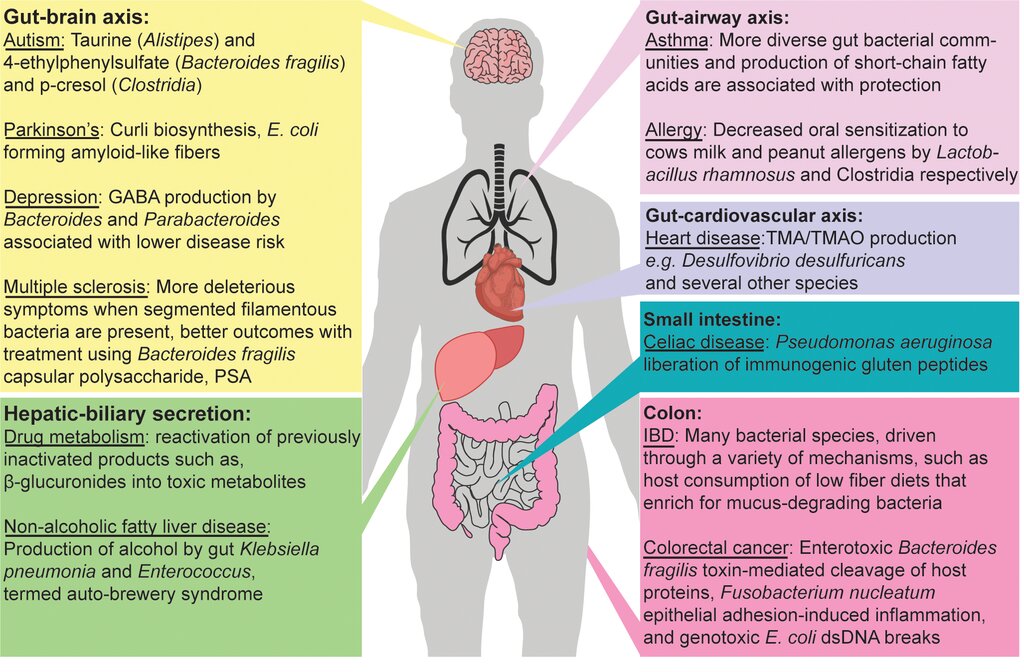
Your gut is also home to trillions of microorganisms, including bacteria, fungi, and viruses, collectively known as the gut microbiome. This isn't an invasion; it's a partnership. These tiny organisms play a huge role in your health.
microbiome
noun
The community of microorganisms, such as bacteria, fungi, and viruses, that live in a particular environment, especially the gut.
Your gut microbiome helps break down complex carbohydrates that your body can't digest on its own, like fiber. It also produces essential vitamins, helps regulate your immune system, and even protects you against harmful bacteria. A healthy and balanced microbiome is crucial not just for digestion, but for your overall well-being.
Let's review the key terms we've covered.
Now, check your understanding of the gastrointestinal system.
What is the correct sequence of organs that food passes through in the gastrointestinal tract?
Which organ produces bile to aid in the digestion of fats?
The gastrointestinal system is a complex and efficient factory. By understanding its main parts and functions, you can better appreciate the journey your food takes every day.