Gasoline Fuel Injection Systems Explained
Introduction to Fuel Injection
From Carburetors to Computers
For decades, the heart of fuel delivery in most cars was the carburetor. Think of it as a mechanical mixer. As air rushes into the engine, it passes through a narrow section in the carburetor called a venturi. This creates a low-pressure zone that siphons fuel from a small reservoir, mixing it with the incoming air. The air-fuel mixture then flows into the cylinders to be ignited.
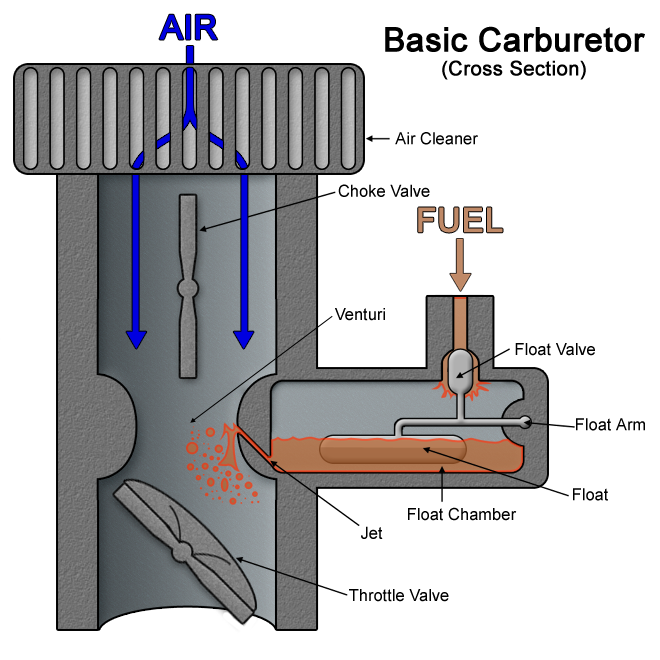
This system was clever for its time, but it had its limits. Carburetors were sensitive to temperature, altitude, and vibrations. They struggled to provide the perfect air-fuel mixture across all driving conditions, leading to wasted fuel, higher emissions, and inconsistent performance. A better, more precise method was needed.
How Fuel Injection Works
Fuel injection takes a more direct approach. Instead of relying on a vacuum to sip fuel, it actively sprays a fine, atomized mist of gasoline into the engine's intake manifold, right before it enters the cylinder. It's the difference between pouring water from a cup and using a spray bottle—the spray gives you a much finer, more evenly distributed mist.
This precision is managed by an onboard computer, often called the Engine Control Unit (ECU). The ECU receives data from sensors around the engine that measure things like airflow, engine speed, and oxygen content in the exhaust. Using this information, it calculates the exact amount of fuel needed for that specific moment and tells the injectors how long to stay open.
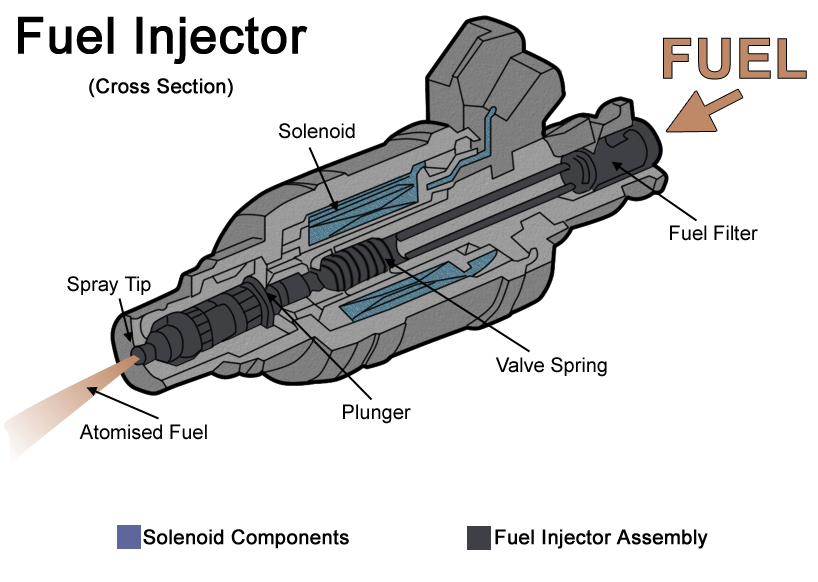
A basic fuel injection system consists of a few key parts: a fuel pump to move gasoline from the tank, fuel lines to carry it, the injectors themselves, and the ECU to control everything. Together, they form a system that can adapt instantly to changing demands.
The Advantages of Precision
The switch to fuel injection brought significant benefits. By delivering the exact right amount of fuel, engines became far more efficient. No more wasted gasoline from a poorly mixed carburetor.
In modern engines, electronic fuel injection systems precisely meter this mix—about 14.7 parts air to 1 part gasoline by mass, the ideal stoichiometric ratio for complete combustion.
This precise mixture also leads to better performance. The fine mist of fuel burns more completely and evenly, providing more power and a smoother response when you press the accelerator. Cold starts became easier, as the ECU could enrich the mixture electronically without the need for a mechanical choke.
Critically, fuel injection was a game-changer for emissions control. By maintaining the ideal air-fuel ratio, the system minimizes the creation of harmful pollutants. This allows the catalytic converter in the exhaust system to work at its peak efficiency, cleaning up what little is left.
Key advantages of fuel injection include better fuel economy, increased power and reliability, and significantly lower emissions.
Let's review the main concepts.
Now, test your understanding of these principles.
What is the primary mechanism a carburetor uses to draw fuel into the airstream?
Which component is essential for the operation of a modern fuel injection system but is NOT found in a system with a carburetor?
Fuel injection marked a major leap forward in automotive technology, laying the groundwork for the efficient and clean-running engines we rely on today.