Ganoderma in Oil Palm
Introduction to Ganoderma boninense
The Palm Killer
Deep in the soil of tropical plantations, a silent predator lurks. It's not an animal, but a fungus called Ganoderma boninense. This organism is a type of white-rot fungus, meaning it's exceptionally good at breaking down the tough, woody components of plants. Its primary target is one of the world's most valuable crops: the oil palm.
Ganoderma boninense is the main culprit behind a devastating disease known as basal stem rot (BSR). The most visible sign of the fungus is its fruiting body, or basidiocarp. This structure, often called a conk or bracket, grows out from the base of an infected palm tree.
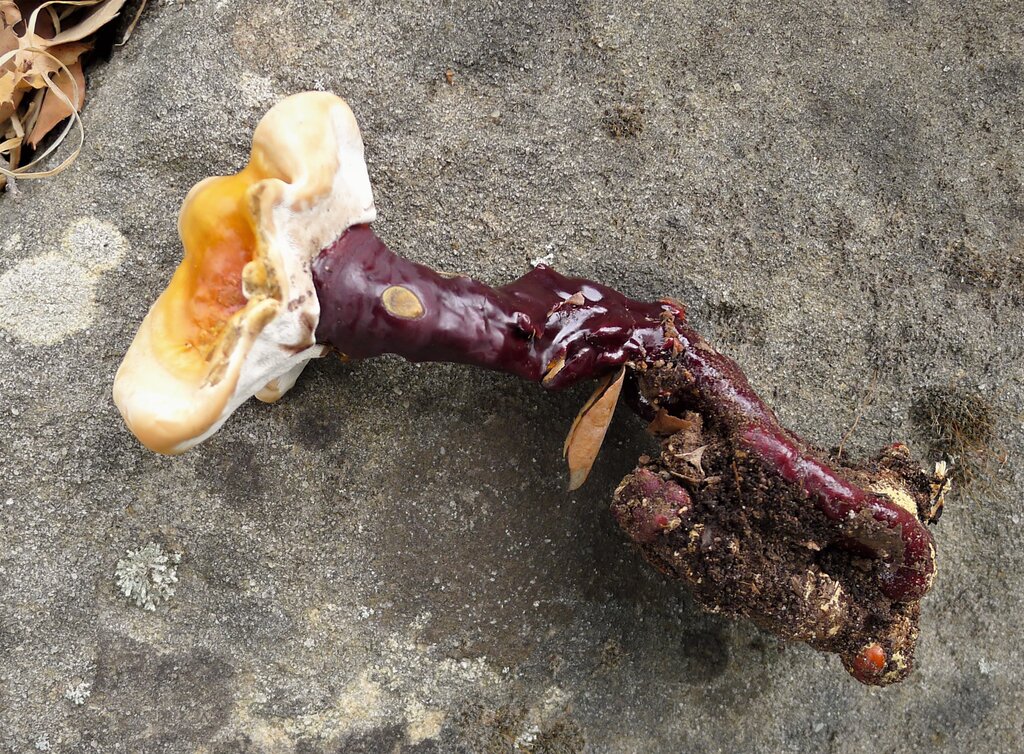
The basidiocarp is typically fan-shaped or kidney-shaped. When young, it's soft and yellowish-white, but as it matures, it develops a hard, reddish-brown, shiny crust. While this fruiting body is the part we can see, the real action is happening inside the tree. A vast, hidden network of thread-like filaments called mycelium spreads through the palm's trunk, digesting the wood from the inside out.
Life of a Wood-Eater
The life cycle of Ganoderma boninense begins with a microscopic spore. The mature fruiting bodies release billions of these spores, which are carried by wind and water to new locations. If a spore lands on a wound at the base of an oil palm or on an exposed root, it can germinate.
Once inside, the fungus forms its mycelial network, secreting enzymes that break down the lignin and cellulose that give the palm its structure. This is the primary growth phase, and it can go on for years without any outward signs of disease.
Ganoderma can also spread asexually. If the roots of an infected palm make contact with the roots of a healthy neighbor, the mycelium can grow directly from one to the other. This root-to-root transmission is a major reason why BSR often appears in clusters within a plantation.
The Cost of Rot
The economic impact of basal stem rot is immense. As the fungus destroys the internal structure of the palm's base, the tree's ability to transport water and nutrients is severely hampered. This leads to yellowing leaves, a reduction in the size and number of fruit bunches, and ultimately, lower oil yield.
Infected trees become structurally weak and may fall over during high winds, posing a danger to workers and equipment. Eventually, the tree dies, often years before the end of its productive lifespan. For an industry that relies on long-term yield, this is a catastrophic loss.
Estimates suggest that basal stem rot can cause losses of up to 💲400 million annually in Malaysia alone, one of the world's top palm oil producers.
Considering the global use of palm oil in everything from food products to cosmetics and biofuels, the damage caused by this single fungus has ripple effects worldwide. Understanding its biology is the critical first step in developing ways to protect this vital agricultural resource.
What is the primary mode of action for Ganoderma boninense that leads to basal stem rot in oil palms?
A plantation manager discovers a cluster of oil palms showing symptoms of BSR, while trees farther away appear healthy. What is the most probable method of transmission for this specific pattern?