Gamification in Brazilian Basic Education
Introduction to Gamification
More Than Just a Game
Think about the last time you were completely absorbed in an activity. Maybe it was a sport, a puzzle, or a video game. Whatever it was, chances are it had a clear goal, rules, and a way to track your progress. These elements are what make games so compelling. Now, what if we could borrow those same elements and apply them to things that aren't games, like learning a new language or completing a work project? That’s the core idea behind gamification.
Gamification
noun
The application of game-design elements and principles in non-game contexts to improve user engagement, motivation, and learning.
It's not about turning a history lesson into a full-fledged video game. Instead, it’s about using mechanics like points, badges, leaderboards, and progress bars to make the learning process more engaging and satisfying. The goal is to tap into our natural desire for achievement, competition, and feedback.
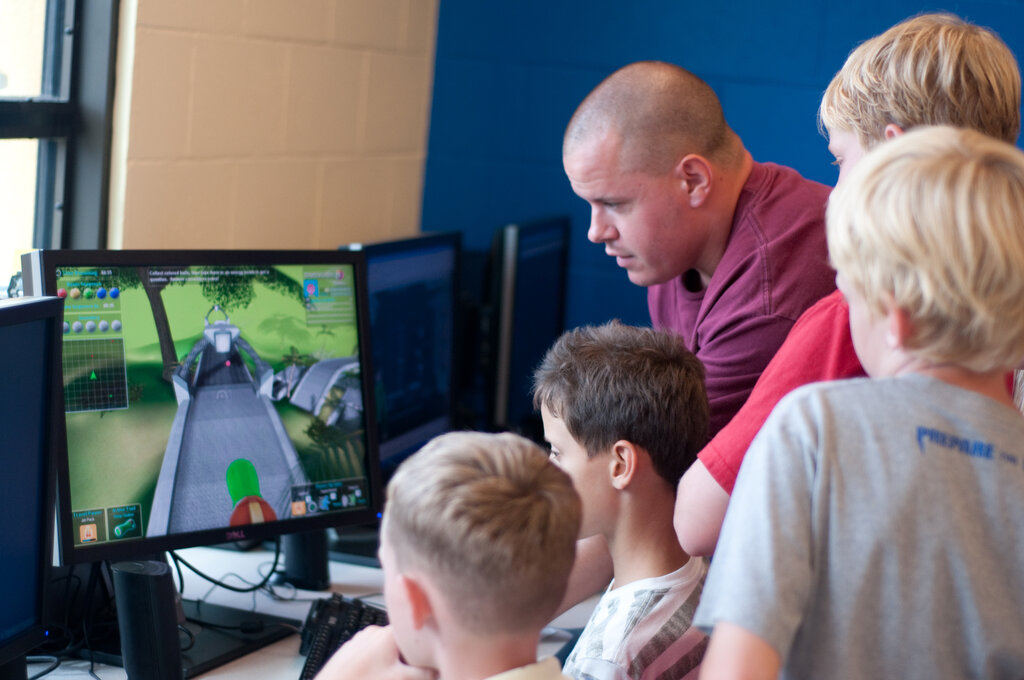
Gamification involves applying game design principles and mechanics to non-game contexts, such as education.
Why Our Brains Love Games
Gamification works because it speaks directly to our brain's wiring. A key part of this is motivation, which can be broken down into two types:
- Extrinsic motivation: This comes from outside rewards. Think of getting a good grade, a trophy, or a paycheck. Points and badges in a gamified system are classic extrinsic motivators.
- Intrinsic motivation: This comes from within. It’s the joy of mastering a skill, the satisfaction of solving a difficult problem, or the curiosity to learn something new.
A well-designed gamified experience balances both. The points and rewards (extrinsic) get you started, but the sense of progress and mastery (intrinsic) keeps you coming back.
Behind the scenes, the neurotransmitter dopamine plays a big role. When we achieve a goal or receive a reward, our brain releases a small amount of dopamine, which makes us feel good and encourages us to repeat the behavior. Games create a constant loop of challenge, achievement, and reward, keeping our dopamine levels up and our engagement high. This is often called a 'feedback loop,' and it's a powerful tool for building habits.
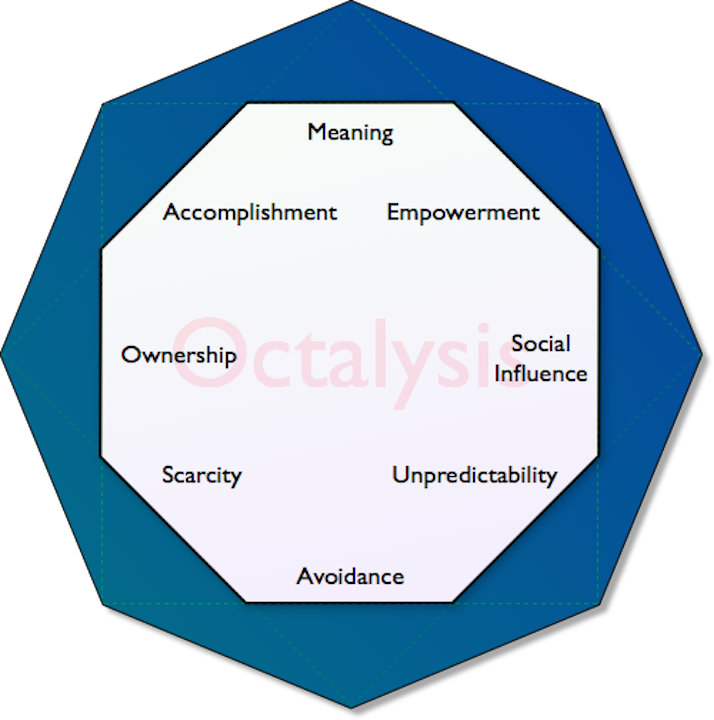
Frameworks like the one above help designers understand the different psychological drivers that make games so effective. By appealing to our needs for meaning, accomplishment, ownership, and social connection, gamification can transform a tedious task into a compelling experience.
Gamification in the Classroom
In an educational setting, the impact of gamification can be profound. Traditional learning can sometimes feel passive and disconnected from real-world results. Gamification changes that by making progress visible and celebrating small wins along the way.
Imagine a math class where students earn points for completing practice problems, unlock new levels of difficulty, and collaborate with classmates on 'quests' to solve complex challenges. This approach doesn't just make math more fun; it creates a safe space to fail. In a game, losing a life or failing a level isn't a disaster, it's an opportunity to learn the mechanics and try again. By framing challenges this way, students build resilience and persistence.
When implemented thoughtfully, gamification transforms the learning experience by making it more interactive and enjoyable.
Ultimately, gamification helps answer the student's question, "Why am I learning this?" By setting clear goals and showing a clear path to mastery, it provides context and purpose, turning learners from passive recipients of information into active participants in their own education.
Now, let's review the key concepts we've covered.
Ready to test your knowledge?
What is the core idea behind gamification?
Earning a digital badge for completing a set of math problems is an example of what type of motivation?
By tapping into the same psychological drivers that make games so captivating, we can make learning more engaging, motivating, and effective for everyone.