Game Theory for Poker Mastery
Introduction to Game Theory
What Is Game Theory?
Game theory is the study of how and why people make decisions in strategic situations. Think of a simple game like rock-paper-scissors. Your best move depends entirely on what you think your opponent will do. If you think they'll throw rock, you'll choose paper. But what if they know you think that? Then they'll choose scissors. This is a strategic interaction.
Game theory is the study of strategic decision-making in situations where the outcome depends on the choices of multiple players.
In game theory, a "game" is any situation with three key ingredients:
- Players: The decision-makers (in poker, you and your opponents).
- Strategies: The possible actions each player can take (bet, check, fold).
- Payoffs: The outcomes for each player based on the combination of strategies chosen (winning or losing chips).
Game theory provides a framework for analyzing these situations to find the most logical course of action.
Finding the Balance
A central concept in game theory is the Nash equilibrium. It's a state where, given the strategies of the other players, no player can improve their own outcome by changing their strategy. Everyone is playing their best possible response to everyone else's strategy.
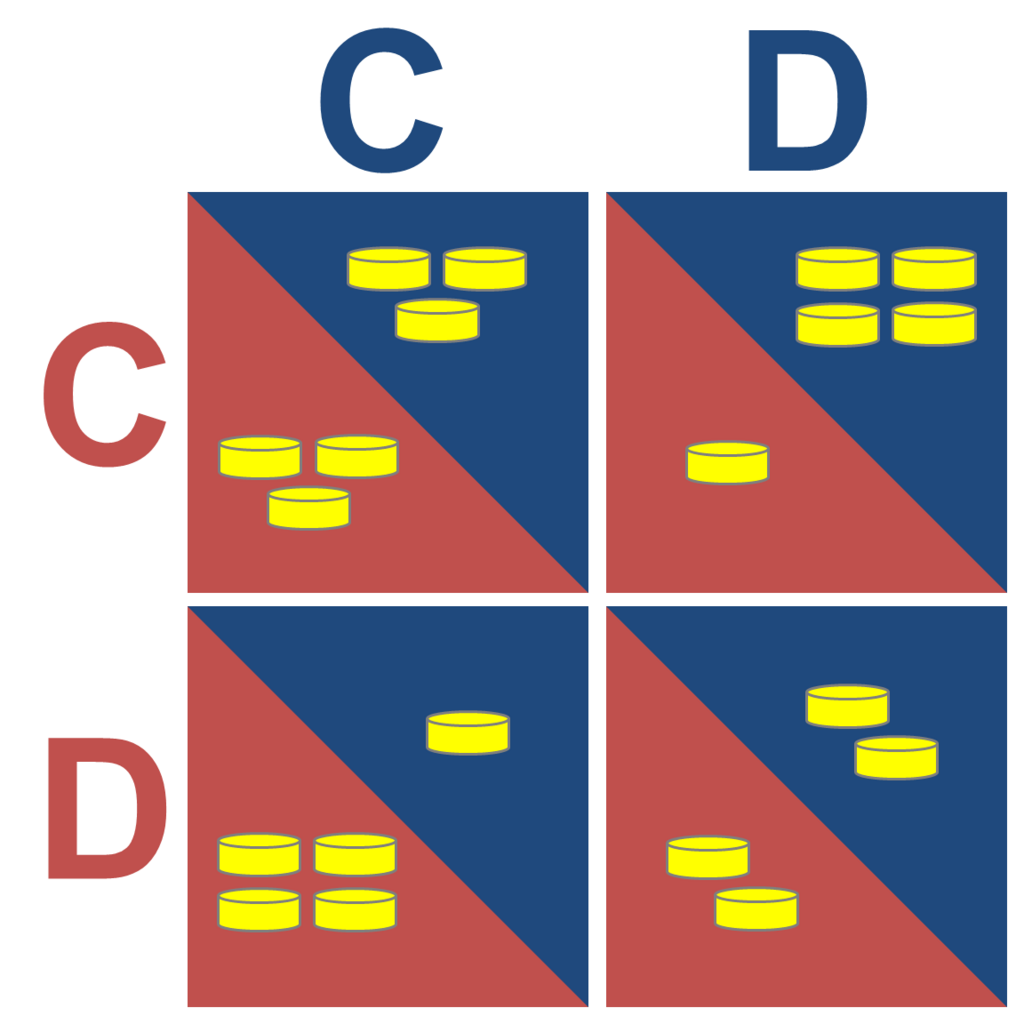
The classic example is the Prisoner's Dilemma. Two partners in crime are arrested and held in separate rooms. The police offer each a deal, without the other knowing. Here are their options:
| Prisoner B Stays Silent | Prisoner B Confesses | |
|---|---|---|
| Prisoner A Stays Silent | Both serve 1 year | A serves 3 years, B goes free |
| Prisoner A Confesses | A goes free, B serves 3 years | Both serve 2 years |
What should they do? From Prisoner A's perspective, if B stays silent, confessing is better (0 years vs. 1). If B confesses, confessing is still better (2 years vs. 3). So, confessing is the dominant strategy for A. The same logic applies to B. The Nash equilibrium is for both to confess, even though they'd both be better off if they both stayed silent. Neither can improve their situation by unilaterally changing their decision.
Poker's Missing Pieces
The Prisoner's Dilemma is a game of complete information. Both players know all the possible strategies and payoffs. Chess is another example; both players see the entire board.
Poker is different. It's a game of incomplete information. You don't know your opponents' cards. You can only make educated guesses based on their actions, the community cards, and their past behavior. This uncertainty is what makes the game so complex and interesting.
In poker, you're not trying to find the one perfect move. You're trying to make the most profitable decision on average, given a range of possibilities.
This is where game theory comes in. It helps you think about your opponent’s range of possible hands, not just one specific hand. It forces you to consider what your actions (like betting or checking) communicate about your own hand.
A perfectly balanced, game-theory-based strategy is often called Game Theory Optimal (GTO). A GTO player makes decisions in such a way that they are "unexploitable." No matter what their opponents do, they can't be put in a situation where they are making a long-term mathematical mistake. It's about playing a fundamentally sound strategy that maximizes your expected value over time, regardless of how your opponents play.
Let's test your understanding of these core concepts.
According to game theory, what are the three essential components that define a "game"?
In the classic Prisoner's Dilemma, the Nash equilibrium occurs when both prisoners confess, even though they would receive a better collective outcome by both staying silent.
By understanding these principles, you can start to build a logical framework for every decision you make at the poker table, moving beyond gut feelings and toward calculated, profitable plays.