Galois Theorem Explained
Polynomial Equations
What is a Polynomial?
At its heart, a polynomial is just a specific kind of algebraic expression. It's built from variables (like ), numbers called coefficients, and the operations of addition, subtraction, and multiplication. The key rule is that the variables can only be raised to non-negative whole number powers.
Think of them as the building blocks of algebra. Simple expressions like are polynomials, and so are more complex ones like .
The general form of a polynomial looks like this:
Let's break that down:
- The ’s (, etc.) are the coefficients. They're the constant numbers multiplying the variables.
- The is the variable.
- The is the degree of the polynomial, which is the highest exponent of the variable. The term with the highest exponent () is called the leading term.
Here are some examples to make it clearer:
| Expression | Is it a polynomial? | Degree | Why? |
|---|---|---|---|
| Yes | 3 | All exponents are whole numbers. | |
| Yes | 1 | This is a linear expression. | |
| No | N/A | Contains a square root of a variable (). | |
| No | N/A | Contains a negative exponent. |
Finding the Roots
Much of the work with polynomials involves solving polynomial equations. This means finding the values of that make the polynomial equal to zero. These special values are called the roots or zeros of the polynomial.
For example, to find the roots of the polynomial , we set up the equation:
Solving this, we find that and are the roots. If you graph a polynomial, its real roots are the points where the graph crosses the x-axis.
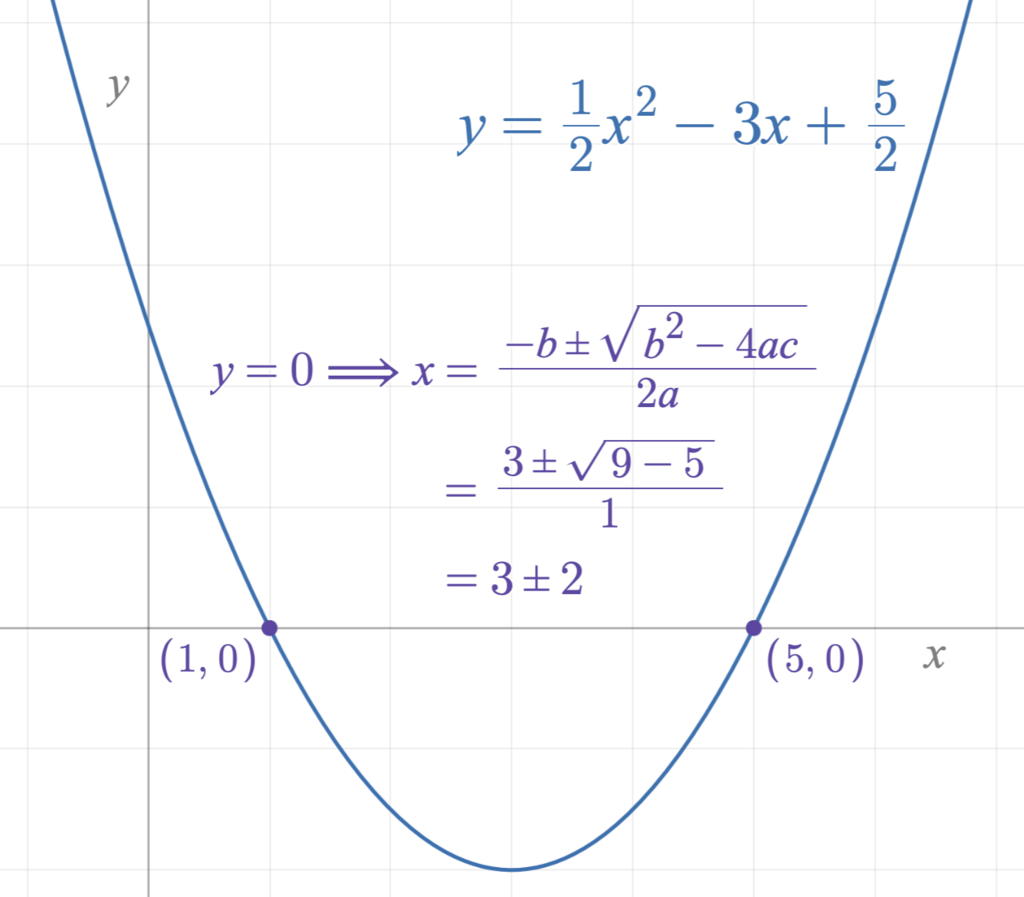
For a second-degree polynomial (a quadratic), you might remember the quadratic formula. It's a reliable tool for finding the roots of any quadratic equation of the form .
The Fundamental Theorem
A huge question in mathematics was whether every polynomial equation even has a solution. The answer is yes, and it’s captured in a rule with a fittingly grand name: the Fundamental Theorem of Algebra.
The theorem states that every single-variable polynomial of degree $n geq 1$ has at least one root in the complex number system.
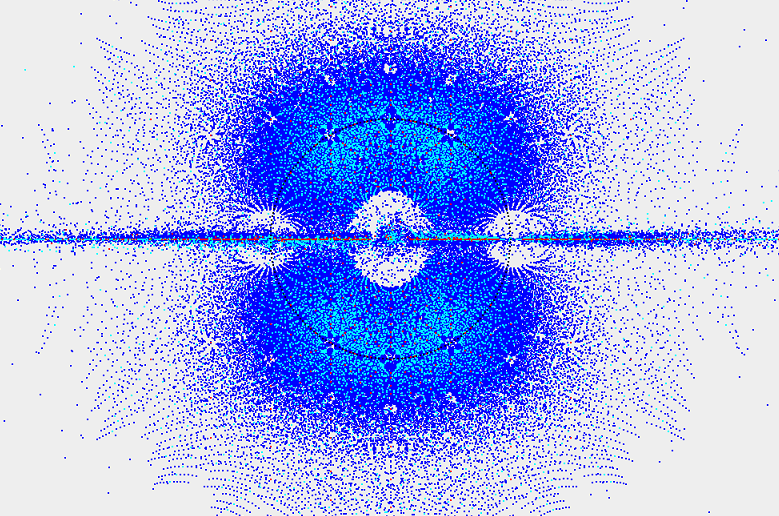
A direct consequence of this is even more powerful: a polynomial of degree will have exactly roots. Some of these roots might be repeated, and some might be complex numbers (involving the imaginary unit ), but the total count is always equal to the degree.
So, a fifth-degree polynomial will have five roots, a cubic equation will have three, and so on. This simple but profound idea guarantees that a solution always exists, even if finding it is hard.
A Brief History of Solving
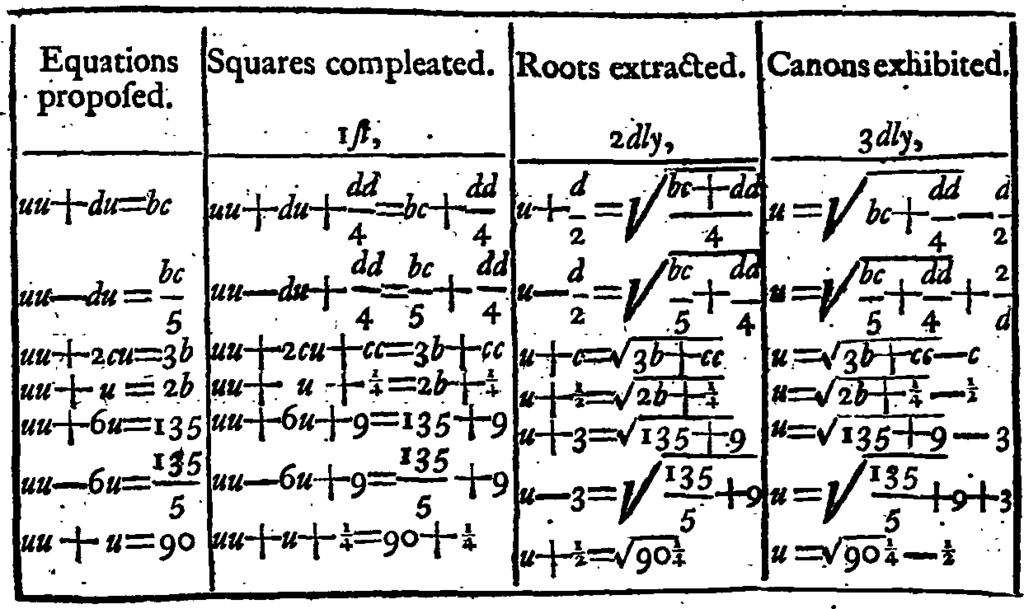
For centuries, mathematicians were on a quest to find general formulas, like the quadratic formula, for polynomials of higher degrees. Ancient civilizations like the Babylonians and Egyptians knew how to solve specific quadratic equations.
In the 16th century, Italian mathematicians made a huge breakthrough. Scipione del Ferro, Niccolò Fontana Tartaglia, and Gerolamo Cardano developed a formula for solving cubic (third-degree) equations. Shortly after, Lodovico Ferrari, a student of Cardano, found a method for quartic (fourth-degree) equations.
The race was on to find a formula for the quintic (fifth-degree) polynomial. Mathematicians tried for nearly 300 years, but no one could find a general solution using only basic arithmetic and radicals (like square roots, cube roots, etc.).
It turned out there was a good reason for their failure. In the early 19th century, Niels Henrik Abel and Évariste Galois proved that no such general formula exists for polynomials of degree five or higher. Their work revealed a deep and surprising truth: while every polynomial has roots, there is no one-size-fits-all formula to find them for degrees beyond four. This discovery fundamentally changed the course of algebra.
Which of the following expressions is a polynomial?
What is the degree of the polynomial ?
While we can't solve every polynomial by hand, understanding their structure and properties is a foundational skill in mathematics and science.