Futanari: An Exploration
Introduction to Futanari
The Meaning of Futanari
The Japanese language has many words that don't translate neatly into single English terms. One such word is futanari. At its core, it's a term that has historically described androgyny or the presence of both male and female characteristics in a single person, plant, or even object.
dual form, two kinds
The word itself is composed of two kanji characters. The first, 二 (futa), means 'two' or 'dual.' The second, 形 (nari), means 'form,' 'shape,' or 'appearance.' Put them together, and you get 'dual form' or 'two kinds.' This etymology is key to understanding its original, broader meaning.
Historical Context
In pre-modern Japan, the concept of futanari wasn't strictly limited to humans. It appeared in literature, art, and religious beliefs, often tied to deities or mythical beings who transcended conventional gender boundaries. For example, some Buddhist deities were depicted with both masculine and feminine traits to represent a complete, all-encompassing nature.
The term could also be applied to botany. A plant that was hermaphroditic, meaning it had both male and female reproductive organs, could be described using this word. This scientific application shows how the concept was rooted in an observation of the natural world.
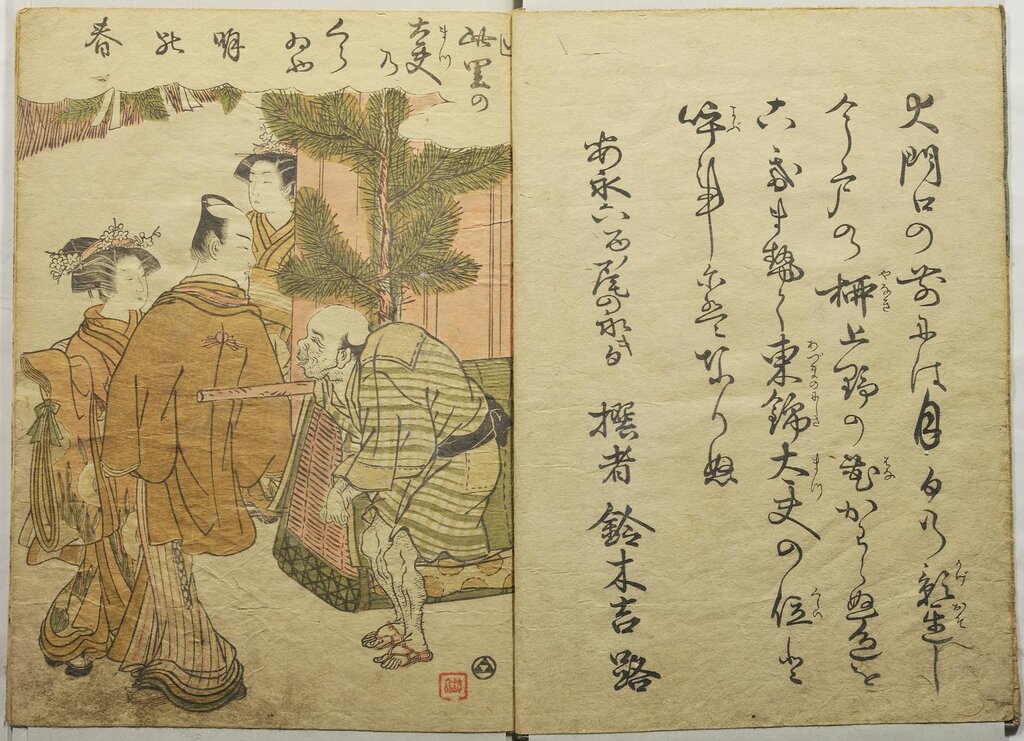
Historically, when applied to people, the term referred to intersex individuals. However, gender and sex were often viewed more fluidly than in many Western cultures of the same period. There are records from the Edo period (1603-1868) of individuals living in ways that didn't conform to a strict male/female binary, sometimes gaining a degree of social acceptance or notoriety.
Evolution of the Term
Over time, like many words, the meaning of futanari has shifted. As Japan modernized and adopted more Western medical and social concepts in the 19th and 20th centuries, the traditional, more fluid understanding of gender began to change. The word's usage became less common in everyday language and more specialized.
Initially a broad term for 'dual form,' it gradually narrowed its focus. Its journey reflects changes in Japanese society itself, moving from a concept found in religion and nature to one more specifically associated with human biology, and eventually, to new contexts entirely.