Fundraising for Industrial Warehousing
Industrial Warehousing Basics
The Hub of Modern Commerce
At its simplest, a warehouse is a large building where raw materials or manufactured goods are stored before they are sold or distributed. But it's much more than just a giant storage closet. Think of it as a crucial buffer in the flow of goods, a place that balances the rhythm of production with the fluctuating beat of consumer demand.
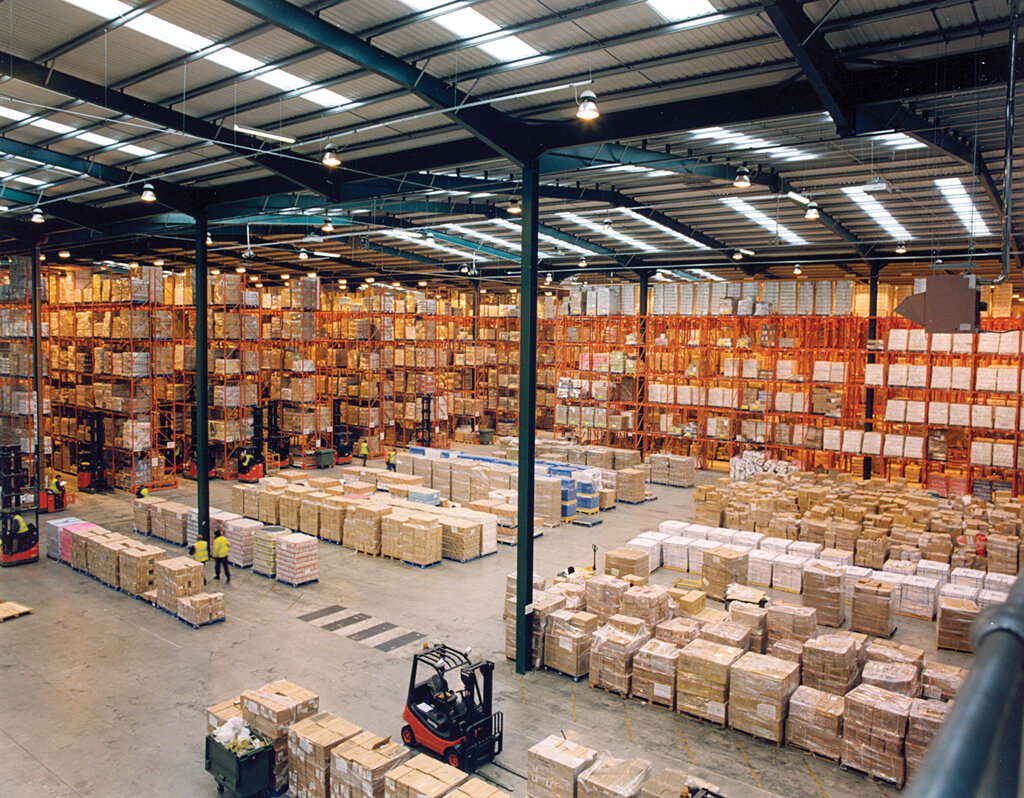
Manufacturers often produce goods in large, efficient batches. Consumers, on the other hand, buy items one or two at a time. Warehouses bridge this gap. They are the essential link in the supply chain, the network of organizations, people, and activities that move a product from the supplier to the customer. Without warehouses, the global economy would grind to a halt. They ensure that products are available when and where they are needed, smoothing out potential disruptions and keeping store shelves stocked.
Different Warehouses for Different Jobs
Not all warehouses serve the same function. Their design and operations are tailored to their specific role in the supply chain. Two of the most common types are distribution centers and fulfillment centers.
Distribution Center
noun
A type of warehouse focused on receiving large quantities of goods from manufacturers and shipping them to retail locations.
Distribution centers are masters of the B2B, or "business-to-business," model. They typically handle pallet-sized or case-sized loads. Imagine a national hardware store chain. Its distribution center receives truckloads of power drills from one supplier and truckloads of paint from another. It then combines these products to send mixed shipments to its individual retail stores across a region.
Fulfillment Center
noun
A warehouse designed to process and ship small orders directly to individual customers, typical in e-commerce.
Fulfillment centers power the world of e-commerce. They operate on a B2C, or "business-to-consumer," model. When you click "buy now" on a website, your order is routed to a fulfillment center. There, a worker picks your specific item, packs it into a box, and sends it directly to your doorstep. The focus is on processing a high volume of small, individual orders quickly and accurately.
| Feature | Distribution Center | Fulfillment Center |
|---|---|---|
| Primary Customer | Businesses (Retail Stores) | Individual Consumers |
| Order Size | Large (pallets, cases) | Small (individual items) |
| Shipment Volume | Lower number of large shipments | High number of small shipments |
| Key Goal | Efficiently resupply retail | Quickly ship direct orders |
Inside the Warehouse Walls
Regardless of its type, every warehouse juggles three core operational components to keep goods moving smoothly from receiving to shipping.
- Inventory Management: This is the brain of the operation. It's about knowing exactly what you have, where it is, and how much of it is in stock. Good inventory management prevents stockouts (running out of a popular item) and overstocking (wasting space on items that don't sell). It relies on systems that track every item from the moment it enters the warehouse to the moment it leaves.
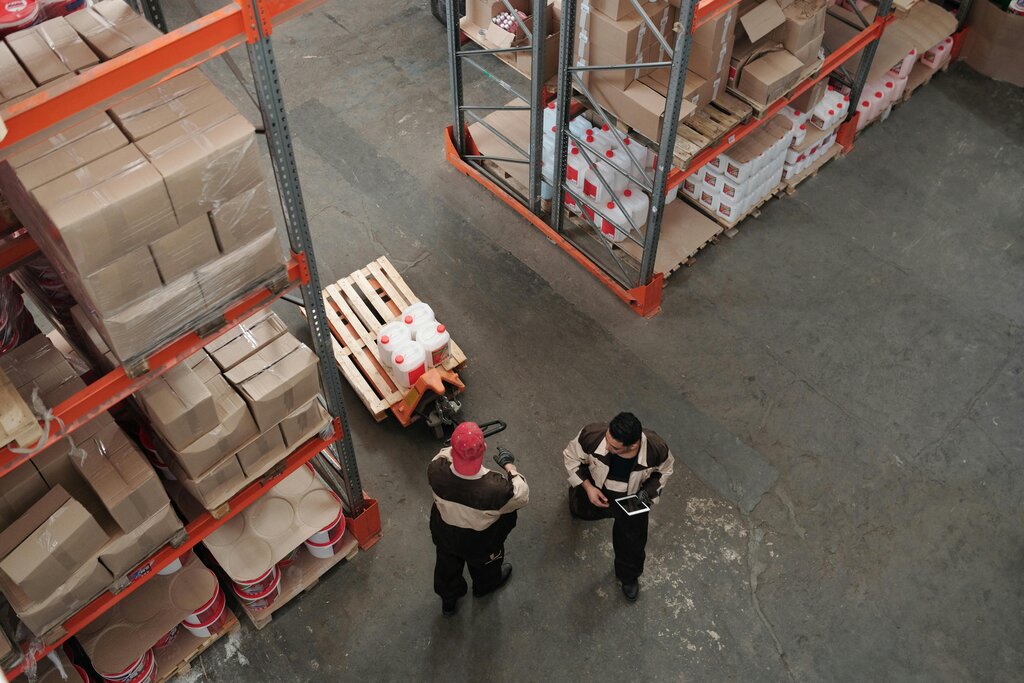
- Order Fulfillment: This is the process of picking, packing, and shipping customer orders. It's also known as the "pick and pack" process. In a fulfillment center, this involves an employee (or robot) traveling through aisles to find the specific items in an order. Once all items are gathered, they are taken to a packing station, boxed up with shipping labels, and sent out for delivery.
- Material Handling: This refers to the movement, protection, storage, and control of materials and products. It involves the equipment used to move goods around the facility, from simple hand-pushed carts to pallet jacks and forklifts. The layout of the warehouse—the placement of shelves, aisles, and workstations—is a critical part of an efficient material handling system, designed to minimize travel time and make processes flow logically.
These three components work together in a continuous cycle. Accurate inventory data allows for efficient order picking, and a well-designed material handling system makes the entire fulfillment process faster and safer. Mastering these basics is the foundation of any successful warehouse operation.