Fundamentals of US Government
Introduction to U.S. Government
A Government Built Like a Team
The United States government is designed to avoid putting too much power in one place. Think of it not as a single entity, but as a team with three core players. Each player has a distinct role, ensuring that the work of governing is shared and no single part becomes all-powerful. This structure is laid out in the U.S. Constitution, the country's foundational document.
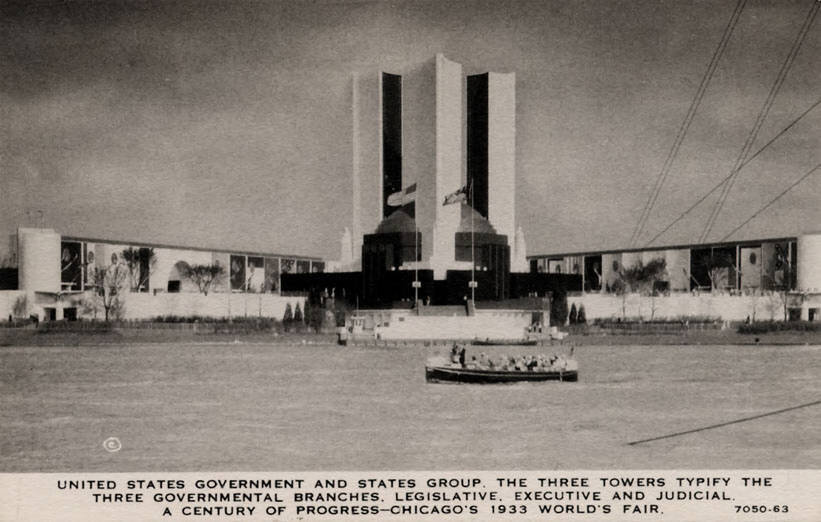
These three parts are known as branches of government:
- The Legislative Branch: This is Congress. Its main job is to create the laws.
- The Executive Branch: Headed by the President, this branch is responsible for carrying out and enforcing the laws.
- The Judicial Branch: This branch consists of the Supreme Court and lower federal courts. Its role is to interpret the laws and ensure they are applied fairly.
Imagine building a house. The legislative branch is the architect who designs the blueprints. The executive branch is the construction crew that builds the house according to those plans. The judicial branch is the building inspector who checks that the blueprints were followed correctly and that the house meets all safety codes.
Separation of Powers
The principle of dividing government into these three distinct branches is called the separation of powers. It’s a simple but powerful idea: by assigning different responsibilities to different groups, you prevent any one group from accumulating absolute control. Each branch operates in its own area of expertise and authority.
Separation of powers divides the federal government into three branches (legislative, executive, and judicial) to prevent any one branch from becoming too powerful
This division creates a government of shared power. The legislature can't enforce the laws it writes, and the executive can't create laws out of thin air. The judiciary remains independent, able to make judgments without pressure from the other two. But these branches don't operate in total isolation. They are designed to interact and, most importantly, to police each other.
A System of Checks and Balances
To ensure no branch oversteps its bounds, the Constitution created a system of checks and balances. This system gives each branch specific ways to limit the power of the others. It's a game of governmental rock-paper-scissors, where each branch can counter the others' moves.
For example, while Congress (legislative) passes laws, the President (executive) can veto, or reject, those laws. But Congress can override that veto with enough votes, checking the President's power.
Similarly, the judicial branch can check both the legislative and executive branches by declaring their laws or actions unconstitutional, effectively nullifying them. However, the President appoints judges, and Congress must approve them, which gives the other two branches influence over the judiciary.
This intricate web of overlapping powers ensures that every branch is accountable to the others. It creates tension and requires compromise, but it's the core mechanism that prevents tyranny and protects liberty.
The principle of dividing government into three distinct branches with separate responsibilities is known as:
Which branch of the U.S. government is responsible for carrying out and enforcing the laws?
These foundational principles, separation of powers and checks and balances, are the bedrock of the U.S. government. They create a system that is designed to be stable, accountable, and balanced.