Fundamentals of Production and Operation
Introduction to Production and Operations
The Engine of Business
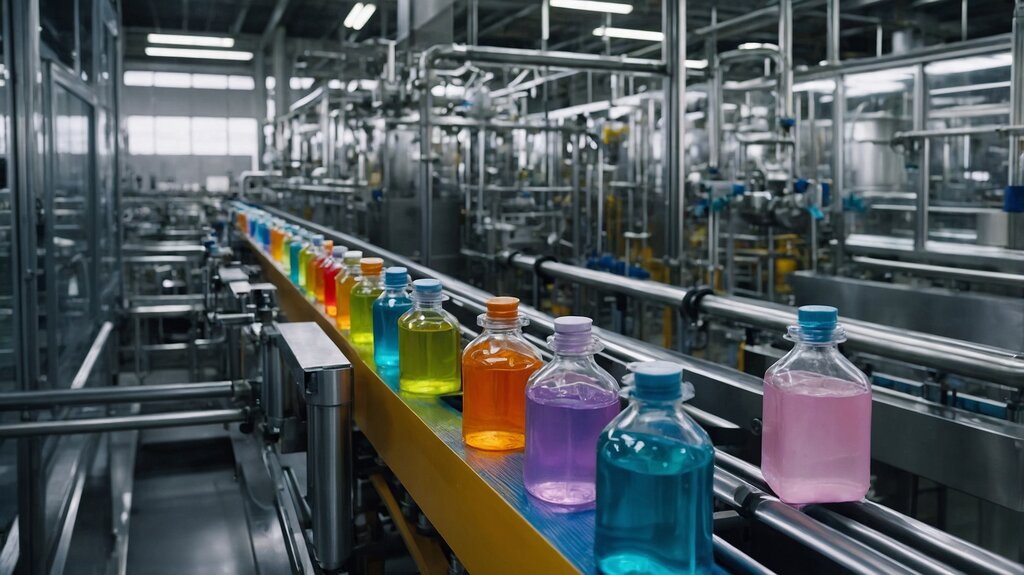
Every business, whether it's a local coffee shop or a massive car factory, is built on processes. A process is just a series of steps taken to achieve a particular end. Making coffee is a process. Assembling a car is a process. What connects them is the transformation of inputs (like coffee beans or steel) into outputs (a hot latte or a new vehicle).
This transformation is the core of all business activity. The field that studies and manages these transformations is called production and operations management.
Production
noun
The process of converting inputs, such as raw materials, labor, and energy, into outputs in the form of goods or services.
If production is the act of creating, operations management is the art and science of making that creation process as effective and efficient as possible. It's about designing, managing, and improving all the systems involved in getting things done.
The Core Objectives
The goals of operations management are straightforward but challenging. Every decision is a trade-off between three key objectives: cost, quality, and speed. A change in one almost always affects the others. The job of an operations manager is to find the right balance to meet the company's goals and keep customers happy.
Let's break them down:
- Cost: This is about efficiency. The goal is to produce goods or services at the lowest possible cost without negatively impacting quality or speed. This involves minimizing waste, using resources wisely, and streamlining processes.
- Quality: This refers to reliability and performance. A quality product or service meets customer expectations and does what it's supposed to do. Operations managers implement systems to ensure consistency and prevent defects.
- Speed: Often called delivery or responsiveness, this is about getting the product or service to the customer quickly and on time. In a competitive market, being faster than rivals can be a huge advantage.
Manufacturing vs. Services
While the core principles of operations management apply everywhere, the nature of the work differs greatly between making physical things (manufacturing) and providing experiences (services). A car factory and a hospital both have complex operations, but they face different challenges.
| Characteristic | Manufacturing Operations (Goods) | Service Operations |
|---|---|---|
| Output | Tangible (a physical product) | Intangible (an experience or action) |
| Customer Contact | Low | High |
| Inventory | Can be stored for later sale | Cannot be stored; produced and consumed simultaneously |
| Uniformity | High (products are very similar) | Low (each service experience can be unique) |
| Location | Production facility is key | Proximity to customer is key |
| Measurement | Easy to measure productivity | Harder to measure productivity and quality |
Think about a smartphone versus a haircut. The phone is a tangible good. Thousands can be made in a factory, stored in a warehouse, and shipped to a customer you never meet. A haircut is an intangible service. It's created and consumed at the same time, with direct interaction between the customer and the provider. You can't put a haircut in a warehouse for later.
Why It All Matters
Effective operations management is not just a behind-the-scenes function; it's a critical driver of business success. When operations run smoothly, a company can produce high-quality products at competitive prices. This leads directly to customer satisfaction and loyalty.
A company with poor operations will struggle. It might face high costs due to waste, lose customers because of poor quality or slow delivery, and ultimately fail to compete in the marketplace. In short, operations management turns ideas and resources into value.
A business is only as strong as its operations. It's the foundation upon which customer satisfaction, profitability, and long-term growth are built.
Now that you understand the basics, let's test your knowledge.
What is the primary function of production and operations management?
A company decides to use cheaper materials to lower the price of its product. This decision primarily focuses on the 'cost' objective but is most likely to create a trade-off with which other key objective?
Understanding these fundamentals is the first step toward seeing how businesses function and succeed from the inside out.