Fundamentals of Fire Prevention Systems
Fire Basics
The Triangle of Fire
Every fire, from a tiny match to a raging wildfire, needs three basic ingredients to exist. Think of it as a simple, three-sided shape: the fire triangle. If you take away any one side, the whole thing collapses, and the fire goes out.
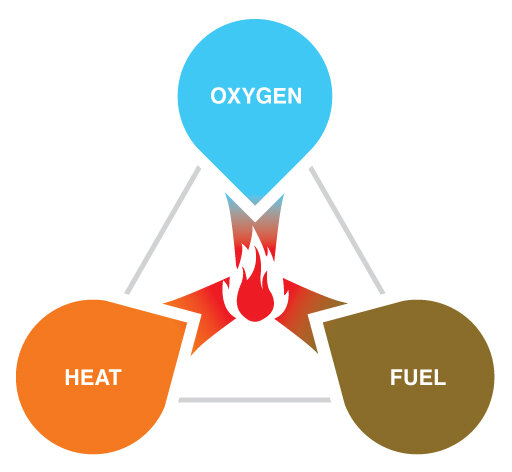
The three sides are fuel, heat, and oxygen.
Fuel is anything that can burn. This includes the obvious things like wood, paper, and gasoline, but also fabrics, cooking oil, and certain gases. It's the substance the fire consumes.
Heat is the energy that gets the process started. Every fuel has an ignition temperature, the point at which it will burst into flame. Heat is what raises the fuel to that temperature. A spark, a lit match, or even friction can provide enough heat.
Oxygen is the final piece. Most fires need air with at least 16% oxygen to burn. Our atmosphere has about 21%, which is plenty. Oxygen combines with the fuel as it burns in a process called oxidation.
No fuel, no heat, or no oxygen means no fire. It's that simple. Removing any one element breaks the triangle and extinguishes the flame.
The Fourth Element
The fire triangle is a great model for how a fire starts, but it doesn't tell the whole story. To understand how a fire keeps going, we need to add a fourth element. This transforms our triangle into a three-dimensional pyramid, or a tetrahedron.
This fourth element is the chemical chain reaction. Once a fire starts, the heat it produces keeps the fuel at its ignition temperature. This process releases flammable gases from the fuel, which then react with oxygen. This reaction produces more heat, which in turn releases more gases, and the cycle continues.
This self-sustaining process is the chain reaction. It's what allows a fire to grow and spread on its own, as long as there is enough fuel and oxygen to feed it.
Oxygen, heat, and fuel are frequently referred to as the “fire triangle.” Add in the fourth element, the chemical reaction, and you actually have a fire “tetrahedron.” The important thing to remember is: take any of these four things away, and you will not have a fire or the fire will be extinguished.
Common Fire Starters
Understanding the fire tetrahedron helps us see how easily fires can start. Everyday situations can bring the four elements together unexpectedly. Some of the most common causes of accidental fires stem from simple sources.
Electrical Faults Faulty wiring, overloaded outlets, and malfunctioning appliances are major fire hazards. An electrical short can generate intense sparks, providing the heat needed to ignite nearby materials like dust, curtains, or carpet.
Open Flames This category is broad. It includes everything from a candle left burning unattended to a stray ember from a fireplace or campfire. Kitchen fires often start when cooking oil gets too hot and ignites on a gas stove. An open flame provides a direct and obvious source of heat.
Flammable Materials Many household products are highly flammable. Items like aerosols, cleaning solvents, paint thinners, and gasoline can release vapors that are easy to ignite. Storing these materials improperly, especially near a heat source like a water heater or furnace, creates a dangerous situation where a small spark can lead to a large fire.
Knowing how fire works is the first step in preventing it. By keeping heat sources, fuel, and oxygen separate, you can avoid creating the conditions a fire needs to start and spread.