Fundamentals of Electronics and Measurement
Electronic Components
The Building Blocks of Circuits
Every electronic device, from your smartphone to a satellite, is built from a collection of fundamental parts called electronic components. Each component has a specific job, and when they are connected together in a circuit, they can perform complex tasks. Think of them like the letters of an alphabet. Individually they're simple, but combined correctly, they can write any story.
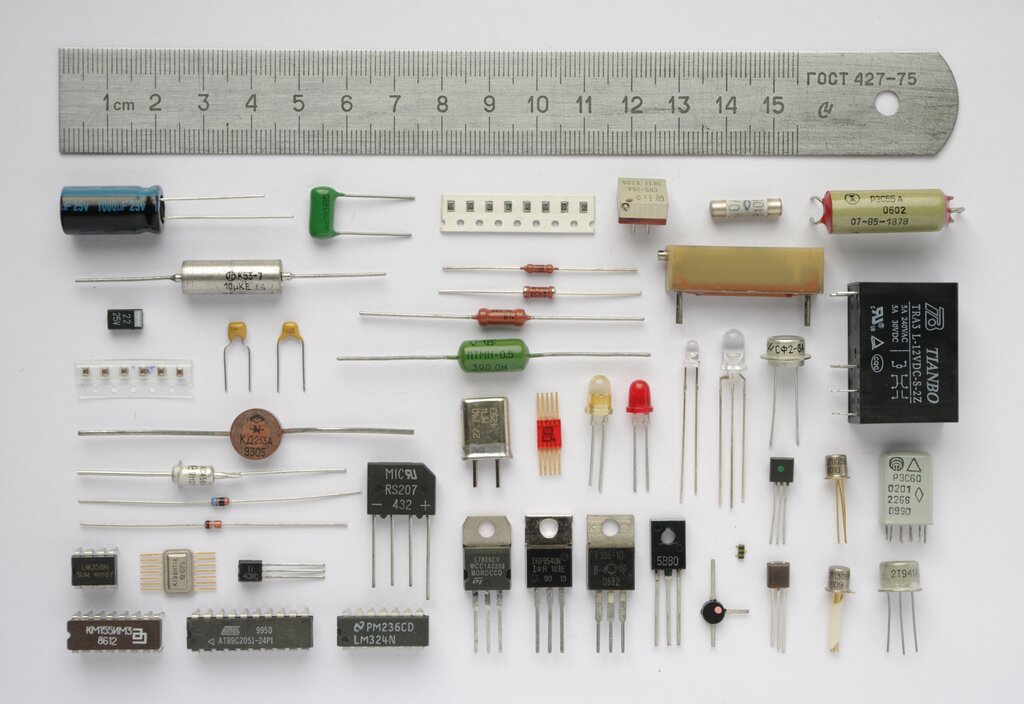
Before diving into specific components, it's useful to group them into two main categories: passive and active. This distinction is based on how they interact with energy in a circuit.
Passive vs. Active Components
Passive components are the simplest parts of a circuit. They don't require an external power source to operate, and they can't introduce net energy (power) into a circuit. Instead, they consume, store, or release energy. The three most fundamental passive components are resistors, capacitors, and inductors.
Active components can control the flow of electricity, typically by amplifying a signal or acting like a switch. Unlike passive components, they need an external power source to function. Examples include transistors and operational amplifiers.
This basic classification helps engineers understand and design circuits. For now, we'll focus on the foundational passive components that form the backbone of electronics.
Resistors, Capacitors, and Inductors
Let's meet the big three of passive components. Each manipulates electricity in a unique way, and together, they provide the essential tools for controlling voltage and current.
Resistor
noun
A passive electrical component with two terminals that implements electrical resistance as a circuit element. Resistors act to reduce current flow, and, at the same time, act to lower voltage levels within circuits.
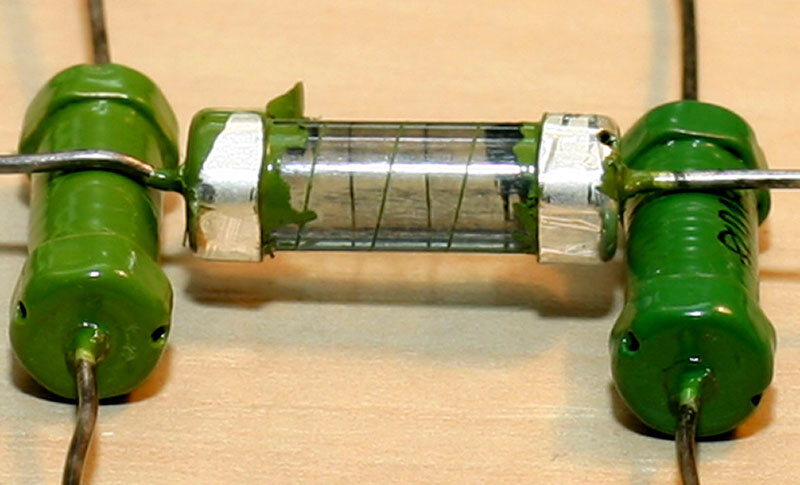
A resistor's primary job is to oppose the flow of electric current. It's like a narrow pipe in a water system that restricts the flow. This property, called resistance, is measured in ohms (Ω). You'll find resistors everywhere, used to control current levels, divide voltages, and protect sensitive components. The colored bands on many resistors are a code that indicates their resistance value.
Capacitor
noun
A passive two-terminal electronic component that stores electrical energy in an electric field. The effect of a capacitor is known as capacitance.
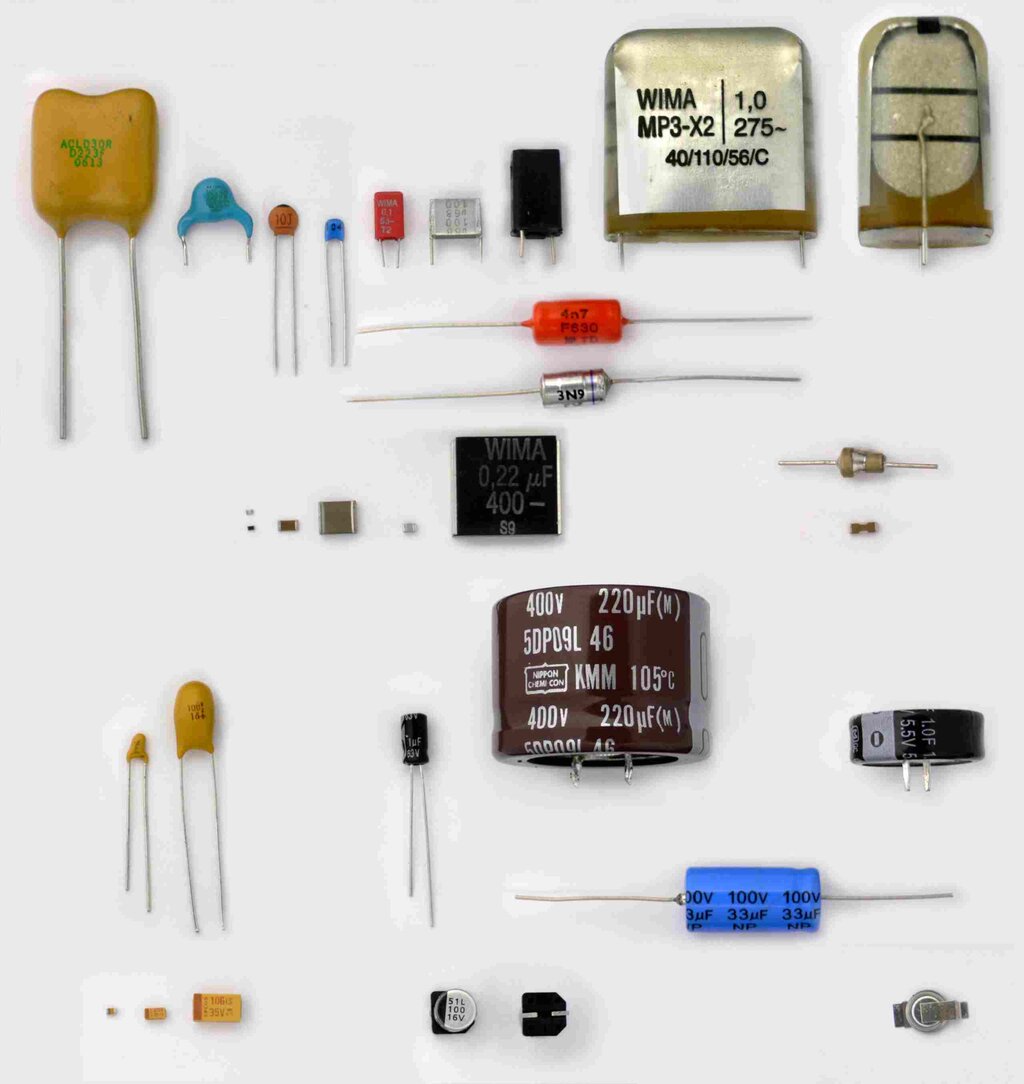
If a resistor is like a narrow pipe, a capacitor is like a small water tank. It stores energy in the form of an electric field and can release it when needed. A capacitor is made of two conductive plates separated by a non-conductive material called a dielectric.
It blocks the flow of direct current (DC) but allows alternating current (AC) to pass, making it essential for filtering out unwanted noise from power supplies, tuning radios, and in timing circuits. Its ability to store charge is measured in farads (F).
Inductor
noun
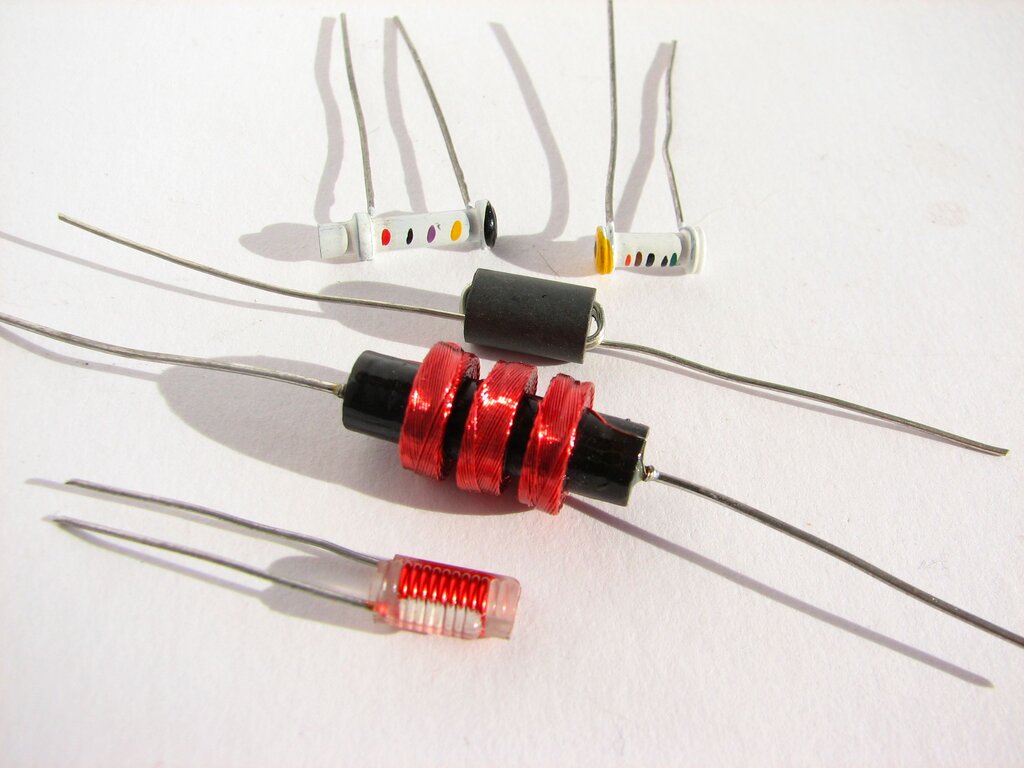
A passive two-terminal electrical component that stores energy in a magnetic field when electric current flows through it. An inductor typically consists of an insulated wire wound into a coil.
An inductor is essentially a coil of wire. When current flows through it, it creates a magnetic field, storing energy in that field. Inductors have a unique property: they resist changes in current. If the current tries to change quickly, the inductor pushes back.
This makes them the opposite of capacitors in many ways. While capacitors block DC and pass AC, inductors pass DC easily but resist the flow of AC. This property is useful for filtering signals, building transformers, and in power converters. Inductance is measured in henries (H).
Let's review the key characteristics of these three passive components.
| Component | Function | Stores Energy As | Resists | Unit |
|---|---|---|---|---|
| Resistor | Limits current flow | (Dissipates as heat) | Current | Ohm (Ω) |
| Capacitor | Stores electrical charge | Electric Field | Changes in Voltage | Farad (F) |
| Inductor | Stores magnetic energy | Magnetic Field | Changes in Current | Henry (H) |
Ready to check your understanding of these fundamental components?
What are the two main categories electronic components are grouped into based on how they interact with energy?
Which component's primary job is to oppose the flow of electric current?
Mastering resistors, capacitors, and inductors is the first step toward understanding how all electronic circuits work. They are the simple, predictable elements that, when combined, create the complex technology we use every day.