Fundamentals of Drawing
Line Control
The Power of a Single Line
A line is more than just a mark on a page. It’s the foundation of every drawing. By learning to control your lines, you can suggest weight, texture, and movement, all without a single smudge of shading. The key is mastering pressure and line weight.
Think about how you use a pencil. Pressing lightly creates a thin, delicate line. Pressing harder creates a thick, dark one. This variation is called line weight. A heavier line can make an object feel solid and close, while a lighter, thinner line can suggest distance or a softer surface. Practice drawing simple shapes, like circles and squares, and consciously change the pressure you apply. Try making one side of a square thick and bold, and the opposite side light and airy.
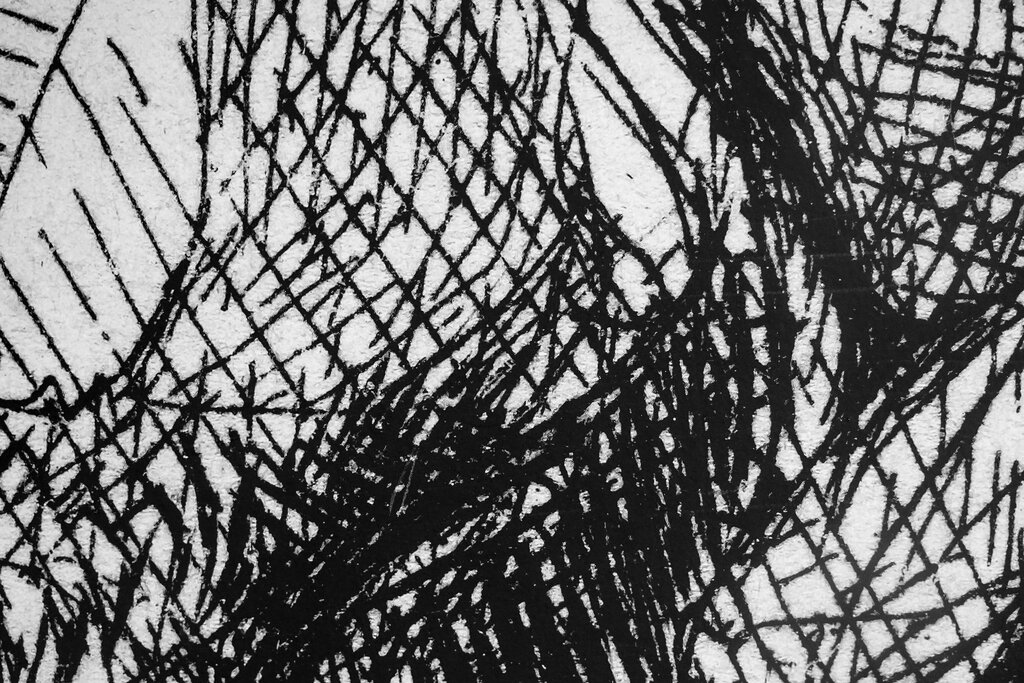
By playing with line weight, you're not just outlining an object. You're beginning to describe it. A thick, heavy line at the bottom of a sphere might suggest its weight resting on a surface. A light, wispy line could describe the texture of a cloud.
Drawing What You See
Two fantastic exercises for improving line control are contour drawing and continuous line drawing. They force you to slow down and truly observe your subject.
A continuous line drawing is exactly what it sounds like. You draw an entire object without ever lifting your pencil from the paper. The goal isn’t a perfect replica, but to train your hand to follow your eye as it traces the object’s form. This creates a fluid, connected image.
Contour Drawing
noun
An artistic technique where the artist sketches the outline of a subject. It emphasizes the mass and volume of the subject rather than the details.
Contour drawing focuses on the edges of an object. You're not just drawing the outside silhouette, but also the major interior lines that define its shape. Imagine an ant crawling along every surface of a coffee mug, inside and out. The path it takes is what you’d draw.
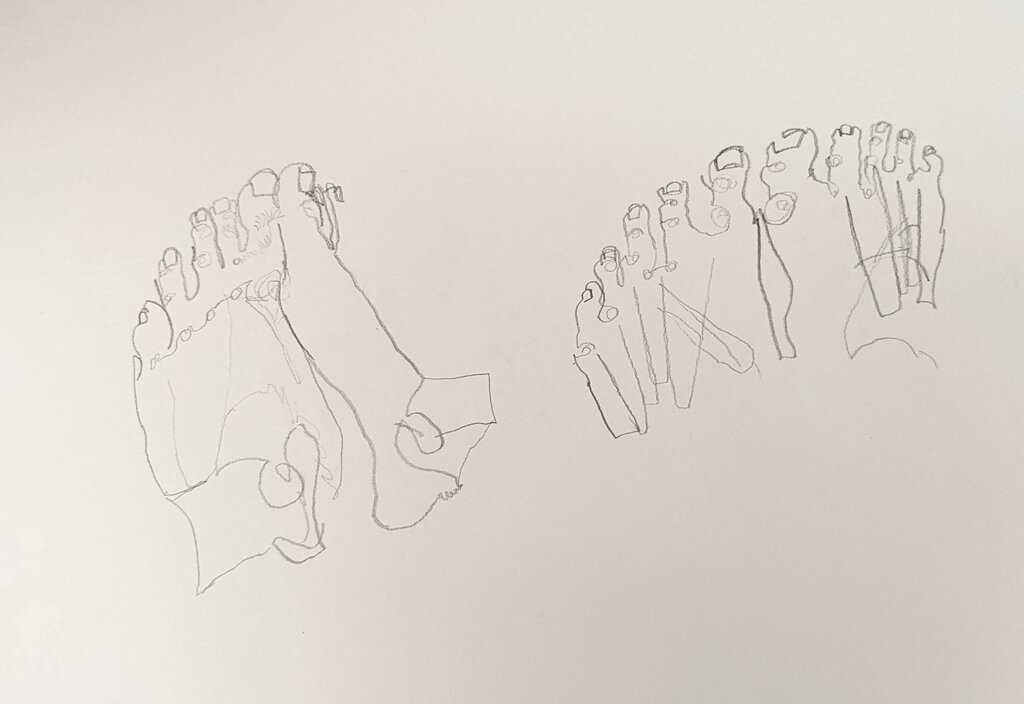
For a real challenge, try blind contour drawing. In this exercise, you look only at your subject, never at your paper. The result will look strange, but it’s one of the best ways to build a strong connection between your eyes and your hand.
Capturing Energy and Form
While contour drawing is slow and deliberate, gestural drawing is the complete opposite. It’s about capturing the energy, movement, and essence of a subject with quick, expressive lines. Think less about accuracy and more about feeling. A gestural drawing of a person dancing would focus on the flow of their movement, not the buttons on their shirt.
Use your whole arm, not just your wrist, to make broad, sweeping gestural lines. This helps create more dynamic and fluid marks.
Once you have the basic form, you can use cross-contour lines to describe its volume. These are lines that wrap around the object, following its surface. They aren't outlines; they are paths across the form. Think of the lines on a globe that show longitude and latitude. They curve around the sphere, giving it a sense of three-dimensional shape.
Practicing these different types of lines—heavy, light, continuous, gestural, and cross-contour—gives you a complete toolkit for describing any object you can see. They are the fundamental building blocks for creating expressive and believable drawings.
Ready to test your knowledge? Let's see what you've learned about line control.
What is the primary purpose of varying line weight in a drawing?
Which type of line is used to wrap around an object to describe its three-dimensional volume, similar to latitude lines on a globe?