Fundamentals of Digital Marketing
Introduction to Digital Marketing
What Is Digital Marketing?
At its core, digital marketing is any marketing effort that uses an electronic device or the internet. It's how businesses connect with current and potential customers through digital channels like search engines, social media, email, and websites.
Think of it as having a conversation with people where they spend most of their time: online.
Instead of casting a wide, general net, digital marketing allows you to find and engage the specific groups of people most likely to be interested in what you offer. It's about delivering the right message to the right person at the right time, all through the digital platforms they use every day.
From Billboards to Clicks
Traditional marketing, like a TV commercial or a magazine ad, broadcasts a single message to a massive audience. You hope some of them are interested, but you can't be sure who sees it or what they do afterward.
Digital marketing changed the game. It’s interactive, measurable, and highly targeted. You can see exactly how many people clicked your ad, what they did on your website, and whether they made a purchase. This shift from one-way broadcasting to a two-way conversation is the biggest difference between traditional and digital approaches.
| Feature | Traditional Marketing | Digital Marketing |
|---|---|---|
| Audience | Broad, general | Targeted, specific |
| Interaction | One-way message | Two-way conversation |
| Measurement | Difficult, often estimated | Precise, real-time data |
| Cost | Often high with uncertain ROI | Scalable with clear ROI |
The evolution was driven by technology. As more people got online, businesses followed them, discovering new and more effective ways to build relationships and grow.
The Language of Digital
Like any field, digital marketing has its own vocabulary. Understanding a few key terms will help you navigate this world. Here are some of the most fundamental concepts.
SEO
noun
Search Engine Optimization. The process of improving your website to increase its visibility when people search for products or services related to your business in Google, Bing, and other search engines.
When your site is optimized for search engines, you get more organic (unpaid) traffic from people actively looking for what you offer.
Content Marketing
noun
A marketing approach focused on creating and distributing valuable, relevant, and consistent content to attract and retain a clearly defined audience. Examples include blog posts, videos, and infographics.
The goal is not to directly sell a product, but to provide value that builds trust and establishes your brand as an authority.
Conversion
noun
When a user takes a desired action on your website. This could be making a purchase, signing up for a newsletter, filling out a form, or downloading a file.
Why Your Business Needs to Be Online
In today's world, a strong digital presence isn't just a nice-to-have, it's essential. Your customers are online, and if you aren't, you're missing out. An online presence allows you to reach a global audience, something that was once only possible for huge corporations.
It also levels the playing field. A small local shop can compete with a large national chain by using smart digital marketing to connect with its local community. Through a website, social media, or email marketing, any business can build direct relationships with customers, gather feedback, and create lasting loyalty.
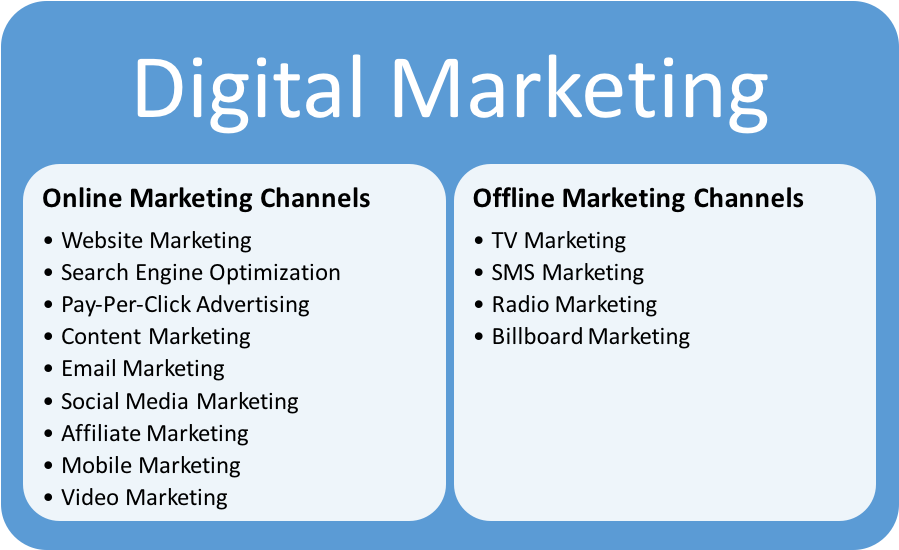
Ultimately, being online means being accessible. It makes it easy for people to find you, learn about your business, and become a customer, no matter where they are or what time it is.
Now, let's test your knowledge of these foundational concepts.
What is the primary characteristic that defines digital marketing?
What is the biggest difference between digital marketing and traditional marketing?
Understanding these basics is the first step. From here, you can explore the specific strategies and tools that make digital marketing so powerful.