Fundamentals of Competition Law
Introduction to Competition Law
The Rules of the Game
Imagine a race where one runner is allowed to trip the others. It wouldn't be fair, and the fastest person might not win. The economy is a bit like that race. Competition law sets the rules to make sure the race is fair for businesses. Its main goal is to promote a healthy, competitive market.
When companies compete, consumers win. They get lower prices, better quality products, and more choices. Competition also pushes businesses to innovate and become more efficient. Without these rules, a few powerful companies could dominate entire industries, stifling innovation and harming consumers.
In short, competition law is designed to protect the process of competition for the benefit of consumers, not to protect individual competitors.
A Quick History
The idea of competition law isn't new. Its modern roots trace back to the late 19th century in the United States. During this era, massive industrial combinations, known as "trusts," controlled key sectors like oil, steel, and railroads. These trusts could set prices, crush smaller rivals, and exploit consumers with little oversight.
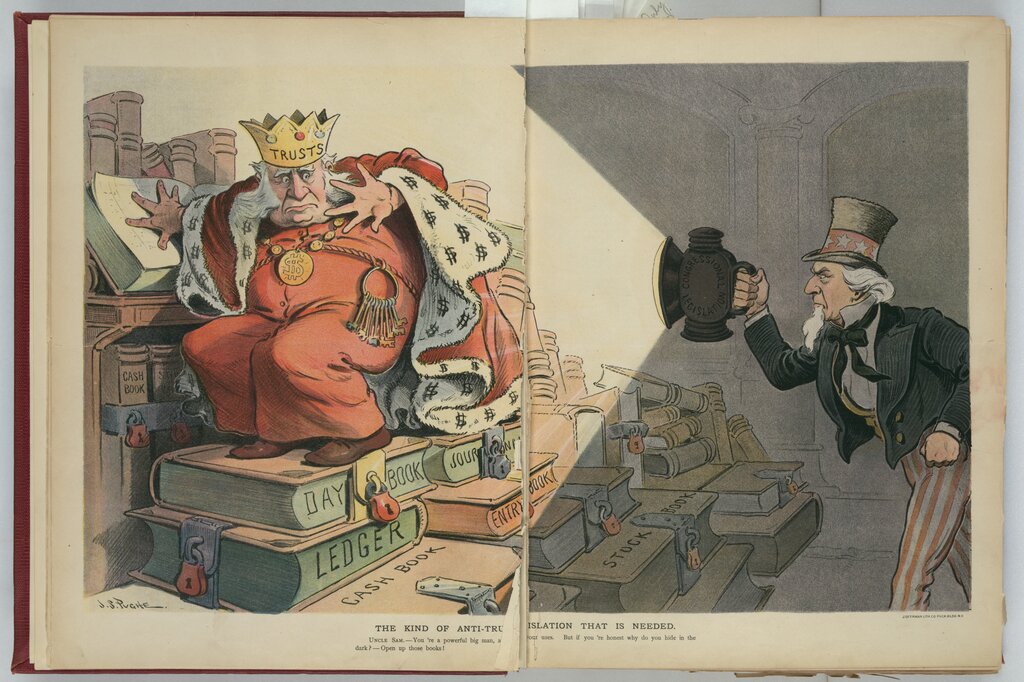
Public outcry against the power of these trusts led to landmark legislation. In Europe, the development of competition law was closely tied to the creation of a single market. After World War II, European nations sought to build economic cooperation and prevent the kind of national protectionism that could lead to conflict. Ensuring fair competition across borders was a crucial step.
Landmark Legislation
Two pieces of legislation form the bedrock of modern competition law on both sides of the Atlantic.
Sherman Antitrust Act
other
A U.S. law passed in 1890 that was the first federal act to outlaw monopolistic business practices. It prohibits agreements and conspiracies that restrain trade.
Across the ocean, the European Union has its own foundational rule. Article 101 of the Treaty on the Functioning of the European Union (TFEU) is a cornerstone of EU competition policy. It bans anti-competitive agreements between companies, such as price-fixing or market sharing, that could affect trade between EU member states.
| Feature | Sherman Antitrust Act (U.S.) | Article 101 TFEU (EU) |
|---|---|---|
| Focus | Outlaws conspiracies in restraint of trade and monopolization. | Prohibits anti-competitive agreements between companies. |
| Scope | Applies within the United States. | Applies to conduct affecting trade between EU member states. |
| Core Idea | Keep markets free from unreasonable restraints. | Ensure a level playing field in the EU single market. |
The Referees
Laws are only effective if they're enforced. Specialized government agencies act as referees, monitoring the market and taking action against companies that break the rules.
In the United States, a key enforcer is the Federal Trade Commission (FTC). The FTC investigates anticompetitive practices, reviews mergers to prevent monopolies from forming, and works to protect consumers from unfair or deceptive business practices.
In the European Union, the European Commission holds a similar and very powerful role. It is responsible for enforcing EU competition rules, investigating potential infringements of Articles 101 and 102 of the TFEU, and approving large-scale mergers. The Commission can impose significant fines on companies that violate EU competition law.
Let's review the key concepts we've covered.
Time to check your understanding.
What is the primary goal of competition law?
In the late 19th century United States, public outcry against massive industrial combinations known as ______ led to the creation of modern competition law.
These foundational laws and agencies ensure that markets remain dynamic and fair, which is a key ingredient for a healthy economy.