Functional Groups and Chemical Reactivity
Electronic Effects Principles
The Flow of Electrons
In organic chemistry, reactions are essentially conversations between molecules, and the language they speak is electrons. The shape and bonding of a molecule, which you're familiar with, is just the static blueprint. The real action happens when electrons start to move.
Electron density is rarely spread evenly across a molecule. Some atoms are more 'electron-greedy' than others, a property called electronegativity. This greediness creates permanent pushes and pulls on the electrons within the molecular framework, setting the stage for chemical reactivity. These movements, or 'electronic effects', happen in two main ways: through the strong, single sigma (σ) bonds that form the molecule's skeleton, and through the more mobile pi (π) bonds found in double or triple bonds.
The Inductive Effect
Imagine a tug-of-war. The rope is a sigma bond, and the atoms at each end are the teams. If one team is stronger (more electronegative), it pulls the rope slightly towards itself. This is the in a nutshell. It's a permanent polarisation of a σ-bond due to the difference in electronegativity between the bonded atoms. This effect is relatively weak and its influence fades rapidly over distance, usually becoming negligible after three bonds.
This effect is symbolised by an arrow on the bond, pointing towards the more electronegative atom, indicating the direction of the electron shift.
We classify groups based on how they pull or push:
-
Negative Inductive Effect (-I): These are electron-withdrawing groups (EWGs). They are more electronegative than carbon and pull electron density away from the carbon chain. Common examples include halogens (-F, -Cl), nitro groups (-NO₂), and cyano groups (-CN). They create an electron-deficient site (a partial positive charge, ) on the adjacent carbon.
-
Positive Inductive Effect (+I): These are electron-donating groups (EDGs). Alkyl groups (like methyl, -CH₃, and ethyl, -C₂H₅) are the most common examples. They are less electronegative than the carbons they might be attached to in a more complex structure, effectively 'pushing' electron density towards the chain. This creates an electron-rich site (a partial negative charge, ).
Resonance and the Mesomeric Effect
While the inductive effect works through single bonds, the (or Resonance Effect) operates through the pi (π) system of conjugated molecules—those with alternating single and multiple bonds. It involves the delocalisation of π electrons across the system. This isn't a simple push or pull; it's electrons spreading out over multiple atoms. A molecule with resonance is more stable than any single Lewis structure we can draw for it. The true structure is a hybrid of all its contributing resonance forms.
Similar to the inductive effect, we classify groups as donating or withdrawing:
-
Positive Mesomeric Effect (+M): A group exhibits the +M effect if it donates electrons to the conjugated system. These groups typically have a lone pair of electrons on the atom directly attached to the system. Examples include hydroxyl (-OH), alkoxy (-OR), and amino (-NH₂) groups. They increase electron density within the π system, particularly at the ortho and para positions of a benzene ring.
-
Negative Mesomeric Effect (-M): A group shows the -M effect if it withdraws electrons from the conjugated system. These groups typically have a multiple bond to a more electronegative atom. Examples include nitro (-NO₂), carbonyl (-C=O), and cyano (-C≡N) groups. They decrease electron density in the π system, also primarily at the ortho and para positions.
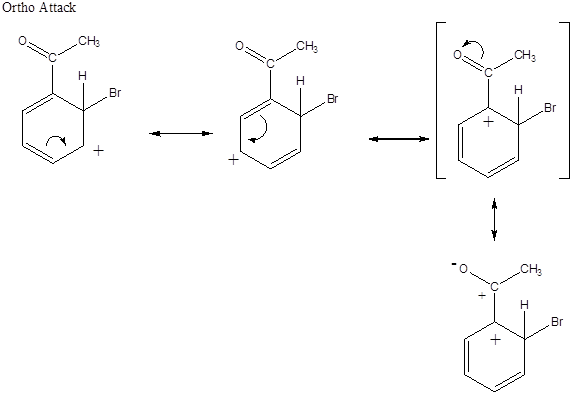
Important note: The Mesomeric effect is generally much stronger than the Inductive effect when they are in conflict. For example, in aniline (-NH₂ on benzene), the nitrogen is more electronegative than carbon (-I effect), but its lone pair donates strongly into the ring (+M effect). The +M effect dominates, making the ring electron-rich and highly reactive.
Hyperconjugation
is a special kind of stabilisation that involves the overlap of a σ-bond orbital (usually C-H or C-C) with an adjacent empty or partially filled p-orbital or a π-orbital. It's like a weaker form of resonance and is sometimes called 'no-bond resonance'. This effect helps to stabilise carbocations and alkenes.
-
In Carbocations: A carbocation has an empty p-orbital. The electrons in an adjacent C-H σ-bond can overlap with this empty orbital, spreading the positive charge over more atoms. The more alkyl groups (and thus more C-H bonds) adjacent to the positively charged carbon, the more hyperconjugation is possible, and the more stable the carbocation. This is why tertiary carbocations are more stable than secondary, which are more stable than primary.
-
In Alkenes: The electrons from a C-H σ-bond on a carbon adjacent to a double bond can overlap with the π* (antibonding) orbital of the double bond. This delocalisation lowers the energy of the system, making the alkene more stable. The more alkyl substituents on a double bond, the more stable it is.
These three effects—Inductive, Mesomeric, and Hyperconjugation—work together to create a detailed map of electron density across a molecule. By identifying electron-rich (nucleophilic) and electron-poor (electrophilic) sites, we can begin to predict where and how a molecule will react. Understanding this electronic landscape is the key to moving beyond simply drawing structures and into the dynamic world of chemical transformations.
Which of the following groups primarily exhibits a negative inductive effect (-I), withdrawing electron density through sigma bonds?
The Mesomeric effect primarily involves the delocalisation of which type of electrons?