Full Stack DevOps Engineering Essentials
Introduction to DevOps
Breaking Down the Wall
Imagine two teams working on a car. One team designs and builds the engine (the developers), and the other team is responsible for keeping the car running on the road (the operations team). In the past, the engine builders would finish their work, toss it over a wall to the operations team, and say, "Here you go! Make it run."
If the car sputtered or broke down, the operations team would get frustrated. The engine team, already working on a new engine, wouldn't have the context of what was happening on the road. This "wall of confusion" led to slow repairs, finger-pointing, and unhappy drivers.
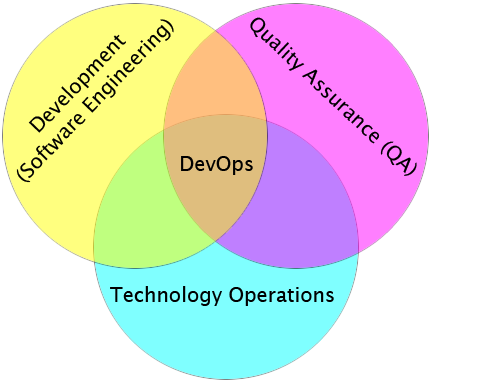
DevOps is a movement that tears down this wall. It's not a specific tool or a job title, but a cultural philosophy and a set of practices that combine software development (Dev) and IT operations (Ops). The goal is to shorten the development lifecycle and deliver high-quality software more frequently and reliably.
DevOps is a set of practices that combines software development (Dev) and IT operations (Ops) to shorten the software development lifecycle, deliver features, fixes, and updates frequently in close alignment with business objectives.
Born from the principles of Agile software development, DevOps extends those ideas beyond just the coding phase. It covers the entire journey of a feature, from an idea in a developer's head to a functioning tool in the hands of a user.
The Core Principles
DevOps stands on a few key ideas that guide how teams work together.
Collaboration
noun
The practice of breaking down organizational silos and encouraging teams to work together towards a common goal.
Instead of separate teams with competing priorities, DevOps encourages creating a single team with shared ownership of the software. Developers, operations staff, quality assurance, and even security personnel all work together from start to finish. This constant communication ensures everyone understands the full picture and is responsible for the product's success.
Another core principle is automation. The goal is to automate as much of the software delivery process as possible, from testing the code to deploying it. Automation reduces the chance of human error, frees up team members from repetitive tasks, and allows for faster, more consistent releases.
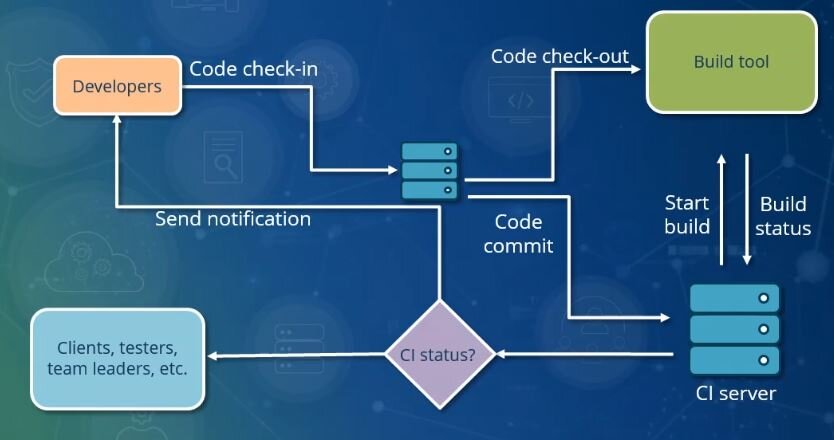
This leads directly to Continuous Integration (CI) and Continuous Delivery (CD). In simple terms, CI means developers regularly merge their code changes into a central repository, after which automated builds and tests are run. CD is the practice of automatically releasing every good build to a testing or production environment. Together, CI/CD creates a streamlined pipeline that takes new code and delivers it to users quickly and safely.
Why Adopt DevOps?
The shift to DevOps isn't just a trend; it brings tangible benefits. By breaking down silos and automating workflows, teams can release software much faster. This speed doesn't come at the cost of quality. In fact, by integrating testing throughout the development process, teams often catch bugs earlier, leading to more stable and reliable products.
When something does go wrong, a collaborative DevOps culture means quicker recovery. Because the team shares responsibility, everyone swarms the problem to find a solution, rather than wasting time blaming each other. This teamwork boosts morale and leads to more innovative, higher-quality work.
Key Benefits:
- Speed: Deliver new features to customers faster.
- Reliability: Ensure application updates are stable and secure.
- Scale: Manage complex systems efficiently.
- Improved Collaboration: Build more effective and engaged teams.
A Culture of Shared Responsibility
Ultimately, DevOps is a cultural change. It's about fostering an environment of trust, transparency, and shared ownership. It moves teams away from a "not my problem" mindset to one of collective responsibility. A common mantra in DevOps is, "You build it, you run it."
This means developers are responsible for their code not just in the development phase, but also in production. They gain a deeper understanding of how their work impacts the end-user and the overall system stability. Likewise, operations teams get involved earlier in the development process, providing valuable input on scalability and reliability.
DevOps is not just a set of tools; it's a cultural shift.
This cultural shift is the foundation. Without collaboration and shared responsibility, even the best automation tools won't deliver the full promise of DevOps.
Ready to test your knowledge? Let's see what you've learned.
What is the primary goal of the DevOps philosophy?
The DevOps mantra "You build it, you run it" emphasizes a shift towards...
By embracing collaboration, automation, and a culture of shared ownership, teams can deliver better software, faster. This approach is not just about technology; it's about empowering people to work together more effectively.