Full-Stack Development Fundamentals
Introduction to Full-Stack Development
What is Full-Stack Development?
Think of building a website like building a restaurant. There’s the part the customer sees: the dining room, the menus, the decor. It’s all about the experience. Then there’s the part they don’t see: the kitchen, the storage rooms, the plumbing, and the electrical systems that make everything run.
In web development, the part the user sees and interacts with is called the front-end, or client-side. The hidden machinery that powers it all is the back-end, or server-side. A full-stack developer is like a general contractor who understands how to build both the dining room and the kitchen, ensuring they work together perfectly.
Full-stack development is the practice of working on both the front-end and back-end portions of an application. It covers everything from the user interface to the database.
This means a full-stack developer has a broad skill set. They can design the user-facing parts of a website, write the server-side logic that processes data, and manage the database where that data is stored. They see the entire picture, which is an incredibly valuable perspective.
A Quick Trip Through Time
Web development didn’t always have such clear-cut roles. In the early days of the internet, websites were simple, static documents. A single person, often called a "webmaster," handled everything because there wasn't much to handle. They created the HTML page, styled it a bit, and put it on a server.
As the web grew more interactive, things got complicated. Websites needed to do more, like process user signups, handle online shopping carts, and show personalized content. This required databases, server-side programming, and more complex user interfaces. Naturally, developers began to specialize. Some focused on creating beautiful, user-friendly interfaces (front-end), while others built the powerful engines that ran behind the scenes (back-end).
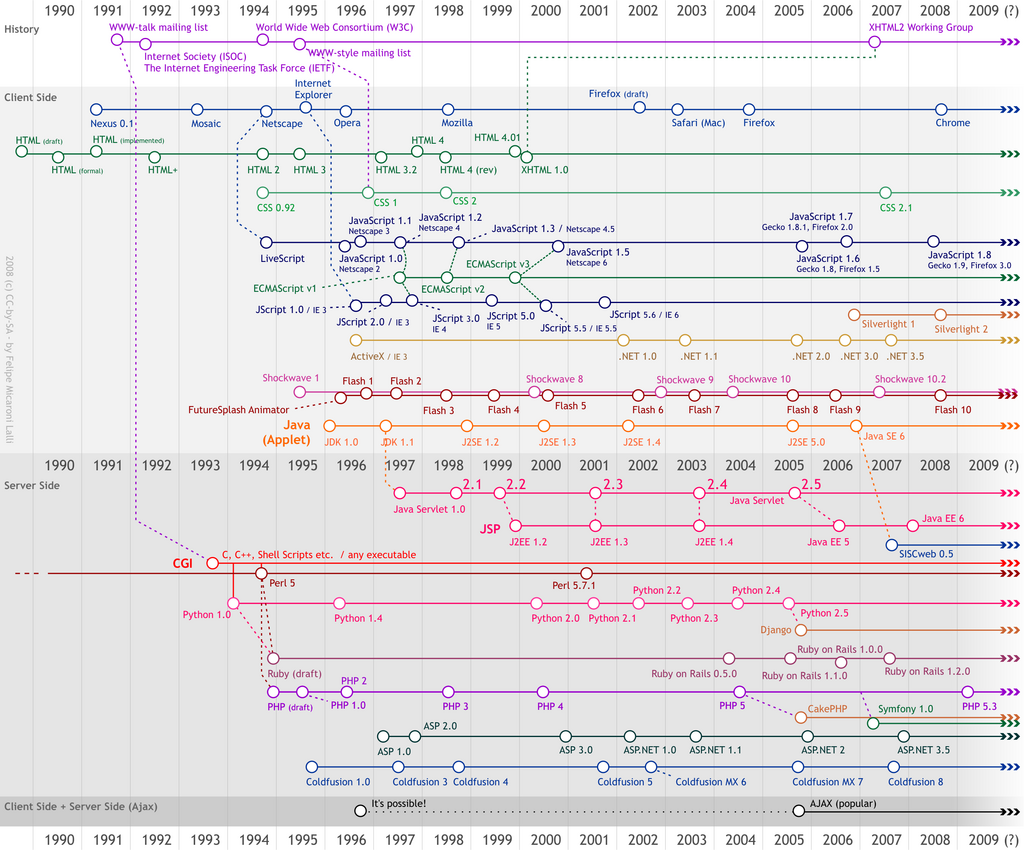
Recently, the pendulum has swung back. New tools and frameworks have made it more feasible for a single developer to manage the entire application stack. This shift gave rise to the modern full-stack developer, a versatile problem-solver who can contribute to all stages of a project.
The Two Sides of an Application
Let's break down the front-end and back-end a little more. While a full-stack developer works across both, understanding the distinction is key.
The front-end is what you see. The back-end is how it works.
The front-end is everything your browser downloads and displays when you visit a website. It’s built with three core technologies that work in concert:
- HTML (HyperText Markup Language): Provides the basic structure and content of the page—the skeleton.
- CSS (Cascading Style Sheets): Adds the styling—the clothes, colors, and fonts.
- JavaScript: Makes the page interactive—the brain and nervous system that responds to your clicks and keystrokes.
The back-end consists of the server, an application, and a database. This is where the heavy lifting happens. When you log in to an account, the back-end verifies your password. When you buy something, it processes your payment. It's the engine room of the application, handling data storage, security, and business logic.
A full-stack developer is fluent in the languages of both sides. They can build a user interface with front-end tools and then write the back-end code to make that interface functional.
Full-stack development combines front-end (user interface) and back-end (server and database management) skills, offering developers the ability to handle all layers of a web application.
Tools of the Trade
To navigate the full stack, developers rely on a host of tools, frameworks, and technologies. A "stack" is simply the collection of technologies used to build a web application. There are many popular stacks, often known by acronyms.
| Acronym | Meaning | Technologies |
|---|---|---|
| MERN | MongoDB, Express.js, React, Node.js | A popular all-JavaScript stack. |
| MEAN | MongoDB, Express.js, Angular, Node.js | Similar to MERN, but uses Angular for the front-end. |
| LAMP | Linux, Apache, MySQL, PHP | A classic, time-tested stack that powers much of the web. |
| PERN | PostgreSQL, Express.js, React, Node.js | A variation of MERN that uses a different database. |
Beyond these stacks, developers use countless other tools:
- Version Control: Systems like Git are essential for tracking changes to code and collaborating with others.
- Databases: Besides MongoDB, MySQL, and PostgreSQL, there are many others like SQLite and Redis, each suited for different tasks.
- Cloud Platforms: Services like Amazon Web Services (AWS), Google Cloud Platform (GCP), and Microsoft Azure provide the infrastructure to host and run applications without managing physical servers.
- APIs (Application Programming Interfaces): These are the messengers that allow the front-end and back-end to communicate with each other and with other services.
Becoming a full-stack developer doesn't mean you have to be an absolute expert in everything. It's about having a solid understanding across the board and the ability to build and maintain a complete application. Ready to test what you've learned?
Using the restaurant analogy from the text, what does the 'back-end' of a website represent?
Which of these technologies is primarily responsible for making a webpage interactive, responding to user clicks and keystrokes?
Full-stack development is a broad and rewarding field. By understanding how the front-end and back-end work together, developers can create seamless, powerful, and complete digital experiences.