Full Stack AIML Development
Introduction to AI and Machine Learning
What Is AI Anyway?
Artificial Intelligence, or AI, is a broad field of computer science focused on creating systems that can perform tasks that typically require human intelligence. This includes things like understanding language, recognizing patterns, learning from experience, and making decisions.
Artificial Intelligence
noun
The theory and development of computer systems able to perform tasks that normally require human intelligence.
Think of AI as the big umbrella. Underneath it, there are many different approaches and subfields. One of the most important and powerful of these is Machine Learning.
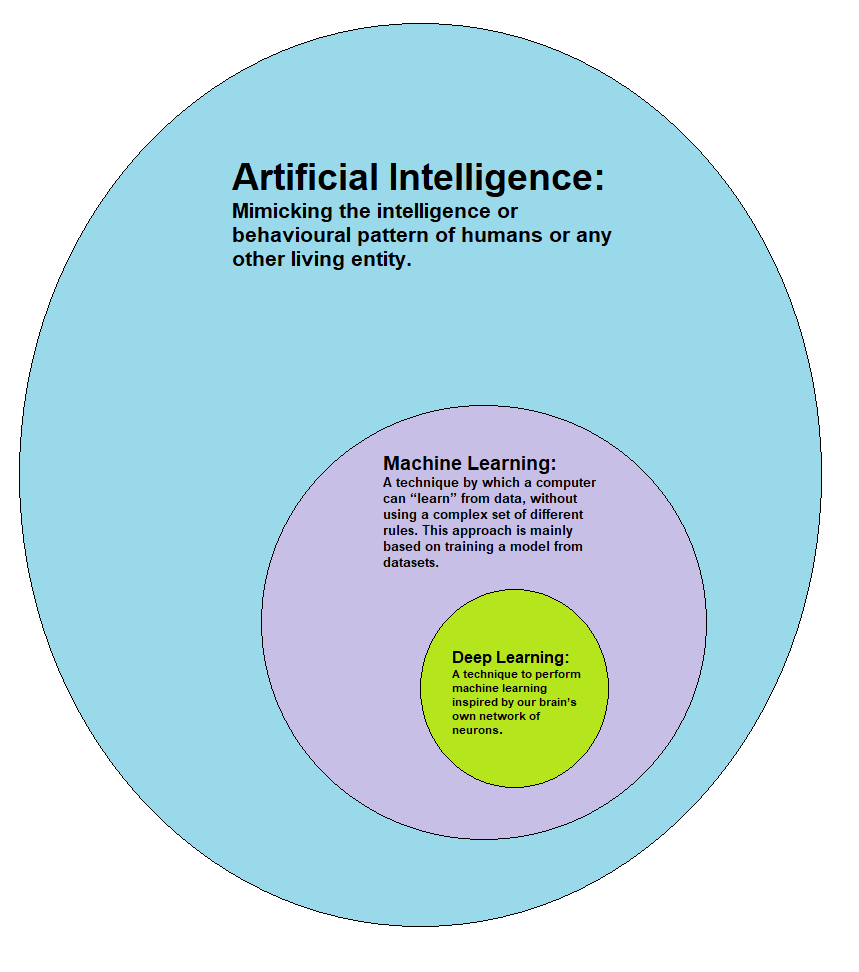
Machine Learning (ML) is an approach to AI where, instead of writing explicit instructions for every possible situation, we give a computer a large amount of data and let it learn the rules and patterns for itself. The goal is to create a model that can make predictions or decisions based on new, unseen data.
In short, Machine Learning is the process of teaching a computer to learn from data, without being explicitly programmed.
A Quick History
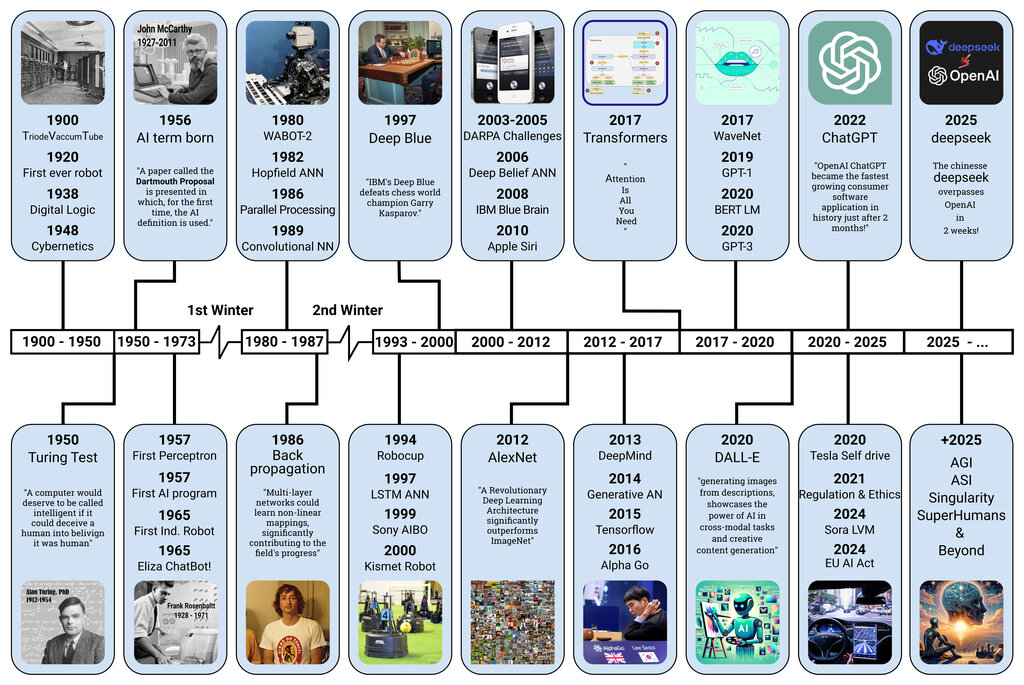
The dream of intelligent machines isn't new. It dates back to ancient myths. But the scientific pursuit of AI began in the mid-20th century. In 1950, Alan Turing proposed a test for machine intelligence that we still discuss today. The term "Artificial Intelligence" was coined a few years later, in 1956.
The journey of AI has seen periods of intense excitement and funding, followed by "AI winters" where progress slowed. Early systems were based on complex sets of rules. The recent explosion in AI is largely thanks to the rise of machine learning, fueled by massive amounts of data and powerful computers.
How Machines Learn
Machine learning isn't a single technique; it's a collection of methods. Most of them fall into three main categories: supervised, unsupervised, and reinforcement learning.
Supervised Learning is like learning with a teacher. The algorithm is given a dataset where the "right answers" are already labeled. For example, you'd feed it thousands of pictures of cats, each labeled "cat," and pictures of dogs, labeled "dog." The model learns the features that distinguish a cat from a dog. Its goal is to correctly label new, unseen photos.
Unsupervised Learning is about finding patterns on your own. In this case, the data is not labeled. Imagine giving a machine a box of mixed fruits. It wouldn't know what a "banana" or an "apple" is, but it could start sorting them into piles based on shared characteristics like color, shape, and size. This method is great for discovering hidden structures in data, like grouping customers by their purchasing habits.
Reinforcement Learning works through trial and error, like training a pet. The algorithm, or "agent," learns by interacting with an environment. It gets rewards for correct actions and penalties for incorrect ones. Over time, it learns the best strategy to maximize its total reward. This is the approach used to train AIs to play complex games like chess or Go, or to control a robot's movements.
| Learning Type | Input Data | Goal | Real-World Example |
|---|---|---|---|
| Supervised | Labeled Data | Predict an outcome | Spam email detection |
| Unsupervised | Unlabeled Data | Find hidden patterns | Customer segmentation |
| Reinforcement | No initial data; agent interacts with environment | Maximize a reward | Self-driving car navigation |
AI in the Wild
You probably use AI and ML every day without even realizing it. When Netflix suggests a movie you might like, that's a recommendation engine powered by machine learning. When your email filters out junk mail, that's a classification model at work.
Other common applications include:
- Virtual Assistants: Siri, Alexa, and Google Assistant use natural language processing, a part of AI, to understand and respond to your voice commands.
- Medical Diagnosis: AI models can analyze medical images like X-rays and MRIs to help doctors spot signs of disease earlier and more accurately.
- Financial Services: Banks use ML to detect fraudulent transactions in real time and to assess credit risk.
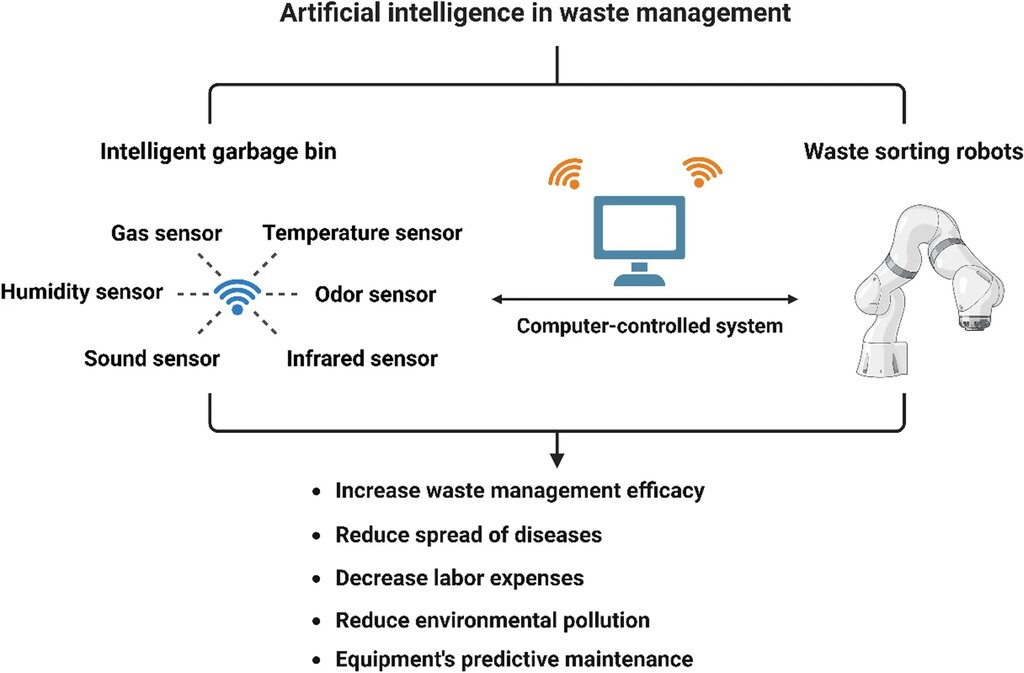
- Smart Cities: AI helps optimize everything from traffic flow to energy consumption and waste management.
Understanding these core concepts—what AI and ML are, how they evolved, and the basic ways machines learn—is the first step into a much larger world. Now, let's review the key terms we've covered.
Ready to check your understanding?
What is the relationship between Artificial Intelligence (AI) and Machine Learning (ML)?
An algorithm is given a large dataset of customer information without any predefined categories. Its task is to identify natural groupings of customers based on their behavior. This is an example of:
These building blocks are the foundation for everything that follows in AI development. By grasping the difference between AI and ML and the three main learning types, you're well on your way.