Frontier Robotics AI
Introduction to AI in Robotics
The Brains Behind the Brawn
For a long time, robots were impressive but not very bright. Think of an assembly line arm in a car factory. It can weld a door perfectly thousands of times, but it only does what it’s told. If the door is an inch out of place, the robot doesn't know. It just keeps welding in the same spot. This is robotics without intelligence.
Intelligent robotics is about giving machines the ability to perceive their surroundings, make decisions, and act on them. It’s the difference between a pre-programmed arm and a robot that can see the misplaced door, adjust its position, and weld it correctly. It’s about creating machines that can handle the unpredictability of the real world.
Intelligent robotics gives machines the ability to sense, think, and act autonomously.
From Repeaters to Responders
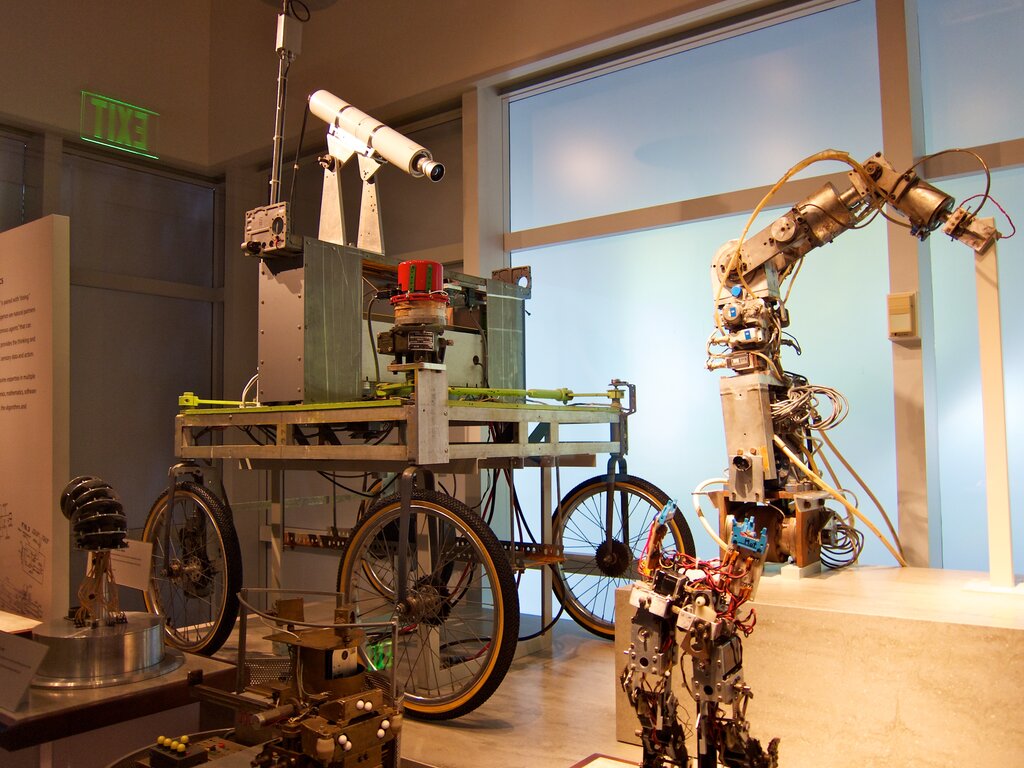
The journey to intelligent robotics wasn't instantaneous. Early robots of the mid-20th century were confined to cages on factory floors, blindly repeating simple motions. They were powerful but had no awareness. The fields of artificial intelligence and robotics developed separately for years.
Researchers in AI were focused on creating programs that could play chess or understand language. Roboticists were building better arms and legs. The magic happened when these two fields converged. Scientists began to wonder: what if we could put an AI brain into a robot body? This fusion marked the shift from robots that simply do to robots that understand and react.
The Building Blocks of a Robotic Mind
So how does a robot become intelligent? It’s not a single switch you flip. Instead, it’s a combination of several key AI technologies working together. These form the foundation of a robot's ability to operate on its own.
Machine Learning
noun
The process of teaching a computer to learn from data and make predictions or decisions without being explicitly programmed for every single task.
Machine learning (ML) lets a robot learn from experience. Instead of a programmer writing code for every possible situation, they can show the robot thousands of examples. A robot tasked with sorting recycling learns to identify plastic, glass, and paper by analyzing images of each, getting better with every piece it sorts.
But seeing isn't enough. Robots need a complete understanding of their environment. This is where sensor fusion comes in. It’s the art of blending data from multiple sensors—like cameras (vision), LiDAR (depth), and tactile sensors (touch)—into a single, reliable picture of the world. It’s how a self-driving car knows there's a pedestrian ahead, not just a suspicious shadow from its camera and a vague shape from its laser scanner.
The final piece is the cognitive architecture. This is the blueprint for the robot's mind. It organizes how the robot processes sensor data, uses what it has learned via ML, and makes decisions to achieve its goals. It’s the framework that connects perception to action, allowing the robot to function as a cohesive, intelligent whole.
Intelligent Robots in Action
The combination of these technologies has unlocked incredible new capabilities for robots across many industries.
- Autonomous Navigation: Delivery drones and warehouse robots navigate complex, changing environments without human guidance. They use sensor fusion to build a map of their surroundings and machine learning to recognize obstacles and find the most efficient path.
- Collaborative Manipulation: In advanced manufacturing, 'cobots' (collaborative robots) work alongside humans. They use AI to understand human movements and intentions, ensuring safety and efficiency. A cobot can hand a worker the correct tool at the right time, adapting its actions based on the task.
- Inspection Tasks: Robots equipped with AI can inspect infrastructure like bridges or pipelines in dangerous or hard-to-reach places. They use machine learning to identify cracks, corrosion, or other defects from visual data, often with greater accuracy than a human inspector.
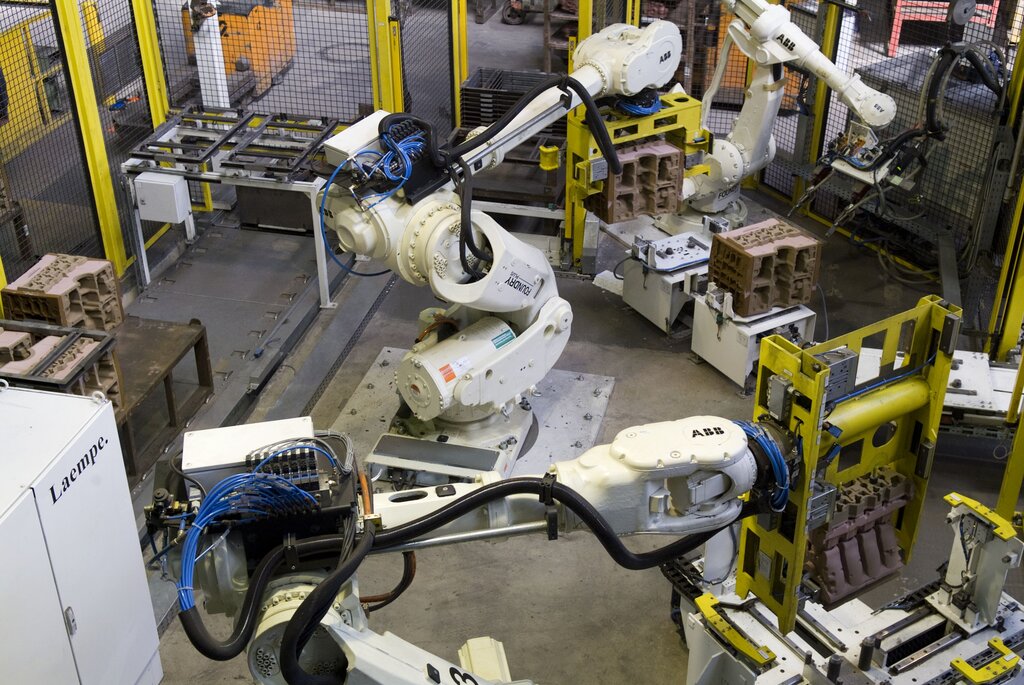
By integrating AI, we're not just creating better tools; we're creating partners that can take on dynamic and complex tasks, fundamentally changing what's possible with automation.
What is the primary characteristic that distinguishes an intelligent robot from a traditional, pre-programmed robot?
A self-driving car uses data from its cameras, LiDAR, and radar to build a complete picture of the road ahead. This process of blending data from multiple sources is called: