Frontier AI Systems and Optimization
Hardware Optimized Kernel Engineering
Hopper to Blackwell Architectural Shifts
The transition from the Hopper (H100) to the Blackwell (B200) architecture marks a significant evolution in hardware capabilities, directly impacting kernel optimization strategies. While Hopper introduced the Transformer Engine with FP8 support and the (TMA) for asynchronous data movement between global and shared memory, Blackwell refines these features. The B200's second-generation Transformer Engine adds support for new FP4 and FP6 micro-scaling formats, effectively doubling performance and model size capabilities for a given memory footprint. Furthermore, the fifth-generation NVLink interconnect provides 1.8 TB/s of bidirectional throughput per GPU, a critical enhancement for multi-GPU and multi-node training workloads where inter-GPU communication is a primary bottleneck.
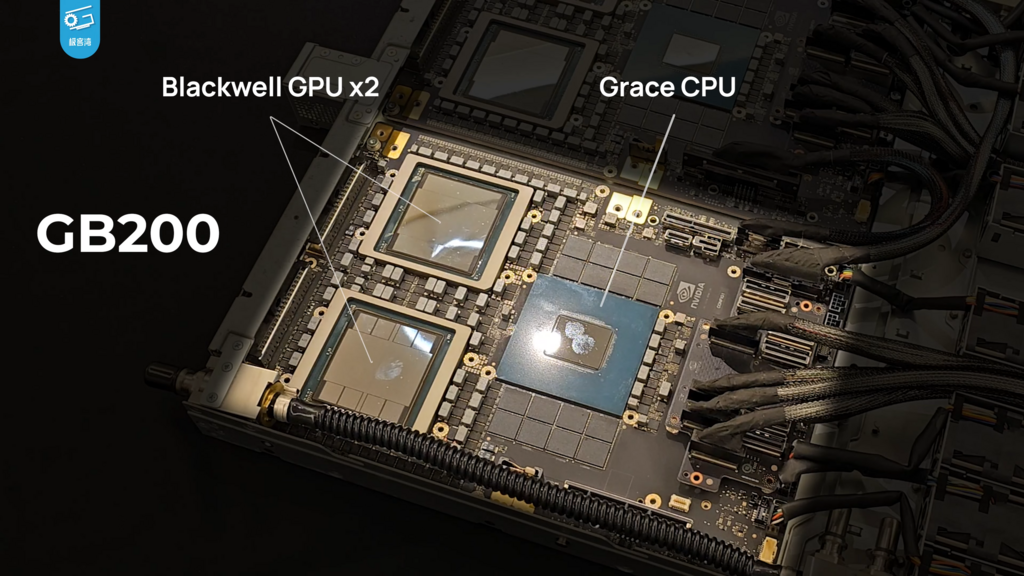
These hardware advancements necessitate a shift in kernel engineering. Optimizations are no longer just about maximizing FLOPs but about orchestrating a complex interplay of asynchronous data movement, computation, and communication, all while managing the precision trade-offs of new low-bit formats.
FlashAttention-3 Implementation
FlashAttention-3 is engineered to exploit these new architectural features to their fullest, achieving SM utilization rates upwards of 75%. The core principle is to fuse the attention computation, including the softmax and dropout operations, into a single kernel, minimizing round trips to HBM. The algorithm processes the Q, K, and V matrices in blocks, loading them from HBM into the much faster on-chip shared memory (SRAM).
This block-wise processing is the key to managing memory. By keeping only the necessary blocks in SRAM, FlashAttention avoids materializing the full attention matrix, reducing memory usage from to . The true innovation in FlashAttention-3 is its deep integration with Hopper and Blackwell's asynchronous capabilities to hide the latency of these HBM-to-SRAM data transfers.
Warp-Specialization and Overlap
To hide memory latency, FlashAttention-3 employs a [{
This producer-consumer model allows the latency of loading the (i+1)-th block of data to be almost entirely hidden behind the computation of the i-th block.
The synchronization between producer and consumer warps is managed through cuda::barrier objects, ensuring that consumers don't operate on data before it has been successfully loaded by the producers. This fine-grained, asynchronous pipeline keeps the Tensor Cores fed and achieves exceptional throughput.
FP8 and Incoherent Processing
Blackwell's second-generation Transformer Engine enhances support for FP8 (E4M3 and E5M2 formats). While using lower precision accelerates matrix multiplication and reduces memory footprint, it introduces the risk of quantization error, where information is lost during the conversion from higher-precision formats like FP32.
To mitigate this, advanced kernels use a technique called incoherent processing. The main matrix multiplications for the forward pass ( and ) are performed in FP8 for maximum speed. However, the intermediate statistics for the softmax calculation, specifically the row-wise maximum and sum used for stable softmax, are maintained in a higher precision format like FP32. This ensures that the numerically sensitive normalization step doesn't suffer from catastrophic cancellation or underflow, preserving the accuracy of the attention output while still reaping the performance benefits of FP8 computation for the bulk of the work.
What is the primary hardware advancement in the Blackwell B200's second-generation Transformer Engine compared to the Hopper H100 architecture?
How does FlashAttention-3's block-wise processing strategy fundamentally reduce memory requirements compared to a standard attention implementation?
By understanding the interplay between TMA, WGMMA, warp-specialization, and mixed-precision computation, developers can build attention kernels that fully saturate the capabilities of next-generation architectures like Blackwell.