Frontend Architecture for Scalability
Frontend Architecture Fundamentals
Building a Strong Foundation
Think about building a house. You wouldn't just start throwing up walls wherever you feel like it. You'd start with a blueprint, a plan that shows where the kitchen, bedrooms, and plumbing will go. This plan, or architecture, ensures the house is sturdy, functional, and easy to add to later.
Software is no different. The way you structure your code on the frontend—the part of the application users see and interact with—is its architecture. A solid architecture makes an application easy to update, fix, and grow over time. A messy one becomes a tangled web that's difficult to change without breaking something.
A well-designed app architecture is the foundation of good performance.
Three core principles guide modern frontend architecture: modular design, separation of concerns, and component-based development. Together, they help create applications that are both scalable and maintainable.
Modular Design
Modular design is the practice of breaking a large application into smaller, independent, and interchangeable pieces called modules. Think of it like building with LEGO bricks. Each brick is a self-contained unit, but they're all designed to snap together to create something bigger.
In a web application, a module might handle a specific piece of functionality. For an e-commerce site, you could have a module for user authentication, another for the product catalog, and a third for the shopping cart. Each module manages its own tasks.
This approach makes the codebase easier to understand. Instead of trying to comprehend the entire application at once, a developer can focus on a single module at a time.
Working in a team also becomes much simpler. Different developers can work on different modules simultaneously without stepping on each other's toes. This speeds up development and makes it easier to isolate and fix bugs, since a problem in the shopping cart module is unlikely to be caused by code in the product catalog.
Separation of Concerns
Separation of concerns is a principle for keeping different types of code from getting tangled together. Imagine a chef's kitchen: there's a station for prepping vegetables, another for cooking on the stove, and a third for plating the final dish. Each area has a distinct purpose, which keeps the kitchen organized and efficient.
In classic web development, this principle is applied by keeping the structure, style, and behavior of a webpage in separate files:
Modern frameworks extend this idea further. They encourage separating data management (state) from the user interface (view) and the application's logic (actions). This clean separation makes the code more predictable and easier to debug. When something goes wrong with the UI, you know to look at the view code, not the data-fetching logic.
Component-Based Development
Component-based development takes modularity and separation of concerns and applies them directly to building user interfaces. The idea is to build the UI out of small, self-contained, and reusable pieces called components.
A component bundles its own HTML structure, CSS styles, and JavaScript logic into one place. For example, a search bar on a website could be a single component. It contains the input field (HTML), the look of the button (CSS), and the logic to handle what happens when a user types and clicks 'search' (JavaScript).
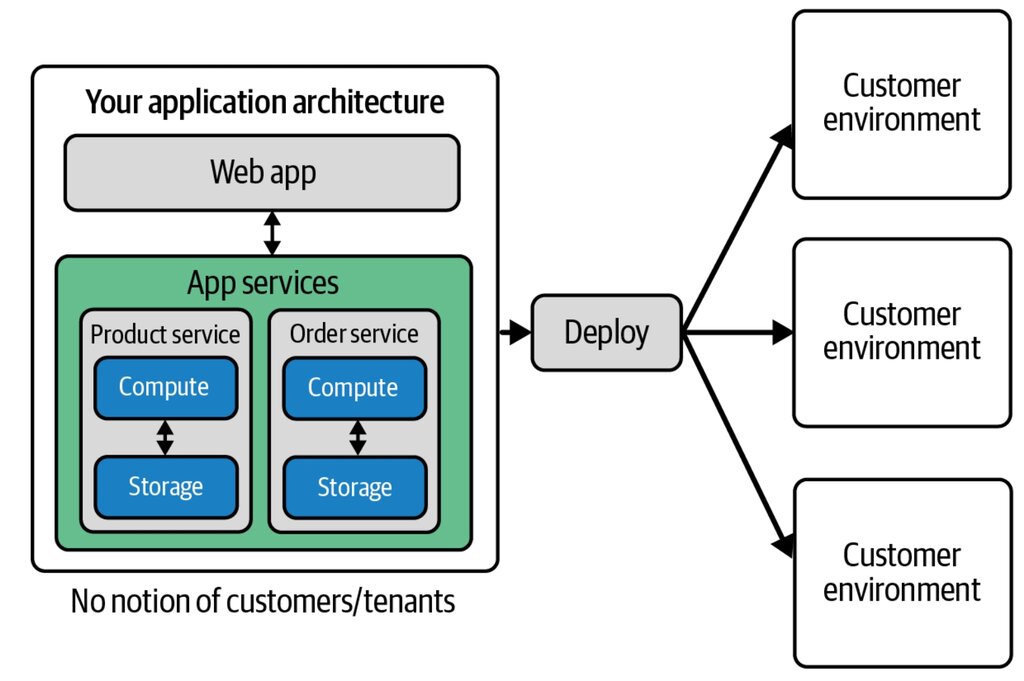
You can then assemble these components like building blocks to create complex pages. A user profile page might be built from an Avatar component, a UserInfo component, and a PostFeed component. Each of these can be developed and tested in isolation. If you need a search bar somewhere else on your site, you can just reuse the SearchBar component you already built.
This reusability is a huge benefit. It saves time, reduces code duplication, and ensures a consistent look and feel across the application.
Good architecture is about making smart choices early on that pay off later. By building applications that are modular, well-organized, and component-based, you create a frontend that is easy to maintain and can grow to handle more users and features without collapsing under its own weight. It's the difference between a sturdy, expandable house and a precarious shack.
What is the primary purpose of establishing a solid frontend architecture for a software application?
In the context of frontend architecture, a module is best described as...