From Factory to Runway Utility Fashion
Origins of Utility Clothing
Clothing on the Ration
By 1941, World War II had placed an immense strain on Britain's resources. Factories that once wove fine fabrics were now producing parachutes and uniforms. Raw materials like wool, cotton, and silk were redirected to the war effort, leading to severe shortages on the home front. Clothing, once a matter of personal choice, became a national concern.
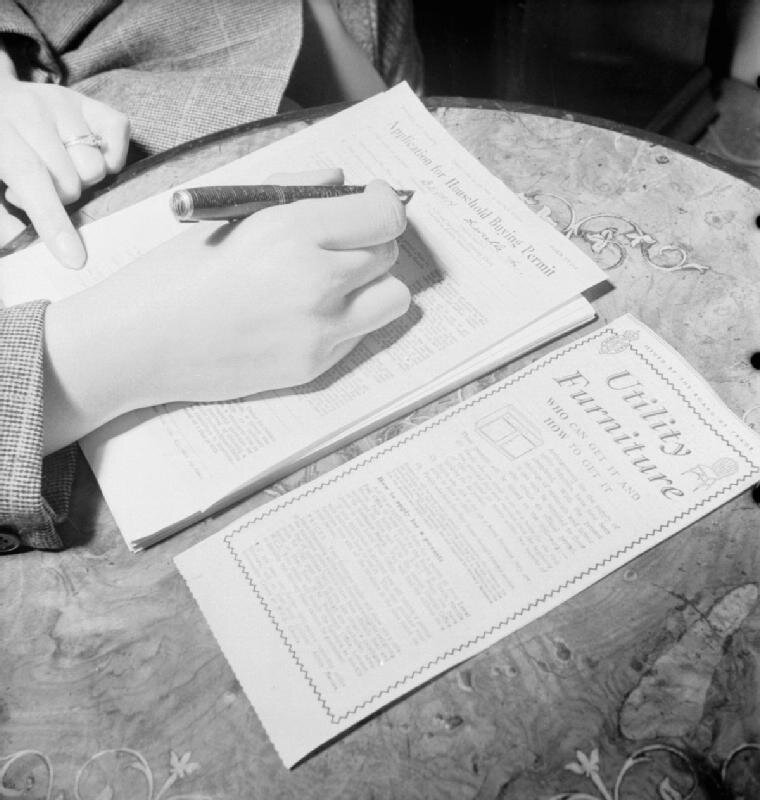
In response, the British government introduced the Utility Clothing Scheme. The goal was twofold: to conserve scarce materials and to ensure that every citizen had access to affordable, durable clothing. The scheme strictly regulated the design and production of garments, dictating everything from the number of pockets on a coat to the amount of fabric in a skirt. Prices were capped to prevent profiteering, and clothes were sold under the rationing system, requiring both money and precious clothing coupons.
Utility Clothing
noun
Garments produced under a British government scheme during and after World War II, designed to be simple, durable, and economical with materials.
Style Under Strain
But practicality didn't have to mean ugliness. The government understood that morale was crucial, and drab, poorly designed clothes wouldn't help. They turned to an unlikely source for help: the country's top fashion designers.
The Incorporated Society of London Fashion Designers, a group that included famous names like Norman Hartnell and Hardy Amies, was commissioned to create a collection of prototype Utility designs. Their challenge was to create fashionable, appealing clothing while adhering to the strict austerity regulations. They developed clever tailoring techniques, used prints to add interest without requiring extra fabric, and focused on strong, simple silhouettes that were both stylish and easy to mass-produce.
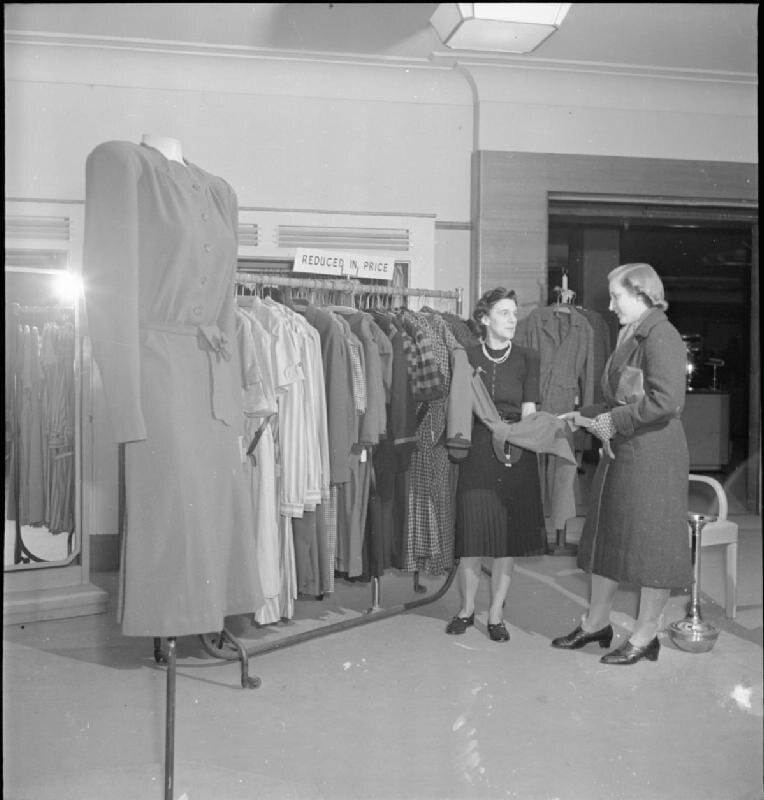
These designers proved that creativity could flourish even within tight constraints, producing styles that were functional, smart, and quintessentially British.
The Mark of Quality
To identify items made under the scheme, the government introduced a special label. It was a simple, distinctive logo featuring two 'C's and the number 41, often described as resembling a Pac-Man.
This was the CC41 mark, which stood for "Controlled Commodity 1941." It appeared on everything from dresses and suits to shoes and furniture. The mark was a guarantee. It signaled that the item was price-controlled and met the government's standards for quality and construction. Far from being a stigma, the CC41 logo became a symbol of patriotism and practicality, worn with pride as a contribution to the war effort.
Now, let's test your knowledge on the origins of utility clothing.