From Draft to Stage: Tel Aviv Monodrama
Solo Script Editing
The Director's Chair Is Empty
You've finished the draft. The character's voice is on the page, the story is told. But for the actor-writer, this is a uniquely vulnerable moment. There's no director yet to offer an outside eye, no scene partner to test the material against. You must become your own first critic, a process of that turns a manuscript into a living, breathing performance.
The first step is to create distance. Your intimate knowledge of the character's backstory and motivations is a liability during the edit. You fill in the gaps automatically; the audience won't. To gain an outside-in perspective, record yourself reading the entire script aloud, neutrally. Then, listen back not as the writer, but as an audience member in seat J7. Where do you get bored? When are you confused? Mark these moments ruthlessly. They are not failures; they are opportunities.
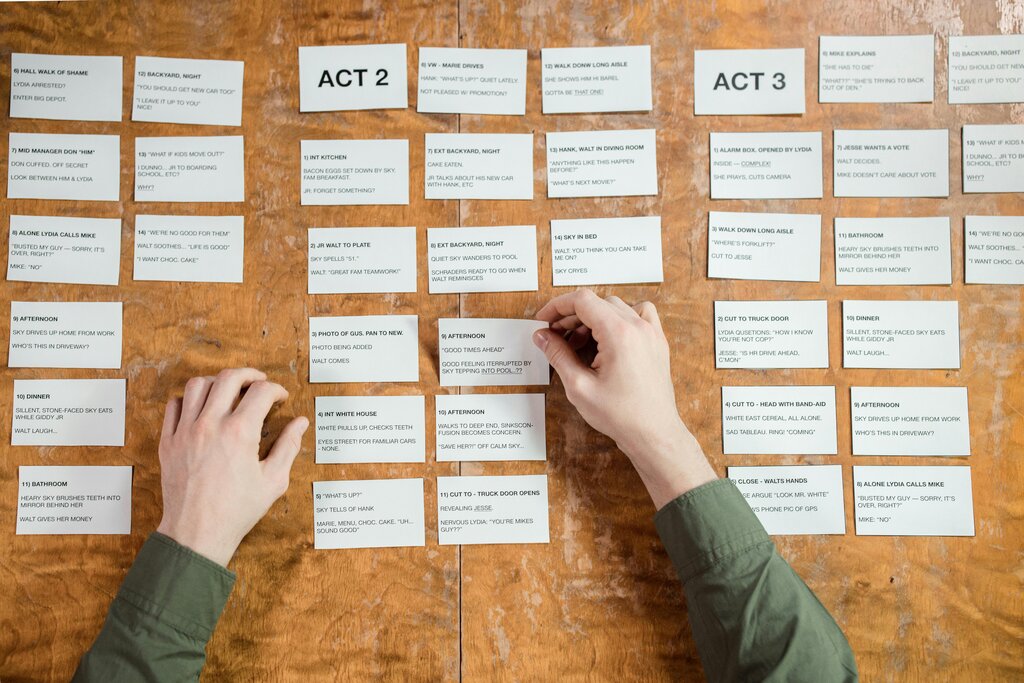
This audio-pass helps you feel the script’s rhythm. A monodrama lives and dies on its pacing. Unlike a multi-character play where scenes can provide natural breaks and shifts in energy, the solo piece must generate its own ebb and flow. You are looking for a pulse, a dynamic variance in tempo and intensity that keeps the audience engaged. If the entire script feels like it’s at the same emotional pitch, you have a structural problem.
Hunting for Dead Air
In a solo performance, 'dead air' isn’t silence. It’s exposition disguised as monologue. It’s the moment the character stops doing and starts explaining. Without a scene partner to create immediate conflict, the forward momentum must come from the character's active, present-tense struggle. Every line must be an action: an attempt to persuade, to confess, to deny, to understand, to escape. Information is the byproduct of this struggle, not the goal.
Ask of every section: 'Why is my character saying this, right now, to this audience?' If the only answer is 'So the audience knows what happened,' it's dead air.
This is especially true for the 'solo-performer-as-narrator' device. It can be a powerful tool, but it's also a trap. When the character slips into pure narration, the emotional stakes plummet. The audience is no longer witnessing an event; they are being told about one. To fix this, root the narration in a physical or emotional reality. Don't just tell us about the fire; show the character obsessively washing the smell of smoke from their hands as they recount the story. The memory is active, not passive. The past intrudes on the present.
Trimming for Truth
In a conventional play, exposition can be distributed among characters. In a monodrama, every word your character speaks is a direct reflection of their state of mind. Therefore, trimming becomes an act of character refinement. An audience doesn’t need to know everything you know. They only need to know what the character is compelled to reveal.
Focus on thematic clarity. A 60-minute solo piece can't sustain multiple complex themes. What is the one core question your character is wrestling with? Every scene, every memory, every line should, in some way, relate to this central inquiry. Cut anything that feels like a tangent, no matter how beautifully written. A great line in the wrong place is a bad line. This isn't just about shortening the script; it’s about intensifying its focus.
Start by tackling major structural revisions before delving into fine-tuning dialogue or character nuances.
This editing phase ensures the script is physically performable. As you read, get on your feet. Does the text invite movement? Does a long, dense paragraph leave you literally breathless? The words must be able to live in a body, in a space. If the language is purely intellectual, it will sit flat on the stage. The goal is to move from a writer's draft to an actor's blueprint, a script that is not just read, but embodied.
The process of an actor-writer becoming their own first critic to transform a manuscript into a living performance is called ______.
What is the primary purpose of recording and listening to a neutral read-through of a solo script?