From Concept to Market Launch
Advanced Market Validation
Beyond the Business Plan
A detailed business plan and traditional market research can build confidence, but they are built on a fragile foundation: assumptions. You assume you know who your customer is, what they need, and how much they’ll pay for it. The problem is, as soon as a business plan makes contact with reality, it often falls apart. Instead of writing a perfect plan, modern startups treat their initial idea as a set of testable hypotheses.
This is the core of the — a scientific approach to creating and managing businesses. It’s about getting a product into the hands of real customers as quickly as possible to see how they react. The goal isn't to build a flawless final product on day one, but to start a process of continuous learning and adaptation. This framework minimizes wasted time and money by ensuring you're building something people actually want.
The fundamental activity of a startup is to turn ideas into products, measure how customers respond, and then learn whether to pivot or persevere.
The Build-Measure-Learn Loop
At the heart of the Lean Startup is a simple feedback loop: Build-Measure-Learn. It's a cycle designed to turn assumptions into facts as efficiently as possible. It works like this:
First, you Build a minimal version of your product or a simple experiment to test a core assumption. Next, you Measure how customers behave. Are they signing up? Are they using the feature? Finally, you Learn from that data. Did the experiment validate your hypothesis? Based on what you've learned, you decide whether to persevere with the current strategy or pivot to a new one. Then the loop begins again.
Your First Experiment The MVP
The first step in the Build-Measure-Learn loop usually involves creating a Minimum Viable Product, or . This is one of the most misunderstood terms in the startup world. An MVP is not just a buggy, feature-light version of your final product. It is the version of a new product that allows a team to collect the maximum amount of validated learning about customers with the least amount of effort.
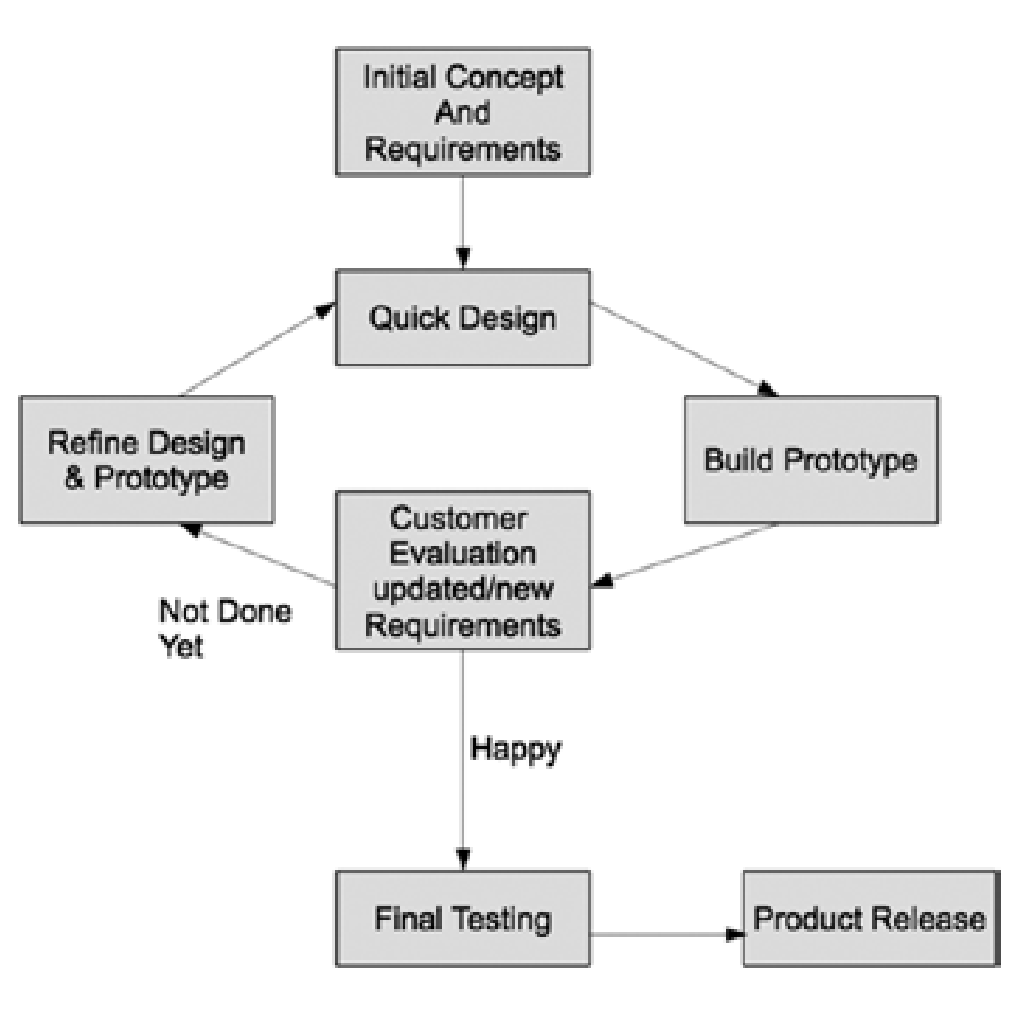
The key is 'validated learning'. You're not trying to build something impressive; you're trying to answer a critical question. For example, 'Will people pay for a subscription to a curated newsletter of rare books?' An MVP for this could be a simple landing page that describes the service and asks for an email address and credit card. You don’t even need to write the first newsletter until you see if people are willing to pay.
To inform what your MVP should even be, you need to talk to potential customers. This is done through a process called Customer Discovery Interviews.
The goal of a Customer Discovery Interview is not to sell your product. It's to understand your customer's world so well that you can see if your idea fits into it.
These are open-ended conversations focused on the customer's problems and past behaviours, not your proposed solution. You’re looking for evidence of the problem you think you can solve. Did they try to solve it before? How? What was the outcome?
| Do | Don't |
|---|---|
| Ask open-ended questions about their past experiences. | Pitch your idea or ask if they'd use your solution. |
| Listen for problems, pains, and workarounds. | Ask hypothetical future questions ('Would you...?'). |
| Ask 'Why?' to dig deeper into their motivations. | Talk more than you listen. |
Finding Your Fit
The validation process has two major milestones: Problem-Solution Fit and Product-Market Fit. They sound similar, but they represent different stages of maturity.
Problem-Solution Fit is the first hurdle. It’s achieved when you have evidence that your target customers have the problem you think they have, and that they care enough to want a solution. Your proposed solution must also resonate with them. This is typically validated through your Customer Discovery Interviews and the qualitative feedback from your earliest MVP users.
, coined by entrepreneur Marc Andreessen, is the next level. This means being in a good market with a product that can satisfy that market. You've moved beyond a handful of early adopters and found a repeatable, scalable model for acquiring and retaining a larger customer base. This is where quantitative data becomes essential.
To measure your progress towards Product-Market Fit, you need robust methods that go beyond simple vanity metrics like total sign-ups. Two powerful techniques are Cohort Analysis and A/B Testing.
Cohort Analysis
noun
A behavioural analytics tool that breaks down data into groups of people with common characteristics over time. A cohort is simply a group of users who share a common trait, such as their sign-up date.
Instead of looking at your overall churn rate, cohort analysis lets you see the retention of users who joined in a specific week or month. This helps you see if the changes you're making to your product are actually improving retention over time. If the 'Week 4' cohort sticks around longer than the 'Week 1' cohort, you're on the right track.
A/B testing can be used for much more than optimising website conversions. You can A/B test your entire business model. For example, you could offer one group of users a monthly subscription (Version A) and another a pay-per-use model (Version B). By measuring the revenue and engagement from each group, you can validate which model is more viable for your business before committing to it fully.
Market validation is the process of testing and verifying whether a genuine demand exists for a product or service within a specific target market.
By moving from assumptions to validated learning, you systematically de-risk your business. Each loop of the Build-Measure-Learn cycle provides another piece of evidence, grounding your strategy in reality, not just a spreadsheet.
According to the Lean Startup methodology, what is the primary flaw of a traditional business plan?
What is the primary goal of a Minimum Viable Product (MVP)?